Reply To:
Name - Reply Comment
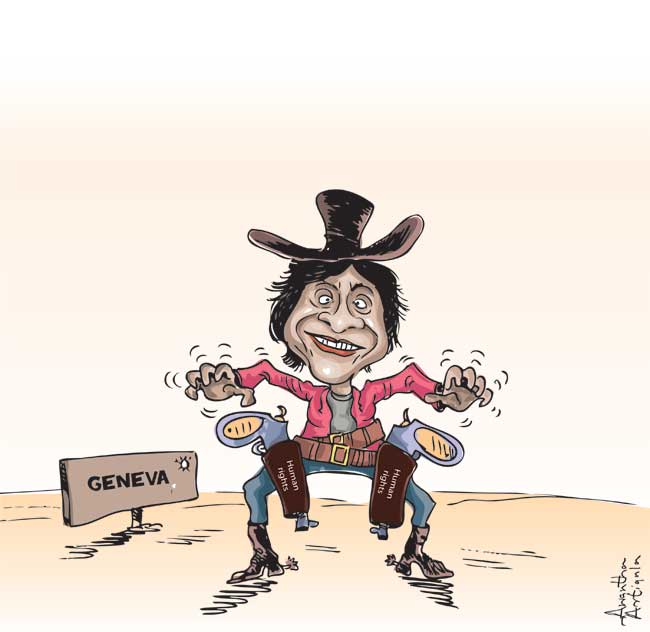
.jpg) The New Year dawned, and the country is slated to experience pressing political and diplomatic challenges in 2014. Main among them is the session of the United Nations Human Rights Council scheduled for March.
The New Year dawned, and the country is slated to experience pressing political and diplomatic challenges in 2014. Main among them is the session of the United Nations Human Rights Council scheduled for March.
The government is bracing for the event, and already appointments have been sought with the member states for a lobbying-spree ahead of the session. The UNHRC will appraise Sri Lanka’s progress on the implementation of matters outlined in its resolution adopted last March.
The last year’s resolution says, “Welcoming and acknowledging the progress made by the Government of Sri Lanka in rebuilding infrastructure, de-mining, resettling the majority of internally displaced persons, and noting nonetheless that considerable work lies ahead in the areas of justice, reconciliation and resumption of livelihoods, and stressing the importance of the full participation of local population, including representatives of civil society and minorities, in these efforts.
Taking note of the report of the Lessons Learnt and Reconciliation Commission of Sri Lanka and its findings and recommendations, and acknowledging its possible contribution to the process of national reconciliation in Sri Lanka,
Taking note of the National Plan of Action to implement the recommendations of the Lessons Learnt and Reconciliation Commission of the Government of Sri Lanka and its commitments as set forth in response to the findings and recommendations of the Commission,
Noting that the national plan of action does not adequately address all of the findings and constructive recommendations of the Commission,
Recalling the constructive recommendations contained in the Commission’s report, including the need to credibly investigate widespread allegations of extrajudicial killings and enforced disappearances, demilitarise the north of Sri Lanka, implement impartial land dispute resolution mechanisms, re-evaluate detention policies, strengthen formerly independent civil institutions, reach a political settlement on the devolution of power to the provinces, promote and protect the right of freedom of expression for all and enact rule of law reforms,
Noting with concern that the National Plan of Action and the Commission’s report do not adequately address serious allegations of violations of international human rights law and international humanitarian law,
Expressing concern at the continuing reports o f violations of human rights in Sri Lanka, including enforced disappearances, extrajudicial killings, torture, and violations of the rights to freedom of expression, association and peaceful assembly, as well as intimidation of and reprisals against human rights defenders, members of civil society and journalists, threats to judicial independence and the rule of law, and discrimination on the basis of religion or belief,
Calling upon the Government of Sri Lanka to fulfill its public commitments, including on the devolution of political authority, which is integral to reconciliation and the full enjoyment of human rights by all members of its population,
Expressing appreciation for the efforts of the Government of Sri Lanka in facilitating the visit of a technical mission from the Office of the United Nations High Commissioner for Human Rights, and encouraging the Government to increase its dialogue and cooperation with the Office of the High Commissioner,
Noting the High Commissioner’s call for an independent and credible international investigation into alleged violations of international human rights law and international humanitarian law,
1. Welcomes the report of the Office of the United Nations High Commissioner for Human Rights on advice and technical assistance for the Government of Sri Lanka on promoting reconciliation and accountability in Sri Lanka [1] and the recommendations and conclusions contained therein, in particular on the establishment of a truth-seeking mechanism as an integral part of a more comprehensive and inclusive approach to transitional justice;
2. Encourages the Government of Sri Lanka to implement the recommendations made in the report of the Office of the High Commissioner, and also calls upon the Government of Sri Lanka to conduct an independent and credible investigation into allegations of violations of international human rights law and international humanitarian law, as applicable;
3. Reiterates its call upon the Government of Sri Lanka to implement effectively the constructive recommendations made in the report of the Lessons Learnt and Reconciliation Commission, and to take all necessary additional steps to fulfill its relevant legal obligations and commitment to initiate credible and independent actions to ensure justice, equity and accountability, and reconciliation for all Sri Lankans;
4. Encourages the Government of Sri Lanka to cooperate with special procedures mandate holders and to respond formally to their outstanding requests, including by extending invitations and providing access;
5. Encourages the Office of the High Commissioner and relevant special procedures mandate holders to provide, in consultation with and with the concurrence of the Government of Sri Lanka, advice and technical assistance on implementing the above-mentioned steps;
6. Requests the Office of the High Commissioner, with input from relevant special procedures mandate holders, as appropriate, to present an oral update to the Human Rights Council at its twenty-fourth session, and a comprehensive report followed by a discussion at the twenty-fifth session, on the implementation of the present resolution.
.jpg) It is reasonable to anticipate that the government will make every possible effort to thwart such attempts. On the one hand, it will amount to an attempt to infringe upon the sovereignty of a country that is rebuilding its society after three decades devastation
It is reasonable to anticipate that the government will make every possible effort to thwart such attempts. On the one hand, it will amount to an attempt to infringe upon the sovereignty of a country that is rebuilding its society after three decades devastation
The United States was the prime mover of the resolution, and it had co-sponsors namely Austria, Canada, Croatia, Belgium, Denmark, Estonia, France, Finland, Georgia, Germany, Greece, Hungary, Iceland, Ireland, Italy, Liechtenstein, Lithuania, Malta, Monaco, Montenegro, Norway, Poland, Portugal, Romania, Slovakia, Slovenia, Spain, St Kitts and Nevis, Sweden, Switzerland, United Kingdom of Great Britain and Northern Ireland.
Gearing to beat any resolution against SL
Last time, the government did not muster its fullest strength to defeat this resolution merely because of the composition of the UNHRC at that time. Mostly, the countries that were not diplomatic allies of Sri Lanka in the present context held its membership.
Nonetheless, it appears that Sri Lanka has every reason to work towards the defeat of any resolution this time. Already, Britain, a key ally of the US, has vowed to push for an international inquiry into alleged human rights violations during the last phase of war in Sri Lanka. It is reasonable to anticipate that the government will make every possible effort to thwart such attempts. On the one hand, it will amount to an attempt to infringe upon the sovereignty of a country that is rebuilding its society after three decades devastation. Allies of Sri Lanka believe it as an attempt much against the spirit of the international law that calls for co-operation.
LG budget defeats
The string of defeats of local authorities’ budgets, controlled mostly by the ruling United People’s Freedom Alliance, has rocked the government in some quarters. Political analysts and observers interpret the phenomenon in different perspectives. One school of thought is that it could be the beginning of a political tide against the ruling party, ahead of major elections being planned later this year or early next year.
This thinking has been strengthened by the fact that local government members even defied the order from the top-brass of the government not to defeat budgets. Where did they get the strength from, to defy an order from the party’s hierarchy? This question is raised in many quarters interested in the unraveling political scenario.
However, the argument does not seem to be holding water when it is analysed from different angles. It was not a phenomenon faced by the local authorities held by the UPFA only. The budgets were defeated at the local authorities controlled by the Tamil National Alliance (TNA) in the North and the East, the main opposition United National Party (UNP) and Sri Lanka Muslim Congress either at the first time or the second time. It has been a common phenomenon for all the parties, and therefore cannot be considered a tide against one particular party only.
Also, for the budget defeats, the reasons have been common. The dictatorial behaviour of the heads of the local authorities, their rivalries with their deputies and also some politicians in the central government calling the shots, have been the causes.
Once the budget is defeated on the second occasion, the chairman of the respective council ceases to be its head in terms of the new election law adopted in 2012. It was not the case under the old law. When it was in operation, the local authorities’ heads could continue with their work despite budget defeats.
The local budgets dominated news this time since their defeats on two occasions could end the term of office of chairmen and mayors.
Amendments likely
Against this backdrop, there is contemplation in some quarters of the government that the law should be amended to consolidate the hold of chairmen and mayors in their respective councils despite budget defeats. Yet, one must take note that budgets of 306 local bodies out of the total 335 had easy passage. The problems cropped up at a small number of councils. The inclusive participation in the preparation of budgets has enabled the easy passage at these 306 councils. Therefore, it is important to uphold the new law despite occasional hitches encountered in the implementation of it at this initial stage.
With the passage of time, these problems can be avoided. Therefore, it will not be prudent to amend the present law for this particular purpose at this juncture. If it is done, it will be a step backward in the democratic system. The new law provides for inclusivity in running the affairs of local authorities, and it is a healthy sign for maintaining democracy
Dissident seeks appointment with UNP LC
Chairman of UNP Leadership Council Karu Jayasuriya and its member Lakshman Kiriella met at the party headquarters on the New Year Day to discuss the programme for 2014. Mr. Jayasuriya outlined the programme for 20 minutes. Meanwhile, UNP dissident Maithree Gunaratne has sought an appointment with the Leadership Council
Burglaries in Jaffna on the rise
The crime wave in the Jaffna, particularly robberies and house burglaries, has prompted Traditional Industries and Small Enterprise Development Minister Douglas Devananda to ask for more police stations and police posts in the Jaffna district.
The Minister made this request at the Jaffna District Civil Security Committee meeting held in Jaffna District Secretariat on December 26. He asked Jaffna DIG to set up more police stations, Guard Posts and increase the frequency of Police night patrols to rein in the miscreants as there recently had been an escalation of robberies, violence and other anti-social activities in the entire peninsula. The meeting was convened by District Secretary Sundaram Arumainayagam.
Buddhism taught by Carpentry teachers
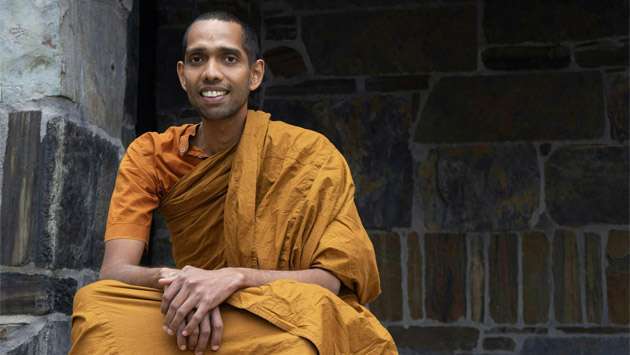
An eminent Buddhist monk at a recent function in Kegalle, complained to Prime Minister D.M. Jayaratne that there were 2,300 vacancies at schools to teach Buddhism, but no action had been taken to fill them. Ven. Gonaduwe Gunanada Thera, the Registrar of All Ceylon Sasanarakshaka Bala Mandalaya said, teachers recruited for subjects such as Music, Arts and Carpentry had been assigned to teach Buddhism at most schools. Also, he said though there are 3.5 million school children, only 1.9 of them attend Sunday Dhamma schools at present. Therefore, he called upon the authorities to ban private tuition on Sundays, as done in the Sabaragamuwa Province.