Reply To:
Name - Reply Comment
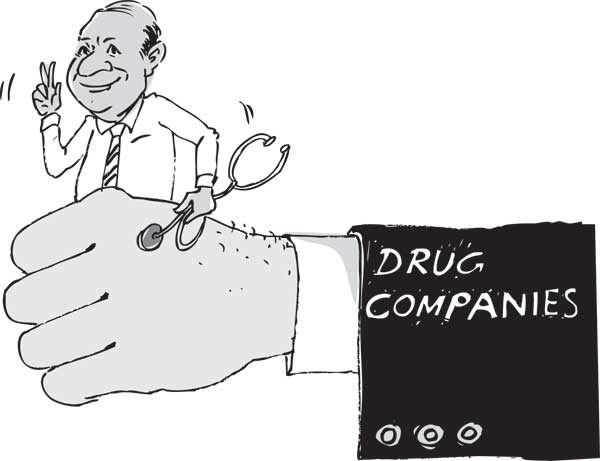
We are in a tragic era where most of the private hospitals have become big businesses and trans-national pharmaceutical corporations are being allowed to run or manipulate the health sector in collaboration with some health officials and medical consultants. Therefore it is a healthy sign that the Government Medical Officers’ Association (GMOA) – comprising some 15,000 doctors and believed to be one of the biggest and most powerful trade unions in South Asia – has launched an annual programme to train some 900 interns to be better care givers and more patient-friendly.
" Minister Sirisena told the Interns that medicine was a noble profession, but health action groups raised questions as to why the minister was delaying the regulations to implement the National Medicinal Drugs Policy "
The Daily Mirror hopes the interns will not only listen and learn from these programmes but more importantly will practise what they are taught so that some of the virtues of the Hippocratic Oath could be restored in the medical vocation and we will have a health service where the well-being of the patients is given top priority.
The man behind this and other vocational training or social justice programmes for doctors is the enterprising GMOA President Dr. Anurudda Padeniya. According to him, the GMOA this year has started a programme to raise the quality and standard of work of medical professionals. It would be good if the programme gives an understanding to interns that medicine is largely a social science and that practitioners need to look even beyond professionalism and look at medicine as a vocation where the healing of the sick – not money or status – is given no. 1 priority.
Since it is important for interns to be able to speak all three languages to effectively deliver patient care, the GMOA last month held a 10-day residential Tamil language training programme for Sinhala speaking doctors at the Agalawatta National Integration Language Education and Training Institute. This was done in association with the Ministry of Health and the Ministry of National Integration.
This week the GMOA held a four-day workshop at Ananda College in Colombo for these 900 interns. The workshop was addressed by distinguished speakers with local and international expertise and was aimed at transmitting essential knowledge and attitudes to the participants to optimise their experience and enhance patient care. Among those who spoke were the Health Minister Maithripala Sirisena, Ministry Secretary Dr. Nihal Jayatilleke and the Health Services Director General Dr. Palitha Mahipala, while Dr. Padiniya outlined the good intern concept, its evolution vision and objectives.
Minister Sirisena told the Interns that medicine was a noble profession, but health action groups raised questions as to why the minister was delaying the regulations to implement the National Medicinal Drugs Policy, the charter of patients’ rights and responsibilities a constitutional amendment to make health a fundamental right and a national policy on food and nutrition. These and other structural changes are vital if good interns are to continue to be good doctors. Talk is cheap and the minister needs to act sincerely to restore a patient-friendly health service.
A handbook for medical interns, a pocket size companion with practical information, knowledge and practical advice to improve the quality of care was given to the interns at the workshop. A website was also launched to constantly update guidelines and information for interns or doctors. The GMOA said the good intern programme would be an annual event to ensure that the medical graduates starting their professional career would be adequately equipped to serve their patients. Concepts are good and the moves by the GMOA to train interns to be more caring and compassionate are laudable. But these need to be practised sincerely and the interns need to make a choice – they cannot serve both money and patients.