Reply To:
Name - Reply Comment
 Modern historians, who explored western colonial expansion and the related development process, recognised the then widening gap between settler and non-settler colonies. The settler colonies were territories where the people who migrated from the colonial centre to the periphery settled down there in large numbers. These territories included North America, Canada, Australia, New Zealand and South Africa. On the other hand, the territories like India, Sri Lanka, Indonesia, most countries of the African continent, etc. did not become settler colonies.
People from the centre did not migrate to these territories in significant numbers to create large migrant settlements. So, the administrators, investors and even planters did not settle down permanently in the colonies. Even among settler colonies, there emerged significant differences at least partly owing to the level of capitalist development in their respective centres. A comparative analysis of the political economy of colonies pointed to the fact that settler colonies emerged as steadily-growing economies whereas the non-settler colonies by and large became under-developed.
The main reason for the difference was that the settler colonies benefitted from the long-term investments made by the migrants and the institutions they built over time. By contrast, non-settler colonies were dominated by extractive activities and the surplus generated was usually transferred to the colonial centre, resulting in persisting underdevelopment. Sustained capital accumulation and continuing human resource development facilitated economic development in the settler colonies. On the other hand, de-colonisation of non-settler colonies had a significant impact on the economy, polity and society of ex-colonial countries. Rising anti-colonial nationalism threatened not only colonial regimes but also native elites, who had adapted to the colonial system. When de-colonisation came, many of the elites opted to migrate to the colonial centre or elsewhere.
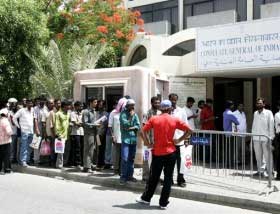 Many westernised Sri Lankans, who had well adapted to the colonial socio-economic environment felt that their future prospects in the country were not very bright and migrated to the United Kingdom, Australia, Canada and the United States. In the process, the country lost many well-trained professionals. Some of them did very well in their destination countries.
After more than six decades since de-colonisation of Sri Lanka, what we observe today is a far more pervasive phenomenon of out-migration. Today, the migrants are mostly highly qualified, young professionals leaving the country looking for greener pastures elsewhere. Since the migrants are mostly young, the outflow has significant demographic implications as well.
If you talk to ten middle class adults such as senior public servants, university academics, professionals, diplomats, business executives, etc, most of them will tell you that most, if not all, of their children are domiciled in overseas countries. These children have had access to the best education here or abroad and secured professional qualifications, but have settled down in other countries due to better prospects there. As I have discussed in my previous articles under this column, leakage of highly qualified professionals is a major impediment to development in any country. Today human capital is considered as equally, if not more, important than financial capital. As is well known, in the era of neo-liberal globalisation, financial capital has become highly mobile. It does not remain trapped within a country and moves around the world seeking better investment opportunities and higher profit margins. But, the process of human capital formation is slow. It is the result of long-term investments in education. Many countries have found it easier to change immigration policies to attract highly skilled professionals from elsewhere rather than increase the domestic supply of such professionals. For instance, Germany several years ago offered visas to 20,000 IT specialists. Sri Lankan professionals have found their way to many developed countries. On the other hand, there has also been a reverse flow to countries that have created better employment prospects for returning nationals. Indian policy on non-resident Indians has been aimed at facilitating this reverse flow. Countries like China, Singapore and Malaysia also have seen a considerable reverse flow in recent times.
Exodus of highly-qualified professionals is a loss in every sense of the term. If they had already left the country as youth for technical and professional education, it would have already cost the country a great deal in foreign exchange. If they leave after their professional education in the country, it amounts to an utter waste of scarce local resources. Either way, it is a zero-sum situation; increasing exodus of professionals can only mean decreasing availability of such persons in the country.
The foot-loose investors who knock on our doors are not necessarily looking for long-term investment opportunities here. They usually invest their capital in the service sector, which is already too large in comparison to the more productive sectors of the economy.
As is widely accepted today, knowledge management is key to not only economic development but also solving myriad of social and other problems. But, to use knowledge for development and other purposes, a country needs to first facilitate knowledge production and then deploy people with knowledge in diverse fields. This is exactly what does not happen in this country. Even a cursory look at the performance of many public institutions would attest to this fact.
Sri Lanka is not a country with a high level of domestic capital formation. So, the country has to depend on foreign capital. Among other things, availability of skilled and cheap labour is a pre-condition for attracting capital. Given the increasing significance of skilled labour for development, permanent migration of most of the young professionals is similar to the situation that prevailed in non-settler colonies during and immediately following the colonial rule. Young Sri Lankans, who have left the country have often been trained at the expense of the country but do no longer invest in the future of their place of origin. The elderly parents who are often left behind are happy that their children are doing well elsewhere and do not have to worry about the future of their children and grand-children. On the other hand, continuing depletion of the pool of highly-skilled labour, among other things, is a major factor that discourages investors looking for long term investment opportunities in the country, particularly in its industrial sector. Under such conditions, it is not easy to promote sustainable economic development.