Reply To:
Name - Reply Comment
BY Dr. Keerthi Jayasekara
.jpg) rilliant senior surgeon of a bygone era now 93 years, whose surgical assistant I was for many years with whom I still maintain an affectionate teacher - student relationship, having read my article on Vesak Day asked me why I chose to write about the Buddha’s advice on family life and not on impermanence, the four noble truths or Nirvana as most Buddhist writers do ?
rilliant senior surgeon of a bygone era now 93 years, whose surgical assistant I was for many years with whom I still maintain an affectionate teacher - student relationship, having read my article on Vesak Day asked me why I chose to write about the Buddha’s advice on family life and not on impermanence, the four noble truths or Nirvana as most Buddhist writers do ?
I told him that the priority was Buddhist social philosophy -- the way the Buddha introduced ethics to transform society and usher in happiness to mankind.
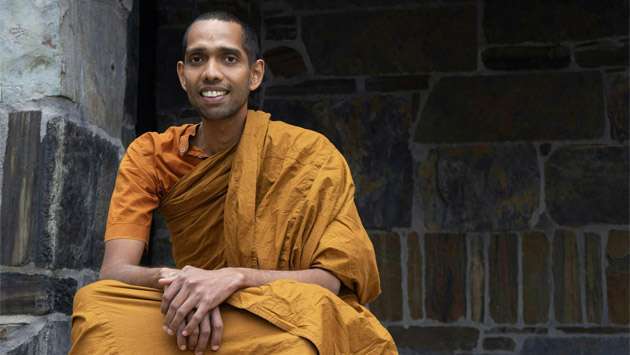
I reminded him of Ven. Balangoda Ananda Maithriya Thera, one of the most respected and venerated Buddhist scholars both in Theravada and Mahayana Buddhism in recognition of which he was appointed the first Professor of Mahayana Buddhism to Vidyodaya University. A master of nearly ten languages who at the tender age of 96 acquired a computer and became computer literate and began working on the computer thereafter. He had his training in meditation from the yogis in the foot hills of the Himalayas. He was endowed with physic powers and also had the ability of out of body experience to the Astral body. When he was 100 years old at a religions ceremony to mark the event he said he did not wish to attain nirvana but wished to be born in Sri Lanka over and over again to serve the people of this country.
To the Buddhist who is in a hurry to cut short his journey in sansara this statement will be most confusing.
However if we view it in the light of what the Buddha said to the first batch of Buddhist missionaries of 60 Arahaths including Arhath Yasa, it will make sense and very meaningful indeed. It is well to remember that Buddhism is the first missionary religion in the world
The Buddha addressing the first batch said, “Go now and wander for the welfare and happiness of many, out of compassion for the world for the benefit and welfare and happiness of gods and man. Teach the Dhamma that is good in the beginning, good in the middle, and good in the end with meaning and the letter, explain a holy life that is utterly perfect and pure. There are those with little dust in their eyes who will be lost through not hearing the Dhamma some will understand the Dhamma.”
The Buddha discovered that human suffering in society was due to lust, hate and delusion. He expounded an elaborate ethical system for the removal of misery. The Buddha explained the universality of suffering with these words,”Birth is misery, old age, decay, sickness, death, sorrow, grief, woe, lamentation and despair, having said this the Buddha expounded an elaborate ethical system for the removal of misery.
The Buddha preached not only the existence of misery but also brought hope of redemption. The Buddha assured that suffering can be avoided and should be avoided by properly following the ethical discipline of self control.
The Buddha said that misery has a causal chain and that it can be stopped and also a way to check it.
The Buddha did not accept the view that misery was an inevitable part of life. The third noble truth concerns the means of checking misery.
In the Hinayana tradition the ethical teachings of the Buddha is summarised in the following Triple Jewels:
1. Conduct
2. Meditation
3. Contemplation