Reply To:
Name - Reply Comment
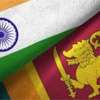
.jpg) The Tamil National Alliance (TNA) relies heavily on the government of India to push for a further power devolution arrangement in Sri Lanka, building upon the 13th Amendment to the Constitution. The TNA has been in constant touch with the leaders of the Congress who call the shots in New Delhi. Indian leaders including Prime Minister Dr. Manmohan Singh have repeatedly said that they would like to see a comprehensive implementation of the 13th Amendment.
The Tamil National Alliance (TNA) relies heavily on the government of India to push for a further power devolution arrangement in Sri Lanka, building upon the 13th Amendment to the Constitution. The TNA has been in constant touch with the leaders of the Congress who call the shots in New Delhi. Indian leaders including Prime Minister Dr. Manmohan Singh have repeatedly said that they would like to see a comprehensive implementation of the 13th Amendment.
As things stand now, the popularity of the Congress-led Indian government has shattered already. Its current term in office ends on May 22, 2014, and the Indian general election is likely in April.
Meanwhile, many Indian political analysts predict a change of regime as the Bharathiya Janatha Party (BJP), the principal opposition party, stands on a firm footing in Indian politics today.
.jpg)
TNA wooing BJP
Sensing this possible development in Indian politics, the Tamil National Alliance (TNA) leaders are wooing the BJP leaders ahead of the Indian general election.
As part of this effort, TNA leader R. Sampanthan went to Tamil Nadu last week and had talks with BJP regional leaders such as L. Ganeshan, the former chairman of the BJP committee in the state and its present chairman P. Radhakrishna along with a cross section of the party’s central committee.
Mr. Sampanthan then had a meeting with TNA senior leaders intending to update them on his discussions with BJP leaders in Tamil Nadu, soon after the inaugural session of Sri Lanka’s first Northern Provincial Council.
" Sensing this possible development in Indian politics, the Tamil National Alliance (TNA) leaders are wooing the BJP leaders ahead of the Indian general election "
Gearing towards devolution of power
At this meeting, Mr. Sampanthan stressed on the need to develop a better relationship with BJP leaders including Narendra Modi, the Chief Minister of Gujarat. It is interesting to note that Modi is lauded for the high economic growth in his state and is eying the prime minister portfolio.
Earlier, in April 2012, the TNA leader had met with Lok Sabha opposition leader Sushma Swaraj of the BJP during her visit to Sri Lanka.
As it appears the BJP has already stepped up its efforts to politically align with the Tamil parties in Tamil Nadu, and the moves by the TNA signals its concerted effort to lobby for further devolution through the NPC.
After shedding light on the meetings with BJP leaders, the TNA leaders discussed its position on the Commonwealth Head of Government Meeting (CHOGM). The TNA toughened its stand in this respect, and decided to boycott it due to what it termed ‘the failure on the part of the government to address the issues of human rights violations and to implement recommendations made by the Lessons Learnt and Reconciliation Commission (LLRC).
.jpg)
Wigneswaran sounds moderate
Despite the TNA’s no-show decision at the CHOGM, NPC Chief Minister C.V. Wigneswaran is likely to attend the event regardless of hardliners’ views.
Mr. Wigneswaran sounding moderate in his inaugural address to the NPC, stressed the fact that Tamil people have rejected separatism and are willing to have a political solution within a united Sri Lanka. He also urged the Sinhala people in the South to understand this fact.
He was forthright in his views that the military presence should be scaled down in the North; that the North should not be colonised with people who were never part of that area in the past.
However, his moderate views were shrouded by some others in his party, who used inflammatory language indirectly glorifying and romanticising the actions of the Liberation Tigers of Tamil Eelam (LTTE).
The TNA has been able to distinguish itself from the other provincial councils in the South in terms of carrying out its work in the Northern Provincial Council.
One such move that made a clear distinction was the assigning of all members of the Council with specific responsibilities, in addition to appointing the four ministers to the Council.
" He was forthright in his views that the military presence should be scaled down in the North "
Job seekers ‘inundate’ Sivajilingam
Among others, Councillor, M.K. Sivajilingam has been assigned with the task of reporting to the NPC on the issue of employment. Mr. Sivajilingam said he had received a torrent of telephone calls from young people seeking jobs, soon after the Tamil media reported of his assigned task.
“Many of them think that I am the member in charge of providing employment, so they call me and ask for jobs from me. In fact, my responsibility is to report to the NPC on employment related issues,” he told the Daily Mirror.
Mr. Sivajilingam was among the members who ranted and raged against the government. In the same vein, he was critical of India about its geo-political role in Sri Lanka. As a member of the Tamil Eelam Liberation Organization (TELO), a militant group that joined the democratic stream, he recalled how India had provided them with weapons to fight against the Sri Lanka Army.
“India gave us military aid after the advent of Tamil militancy. At that time, India assured us that the North and the East would remain merged forever by prevailing upon the government of Sri Lanka. However, Indian Prime Minister Rajiv Gandhi was killed some time after he had given that assurance,” he said. He after all said that India had never appeared for dividing Sri Lanka.
“They gave us weapons only for defensive purposes. On one occasion, they provided us with 25 AK Assault rifles. What can we do with 25 weapons? Can we attack an army camp with that? Once I remember I was on board a vessel carrying weapons to the coast of northern Sri Lanka from South India,” he said.
On another occasion, he said the TELO was supplied with 250 AK assault rifles in 1986.
Mr. Sivajilingam was refused entry to India on two occasions, once in December, 2009 and the other in April, 2010. He was deported on both the occasions.
.jpg)
Two orange juice, please!
Sabaragamuwa Chief Minister Mahipala Herath recently took a bag of oranges--grown in his own garden-- for President Mahinda Rajapaksa. The President took two oranges out of the bag right away and asked his aides to prepare two glasses of juice to be enjoyed by both.
The President drank it with great relish, and asked the Chief Minister to bring him about 200 plants of that orange variety. The President also asked the Chief Minister to introduce it to the entire country.
“There are youths who are interested in this type of cultivations. We have to encourage them,” the President said.
Mr. Herath later told about this experience to some people during a ploughing ceremony at a line of paddy fields in Tholangamuwa.
“I am doing an orange cultivation these days. I harvest around 200 oranges from a tree at once. A portion of the first harvest was gifted to the President by me. I gave him a detailed account of the bumper harvest I got from orange trees which are only one foot in height each. There are five or seven oranges in one cluster,” he said.
.jpg)
Vasu busy with language policy
National Languages and Social Integration Minister Vasudeva Nanayakkara assigned with the task of implementing the national trilingual policy is now planning to co-operate with the NPC Chief Minister. Fresh after a visit to South Africa, the Minister said the lack of Tamil speaking police officers was a matter of concern for him in the implementation of effective duties by the police.
“It is better to recruit Tamil nationals more and more to work at police stations in the North and the East. Police officers should be conversant enough to record statements from Tamil people and prepare reports for court proceedings. Also, sign boards are not available in all three languages at certain places,” the Minister said.
" It is better to recruit Tamil nationals more and more to work at police stations in the North and the East. Police officers should be conversant enough to record statements from Tamil people and prepare reports for court proceedings. "
Insights from Cape Town
Referring to the International Conference on Language and Development, he attended in Cape Town between October 15 and 17, he said only Sri Lanka and Ethiopia participated at a ministerial level. Most of others were academics and activists as well as representatives from non-governmental organisations.
“From Sri Lanka, four of us participated. Among them were two senior assistant secretaries, my secretary and myself. In the main discussions, there were several common themes. Later, when the meetings were organised as committees, the discussions were based on factual bases relevant to the conditions in the relevant countries. The discussions mainly revolved on how the languages could become contributory factors in socio-economic and environmental development. It was based more on the prevailing conditions in different countries in Africa and South Africa.
The benefit we had from those was the opportunity we got to assess those matters discussed, to our current situation in Sri Lanka. We also got an opportunity to present others how the Sri Lankan Language Policy affected the Social Integration Process. There was a Question and Answer session too. A representative from a German Organisation that assists our Ministry also accompanied us to the conference. During the main sessions, we had another opportunity to vexpress our views.
In that Conference the other major aspect discussed was the education. All the African nations have given more attention to Education and South Africa also has given education a very important place. Teacher Training and Curriculum Development and the improvements in teaching methods have been given more attention. In South Africa, Primary Education is free and the state provides text books and work-books free of charge,” he said.
Eran wants more than lip service
The Disaster Management Ministry held a parliamentary consultative committee meeting last week in Parliament. At the meeting, United National Party (UNP) MP Eran Wickramaratne said though the preparations were taken to respond to natural disasters, much more remain to be done to curb the man-made disasters.
The MP raised this matter in the backdrop of more than 200 residents of Penderikwatta,Puwakpitiya in the Avissawella area falling sick with respiratory difficulties after a chlorine pipeline blast this month, and 72 other persons developing the same problem due to a gas leak from a chemical factory in the Piliyandala area.
Man-made disasters claim the lives of many. Road accidents alone claim more than 2,000 lives a year. In most cases, those who had died or maimed were found to be bread-winners of families turning it to be a major social problem. It costs dearly on the annual health budget. Despite pious pronouncements from time to time by those in power, the dangerous trend has not yet been arrested. The number of deaths caused by road accidents is even more serious than the number killed due to the war at that time.