AI SUMMARY GENERATED ONLY FROM THIS ARTICLE'S TEXT.
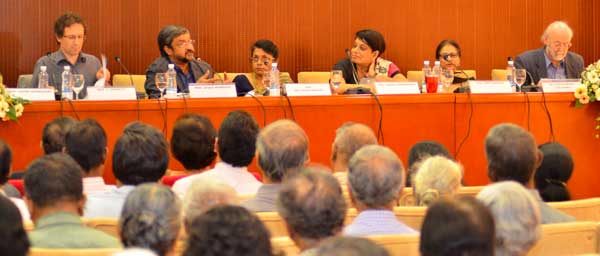
A colloquium organised by the Colombo-based South Asia Policy Research Institute discussed Religious Tolerance, Peaceful Co-existence, Secularism and Plural Societies in South Asia recently with the participation of four world renowned speakers and experts on the subject.
The speakers Asma Jilani Jahangir, the leading Pakistani lawyer and human rights activist, Professor Rajeev Bhargava, a noted Indian political theorist, Professor Radhika Coomaraswamy who was the UN’s Special Rapporteur on Violence Against Women and Dr. Christophe Jaffrelotl, a Paris-based French scholar who is a Director of The Centre for Educational Research and Innovation (CERI) affiliated to the Institute of Political Science - the prestigious Faculty of political Science of the University expressed their views on the subject in a lively discussion followed by a Q & A session.
The South Asia Policy and Research Institute [SAPRI] is Chaired by former President Mrs. Chandrika Kumaratunga. Produced below are excerpts from Professor Rajeev Bhargava’s and Professor Radhika Coomaraswamy’s speeches.
Religion and Politics
By Radhika Coomaraswamy
The dilemma posed by religion’s role in contemporary politics can be generally brought under the rubric of the problem of pluralism in the modern world. Pluralism- or the respect for diversity- along with caste, class and gender remains a major fault line of South Asia- the politics of which threatens to tear apart South Asian societies.
Pluralism is often coupled with the general need for tolerance. In this call for tolerance, respect for diversity is often in tension with the goals of the developmental state in South Asian societies. This developmental state relies heavily on the concept of national sovereignty and forces the centralisation of power that results in controlled governance and economic planning along the lines dictated by those who have assumed or grabbed office. To consolidate its political base, governments often use the developmental state to entrench the perception that the State should bear the homogenous marks of the majority community while the social reality on the ground presents a more plural, multi cultural and multiracial mosaic.
In this contw ext I must make clear that given my background in human rights, I have no hesitation in fighting this homogenizing impulse of the modern developmental state, preferring to advocate for the rights of minorities, their recognition in society and the creation of structures and laws that allow for the full celebration of a plural,multi religious, multicultural society where everyone has a stake in the nation state and where everyone feels equal ownership. As Director of the International Centre for Ethnic Studies for some time, I must admit that this was one of our goals.
However we must also in true honesty recognise that pluralism also poses its own dilemmas, which we cannot shy away from. There is increasingly an internal dynamism within minorities and social groups which is extremely problematic and which in turn poses issues of internal democracy and internal human rights- often related to women’s rights and the rights of minorities within the group. The decision by many women’s groups to postpone the struggle for an Uniform Civil Code in India, which had the aspiration of giving equality to all women regardless of community, points to the fact that we may not be able to fully resolve the latter i.e. internal democracy and human rights within minority groups until we resolve the former, the creation and acceptance of the structures of pluralism at the national level and within society at large. We notice, as the Indian feminists found in India, that the struggle for internal human rights within minority groups is often hijacked by the forces of majoritarianism that are opposed to the creation of a State that acknowledges the multicultural and plural nature of society. Extreme Hindu nationalists took up the call of the Uniform Civil Code not because of any sympathy for women but to bludgeon Muslim identity. This then poses one of the most serious strategic dilemmas to the achievement of pluralism in South Asia- how to recognize minority rights while also fighting for women’s rights and individual and group rights within religious communities.
Religious majoritarianism
In discussing religion and politics I think it is important to see the crucial difference between a religion that is a majority religion with some form of state patronage or a minority religion within a country. Religious majoritarianism, as we have seen in South Asia, if backed by state power can be a terrifying phenomenon. The violence of the 1980s and 1990s are all examples of what can happen in these situations. These were not the spontaneous riots of early eras but what Asis Nandy calls “manufactured riots” or “assembly line violence”. Even today all over South Asia we see militant religious organisations of the majority community walking around with legal impunity with shadow links to the state. This combination of majority intimidation and coercive state power leaves minority individuals powerless and vulnerable. Next to terrorism it is the worst form of excess in South Asia.
The one good side of religious majoritariansim is that if the State wants to progressively reform religion, it has the confidence and the political backing to do so. Under Nehru’s guidance, and even in states like Tamil Nadu after the influence of thinkers like Periyar, the Indian state brought in ordinances to abolish untouchability and caste discrimination, to strengthen anti Sati laws, to force temple entry to the Dalit community, to change the personal law system of the Hindus to allow for, among other things, women to be treated equally, as well as the abolition of animal and bird sacrifices. Meanwhile in Sri Lanka the State is hesitant to intervene to change the personal laws of the Tamil community to give women equal rights or to stop the animal sacrifices in places like Munneswaram. If the state does intervene, given the present politics and the heightened sensitivity, even some progressive members of the Tamil community would likely see it as a sign of double standards, persecution and outside interference.
Religion and politics:
the future
One of Sri Lanka’s scholars Ananda Abeyesekere writing about ethnic and religious conflicts in South Asia suggests that we should think of the term “Aporias”- situations that have no clear resolution in the near future because of a situation of what is called “permanent provocation”. Though we do not really want to accept it perhaps our differences, prejudices and hatreds do run very deep. Alberuni writing at the time of the first Muslim incursion into India honestly describes the strong prejudices of the people even at that time. Madan and Nandy may be right that there was and perhaps is peaceful everyday life co-existence and tolerance among religions and communities but we have seen on many occasions how any direct appeal to prejudices and fear can completely disrupt that everyday tolerance and lead to devastating consequences. I think we have to accept the fact that our prejudices are strong, they are “permanent provocations” even though they co-exist with everyday tolerance and even everyday friendship. The balance between co-existence and provocation can easily be disrupted, resulting in violence and brutality. We will be fooling ourselves to believe that the inherent good sense of the villager or citizen will always prevail. We know from history that it often does not.
If we accept Abeyesekere’s notion of “permanent provocation”, co-existing with a culture of tolerance, then what are the politics and institutional arrangements that must emerge to deal with these antagonisms? Well it has long been said by scholars that ethnic and religious conflicts cannot be solved, they can only be managed. What we then need is a mechanism for conflict resolution among religious groups especially at the community level. This is absolutely essential not only as part of post-war reconciliation but to prevent violence from breaking out at every provocation. Such conflict resolution mechanisms could be written into the law and the State may be proactive in facilitating the process. In Sri Lanka where there is now religious tension in the South this may be a way forward. A procedural device for conflict resolution is all that we need. Beyond that I would not suggest any other institution or law that would bring religion into public life or politics.
Management of conflict in terms of conflict resolution is a technical stop gap- if we want to make the so-called “permanent provocation” less permanent all communities have to move in the direction of what Abeyesekere calls “uninheriting” some aspects of their past, including their religious past- especially those aspects that deal with intolerance, exclusivity and hatred. This can be done only with the tools that Benedict Anderson has often talked about, the tools of education, media and social networks. Of course this is a long process that may take decades and may have to be accompanied by necessary changes in the political economy. This task of “uninheriting” should be lead by the State but even if it does not take up the role, the task falls on all of us in academia, civil society as well as politicians and the ordinary citizen to do what is needed. All of us must accept that responsibility.
Secularism after Western Hegemony
By Rajeev Bhargava
Secular states and the doctrine underpinning them have come under strain elsewhere. Secularism was severely jolted with the establishment in Iran of the first modern theocracy, rejected partly because of the perception that it was a Western idea. By the late 1980s similar Islamic political movements had emerged in Egypt, Sudan, Algeria, Tunisia, Ethiopia, Nigeria, Chad, Senegal, Turkey, Afghanistan, Pakistan, and even Bangladesh Movements challenging secular states were hardly restricted to Muslim societies. Protestant movements decrying secularism emerged in Kenya, Guatemala, and the Philippines. Protestant fundamentalism became a force in American politics. Singhalese Buddhist nationalists in Sri Lanka, practitioners of religious ultra-orthodoxy in Israel, and diasporic communities in Canada and Britain all began to question the separation of state and religion.
The hegemonic western conceptions of political secularism do not appear to have travelled all that well in other societies. What is surprising is that such conceptions and the secular states they underpin are coming under strain even in Europe, where, until recently, they were believed to be firmly entrenched and secure. Why so? It is true that the substantive secularisation of European societies has brought about the extensive secularisation of European states; regardless of their religious affiliation, citizens have a large basket of civil and political rights unheard of in religion-centred states, past or present. Nevertheless, two problems remain.
First, migration from former colonies and intensified globalisation have thrown together in Western public spaces Christian, Islamic, and pre-Christian faiths such as Hinduism. The cumulative result is unprecedented religious diversity, the weakening of the public monopoly of single religions, and the generation of mutual suspicion, distrust, hostility, and conflict. This is evident in Germany and Britain but was dramatically highlighted by the headscarf issue in France, the Cartoon affair in Denmark and the murder of filmmaker Theo Van Gogh in the Netherlands shortly after the release of his controversial film about Islamic culture.
Second, despite substantial secularisation, in some European states inequities resulting from the formal establishment of the dominant religion have done little to bolster better intercommunity relations or to reduce religious discrimination. With the deepening of religious diversity, the religious biases of European states have become increasingly visible. European states have continued to privilege Christianity in one form or another. They have publicly funded religious schools, maintained clerical salaries and real estate holdings of Christian churches, facilitated the control by churches of cemeteries, and trained the clergy. In short, there has been no impartiality within the domain of religion, and despite formal “equality” this privileging of Christianity continues to have a far-reaching impact on the rest of society (Klausen 2005). Even the widespread belief regarding the existence of a secular European public sphere is based largely on a myth. As a result, the formal or informal establishment of a single religion, even the weaker variety of establishment, continues to be part of the problem.
In these circumstances, as societies become religiously diverse or recognise it in their midst, the world has much to learn from these conceptions of secularism that are emerging from the shadow of the previously hegemonic models. My principal objective here is to draw attention to the point that political theorists do not see the normative potential in the secular practices of these different states because they are obsessed with the normativity of the mainstream, hegemonic model of western secularism. Western states need to improve their understanding of their own secular practices, just as Western secularism needs a better theoretical self-understanding. Rather than get stuck on models they developed at a particular time in their history, they would do well to more carefully examine the normative potential in their own political practices.
Comments - 0
Comments - A path to Peaceful Co-existence Secularism and Plural Societies in South Asia
222
Add comment
Comments will be edited (grammar, spelling and slang) and authorized at the discretion of Daily Mirror online. The website also has the right not to publish selected comments.



_DM-9(7).jpg) governance and economic planning along the lines dictated by those who have assumed or grabbed office. To consolidate its political base, governments often use the developmental state to entrench the perception that the State should bear the homogenous marks of the majority community while the social reality on the ground presents a more plural, multi cultural and multiracial mosaic.
governance and economic planning along the lines dictated by those who have assumed or grabbed office. To consolidate its political base, governments often use the developmental state to entrench the perception that the State should bear the homogenous marks of the majority community while the social reality on the ground presents a more plural, multi cultural and multiracial mosaic.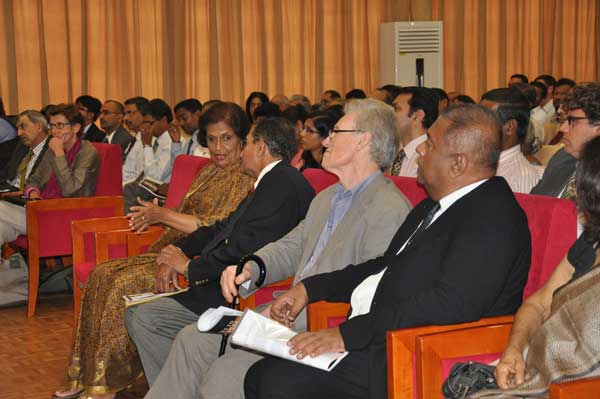
_DM-99.jpg) restricted to Muslim societies. Protestant movements decrying secularism emerged in Kenya, Guatemala, and the Philippines. Protestant fundamentalism became a force in American politics. Singhalese Buddhist nationalists in Sri Lanka, practitioners of religious ultra-orthodoxy in Israel, and diasporic communities in Canada and Britain all began to question the separation of state and religion.
restricted to Muslim societies. Protestant movements decrying secularism emerged in Kenya, Guatemala, and the Philippines. Protestant fundamentalism became a force in American politics. Singhalese Buddhist nationalists in Sri Lanka, practitioners of religious ultra-orthodoxy in Israel, and diasporic communities in Canada and Britain all began to question the separation of state and religion.