Reply To:
Name - Reply Comment
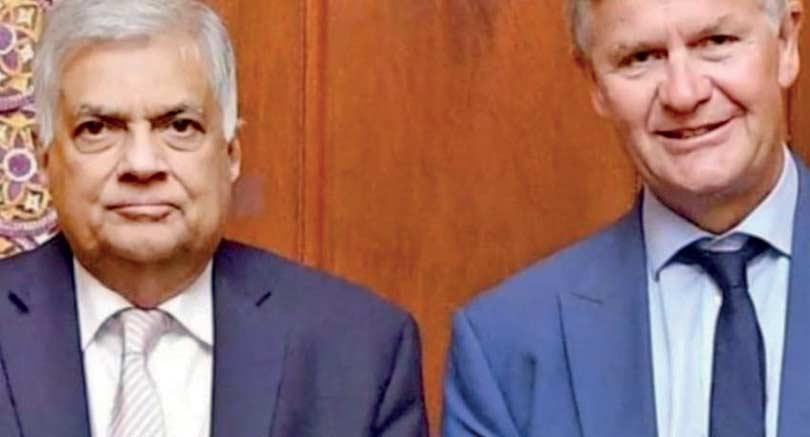
Then Prime Minister Ranil Wickremasinghe and Norwegian negotiator Eric Solheim saw the peace plan an urgent need of the hour
 However, beneath the disunity in the South, there was a greater dysfunction. Sri Lanka lacked a coherent peace strategy, regardless of which party was in power
If there is a lesson to learn from the Sri Lankan peace process, no matter how politically unpalatable, it is that a negotiated settlement between a government and a maximalist non-state actor is a non-starter
 My colleague Kelum Bandara’s interview on Tuesday in the Daily Mirror with Erik Solheim, the Norwegian peace envoy, stirred my memories of the peace process.
Then, as a young journalist, I covered the peace process from its outset, from Ranil Wickremesinghe’s signing of a ceasefire agreement during an impromptu visit to Vavuniya, to the brutal conclusion of the war in Vella Mullivaikall, eight years later.
The answers I sought in the interview were why the peace process failed.
All in all, Mr Solheim had not given a conclusive answer; perhaps because there is no clear-cut answer itself. That might also be because Mr Solheim himself was so taken up by the early prospect of peace, as most of us had been then, that he lost touch with reality. My editors in those days dismissed my reports as being overly peacenik. Much later, during the height of war, I had to fight running battles with the management of my former newspaper for calling the LTTE guerrillas instead of terrorists in my defence column.
Today, I view the world with brutal honesty for what it is, rather than our preferred outcome of what it could become. That makes me think the peace process was doomed from the beginning. And it also tells me, if it ever succeeded, which could only have been possible within the extremely inflammable parity of status between the government and the LTTE that existed, it would have produced a grim status quo which would continue to haunt this country. I would explain later in this article what such a solution would have looked like.
Mr Solheim had apportioned blame equally to the government and the LTTE for failing the peace process: The ‘lack of cooperation’ between the main political parties in the South, and Prabakaran’s maximalist mindset.
Both these factors negatively impacted the peace process, leading to its demise. The LTTE was a maximalist terrorist group, which mirrored the maximalist calculations of Prabakaran, who had cemented his personality cult, not just through hunting down his rivals, but also through a string of military victories. The LTTE withstood the fourth largest army in the world, the IPKF, annihilated rival Tamil militant groups, compelled the democratic Tamil political leadership to accept it as the sole representative of the Tamils, and developed the capabilities of a quasi-conventional army, inflicting heavy casualties on the Sri Lankan military.
The political disunity in the South is often cited as the main obstacle to the failure to find a solution to the Tamil grievance. That might be true of the early period, when the political opposition scuttled S.W.R.D. Bandaranaike’s overture to the Northern Tamil elites and, much later, the SLFP followed suit when it was in the opposition.
Many observers have sought to apply the same template to explain the failure of the peace process from 2001 onwards. That, at best, is naïve, and worst, hypocritical, though I, just out of university, shared the same misgivings when covering the peace process. But many mature and worldly literati and the bureaucracy thought the same way might betray a conspicuous lack of commonsense in the government ranks and perhaps among the peace mediators.
In hindsight, the intransigent political opposition, regardless of their vested interests, had served as a necessary check and balance in the peace process.
Here is why. The status quo between the LTTE and the government at the time was near parity, determined on the battlefield when the LTTE prevailed over the military. The combination of Prabakaran’s maximalist posture and the LTTE’s parity of status meant that any common ground between the government and the LTTE would have required unaffordable and unsustainable compromises by the Sri Lankan government.
In the end, the peace process collapsed -- in part because the government and opposition in the South failed to agree on the extent of compromise that the Sri Lankan state would be prepared to make in exchange for peace. And those were not mere compromises; they amounted to redefining the contours of the state.
However, beneath the disunity in the South, there was a greater dysfunction. Sri Lanka lacked a coherent peace strategy, regardless of which party was in power. As always, since the days of President Premadasa, peace negotiations have been meant to provide a fleeting respite from war. They lacked a coherent idea of where they would lead. In fact, this indecisiveness mimicked the war strategy itself, which was bereft of an overall national strategy.
Nearly twenty thousand soldiers perished during Chandrika Kumararunga’s first term, leading to military debacle after debacle and ending with the LTTE at the gates of Jaffna, following the fall of the Elephant Pass garrison.
The peace process became an escape from that war fatigue. A fleeting respite until it lasted, though no government planned for its eventual collapse.
An interval from war
Also, the ceasefire agreement was never the absence of killings; rather, it offered a respite from major battlefield violence. From the outset of the ceasefire agreement, the LTTE killed military intelligence operatives, rival Tamil political actors, and assassinated Lakshman Kadirgamar. The government tolerated these repeated violations because, despite its imperfections, the peace process had provided an interval from war. However, such arrangements proved to be temporary.
If there is a lesson to learn from the Sri Lankan peace process, no matter how politically unpalatable, it is that a negotiated settlement between a government and a maximalist non-state actor is a non-starter. The solution would only emerge from one party prevailing over the other on the battlefield, be it Gaza, Chechnya, Tigray, or Sri Lanka. That a non-state actor could reach near-military parity, as in our case, was even worse and a testament to a generation of incompetent political leadership in the country.
Imaginewhat a settlement would look like if the peace process were successful. Note that the solution would be built on the parity of status between the government and the LTTE.
In the most likely scenario, the solution would entail a loose confederation with two armies, a weak central government, and the prospect of unilateral declaration of independence.
I cannot find a clear-cut international example. Still, Ethiopia, as it stands now, is founded on its ethnic federalism with a weak centre and each peripheral state owning its own militia, and it is as close as it could get. That country is now a bloodfest as each ethnic group jostles for power and resources, killing each other. A separatist struggle by Tigrayans, who ruled the roost until power transferred to Abiy Ahmed, killed nearly half a million without making international headlines during the height of COVID.
When the centre is deliberately weakened to appease regional interests, it provides an incentive for further fragmentation. Sri Lanka might have ended not just with a confederate state of Tamil Eelam in the North, but also an Islamic State in the East.
State of fragmentation
In this jumble of state fragmentation, whether the Tamils have their political aspirations fulfilled is a secondary concern. But I doubt they would. Historical examples of armed resistance groups in power are not impressive, not even when guided by less megalomaniacal leaders. However, for a group akin to the LTTE, the state it would reign over would resemble Eritrea, which broke away from Ethiopia at the collapse of the Derg Marxist junta. Another example would be South Sudan, the world’s youngest state, which lives in an eternal bloodfest.
None sounds like an alluring solution.
In retrospect, the failure of the peace process was destined from the very outset. The parity of status -- probably with or without the LTTE’s maximalist posture -- made a compromise unlikely.
If peace were to come, the military parity had to be altered on the battle front, which the Sri Lankan forces achieved within barely two and a half years after they revamped the military doctrine, and the government itself adopted the complete military defeat of the LTTE as its overall military strategy. That the Rajapaksa administration failed to follow up the military victory with a political solution continues to haunt the country to this day.
The peace that emerged from the military annihilation of the LTTE might be imperfect. Still, its alternative, a peace settlement that could have emerged from the peace process, would have been worse and trapped the country in never-ending ethnic warfare.
Follow @RangaJayasuriya on X