Reply To:
Name - Reply Comment
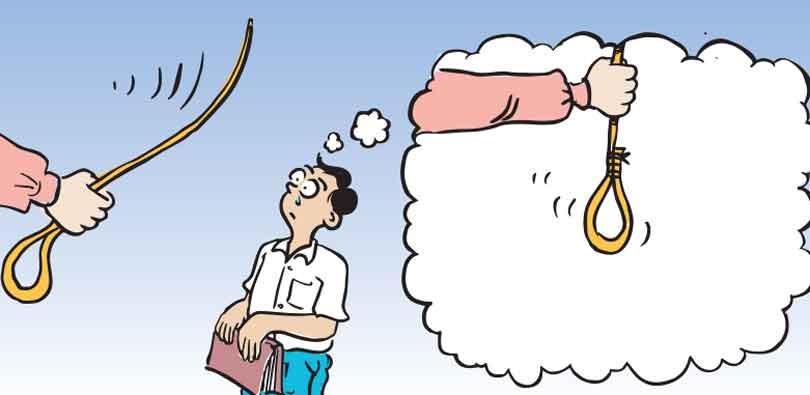
There is much debate taking place about the presence of corporal punishment and the laws being amended to stop children from being physically abused in the name of instilling discipline.
Even a few months ago (last August), a female student in Grade 10 died under tragic circumstances due to being physically abused by her teacher. The reason for being punished was due to being late for school.
Now these incidents are being reported despite a Supreme Court ruling given in 2021, banning corporal punishment in schools. To add to this, in 2024, the Cabinet approved a penal code amendment, banning all forms of corporal punishment on children. This was done while aligning with the UN Convention on the ‘Rights of the Child’.
Physical abuse of children, while inside school, cannot be accepted; especially in a civilised society. Today the world has evolved in education and we are presented with the outcome of research and study material done on human behaviour. It’s not that the ‘old hand that spanks’ doesn’t work, but there are more productive and civilised methods to discipline a child.
The problem occurs when these civilised methods of disciplining a child don’t work and the student has to be suspended from school to drive in a message to the student. Psychologists are quick to dismiss the system of ‘using physical punishment’ to instil discipline and term it as a myth. Then, in turn, using modern psychological methods that don’t produce results can also be termed myths. The argument goes both ways. There are times when ‘law’ breaking students don’t respond to kind words.
Offering rewards and making troublesome children undertake tasks that enhance self-worth does produce results. Even during the good old days, there were occasions when the most badly behaving and aggressive student was picked by the teacher and made class monitor. On most occasions than not, this method produced results. The end result of that exercise was the child making a complete U-turn in his behaviour and even qualifying to undertake more responsibilities in the future; becoming a college senior prefect.
The modern ways of disciplining a child are harped upon. Then again we do notice children belonging to the present era being more introvert and self-centered. Gone are the days when children readily came running to the teacher whether inside the school or outside the academic institution to greet teachers; both working and retired. The modern ways of bringing up children have made students mechanical.
Recently, the Daily Mirror carried an article regarding corporal punishment. It was to coincide with ‘International Day to End Corporal Punishment’, which fell on April 30. There was one quotable quote from a parent reproduced in that article. It read, “I was hit and I turned out to be fine”. These words echo in the mind of this writer. In fact I love these words. May be the old system of hitting a child was followed by a period of the elder or teacher being stern with the child. What dilutes results or the intended purpose is when the teacher/parent who punishes the child attempts to pacify the crying child with an ice cream or toffee. Punishment must stand as a punishment, whether it’s done in a brutal or civilised manner.
There were days when teachers-especially the math teacher—punished us when we got our sums wrong. The same could be said about the science teacher too, when efforts were channeled towards preparing students for examinations. Renowned Biology teacher, Dinesh Muthugula offers a point to ponder via one of his YouTube videos to successful students who have passed their GCE O Level Examination. He tells successful students who have registered for GCE A-Level Biology tuition classes to remind themselves about one thing and that is “I can make a mistake”. Then what is this story about the science and mathematics teachers spanking us when we make mistakes in the answer scripts?
Parents and teachers must use healthy motivational talk and the old method of giving the occasional ‘knock on the head’ when dealing with students. But whatever they do, they must do it in a way that the child moves forward and doesn’t stumble.