 MOHAMED AYUB
 Reply To:
Name - Reply Comment
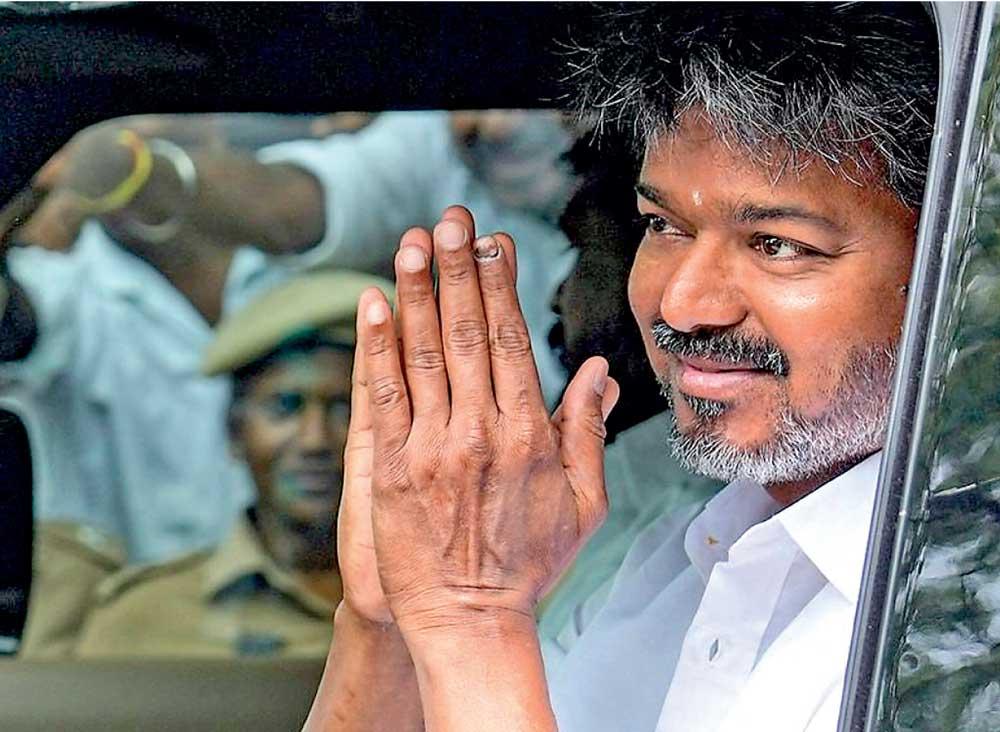
Vijay formed his party Tamilaga Vettri Kazhagam (TVK) in 2024
There was a time when the State assembly election in Tamil Nadu drew much enthusiasm from the Sri Lankan people as politics of the State held a profound and consistent bearing on the of its southern neighbour while the latter was engaged in a bitter war with the separatist Tamil armed group, the Liberation Tigers of Tamil Eelam (LTTE).
Tamil Nadu leaders such as Muthuvel Karunanidhi of the Dravida Munnetra Kazhagam (DMK) and Jeyalalithaa Jeyaram of All India Anna Dravida Munnetra Kazhagam (AIADMK) alternately pressurised the Central Government in New Delhi to pressurise the Sri Lankan Government in turn to grant concessions to the separatists, primarily to gain political mileage back at home.
Yet, the State elections in Tamil Nadu this time failed to resonate much with the people in Sri Lanka as political developments in India in general and those in Tamil Nadu in particular has lost its bearing on the island, after the end of the war in Sri Lanka in 2009. If not for the collapse of the Dravidian parties after monopolizing the states politics for about 60 years and another superstar in the Kolliwood cinema having emerged victorious unexpectedly, Tamil Nadu election results released on May 4 would have been limited to an inside news item in many Sri Lankan newspapers.
The 2026 Assembly elections were held in four states, Assam, Kerala, Tamil Nadu, and West Bengal, along with the Union Territory of Puducherry. Polling in the Union Territory, Kerala, and Assam took place on April 9, while West Bengal voted in two phases on April 23 and April 29. Voting in Tamil Nadu was held in a single phase on April 23. The results of all these elections were released on Monday.
Despite the results having not evoked interests in Sri Lanka in terms of geopolitical dynamics, they did so at least among the politically conscious people in the island with drastic changes in the political landscapes in at least three states, Tamil Nadu, Kerala and West Bengal. In all three States the anti-incumbency trend was vividly evident and has changed the political trajectory of those States.
Kerala which produced the world’s first democratically elected communist leader in 1957 this time saw the end of rule by the communists both Communist Party of India (CPI) and the Communist Party of India (Marxist). It also became the last state in India where communists were in power since 1977. Influence by Kerala’s communist leaders, especially the State’s first communist chief Minister E.M.S. Namboodripad played an important role in shaping the initial political ideology of Sri Lanka’s Janatha Vimukthi Peramuna (JVP) in 1960s. Kerala became the first Indian State to declare hundred percent literacy rate under communist rule in early 1990s. Yet, the Congress-led UDF on Monday stormed back to power.
West Bengal, another leftist Bastian from 1977 to 2011 and gave way to Mamata Banerjee’s Trinamool Congress which administered the State until Monday without a break in three assembly tenures. The State with leftist ideologies succumbed to the Hindutva nationalism/racism of the Barathiya Janatha Party (BJP) led by Prime Minister Narendra Modi this time. Now, the BJP runs 22 out of 28 states and Union Territories in India.
In Tamil Nadu election results, two factors are worth to be reckoned with. One is the collapse of the six-decade long political duopoly of Dravidian parties, the Dravida Munnetra Kazhagam (DMK) and the All India Anna Dravida Munnetra Kazhagam (AIADMK), except for (three years long) three presidents’ rules in the State. The other one is the continuation of the rule of giants of Tamil Cinema, despite the fall of two DMKs the leaders of which have been largely involved in film industry.
From C.N. Annadurai who was first assumed Chief Minister’s office in January 1969, almost all chief ministers of Tamil Nadu and the current Chief Minister elect Joseph Vijai Chandrasekhar have played a significant role in the Tamil cinema industry or sponsored by such people. There were two chief ministers who were not directly involved in the film industry, but were brought to the lime light by former Chief Minister Jayalalithaa Jayaram who was often described as a “Queen of Tamil Cinema.”
Actor-turned politician Joseph Vijay has stunned everyone with his Tamilaga Vettri Kazhagam (TVK) emerging as the single largest party in the State, pushing the two Dravidian majors to a distant second and third. However, TVK has managed to win only 108 out of 234 seats in the state assembly. whereas any party or alliance must have a strength of 118 seats to form the government.
Hence, the TVK that went to the polls without an alliance, has been compelled now to depend on the support from smaller parties in the DMK-led Secular Progressive Alliance or the AIADMK-led National Democratic Alliance to form the government. Another option is to form a government with some party/parties supporting it from outside, meaning without sharing Cabinet portfolios.
One of the two major parties in the Opposition supporting Vijay from outside means ‘tail wagging the dog.’ Also, the party that comes to provide lifeline might any time pull the rug out from under the inexperienced movie star’s feet. The governments of Prime Ministers V.P.Singh, Chandrasekar, Atal Bihari Vajpayee (twice), Deve Gauda and Inder Kumar Gujral being toppled by their own outside supporters between 1989 and 1999 are best cases in point for the vulnerability of such hung governments.
Although many in Sri Lanka express fear about Vijay’s pro-LTTE stance and his campaign rhetoric on fishing controversy in the seas between India and Sri Lanka, practicality of such rhetoric would be a far cry from realpolitik. Firstly, the LTTE and its armed struggle against the Sri Lankan Government are things of the past. Secondly, geopolitics in the region as well as in the world has so drastically changed that India seems to be no longer much concerned about the Indo-Sri Lanka Accord but seeking more partnership with its southern neighbour, with the increasing growth of its economic interests in the island.
Thirdly, with conflicts growing between the Tamil Nadu leaders and the Tamil people in Sri Lanka’s Northern Province over poaching and destruction of marine resources by Tamil Nadu fishermen in Sri Lankan waters, it would be difficult for Vijay’s new administration to justify his pro-LTTE rhetoric in the name of the same Sri Lankan Tamils. Fourthly, with around 40% of India-Sri Lanka trade flowing through Tamil Nadu, according to India’s EXIM Bank, the Modi’s BJP which has almost been routed from Tamil Nadu has no longer anything to lose in the State by ignoring rhetoric that might run counter to the country’s strategic interests.