Reply To:
Name - Reply Comment
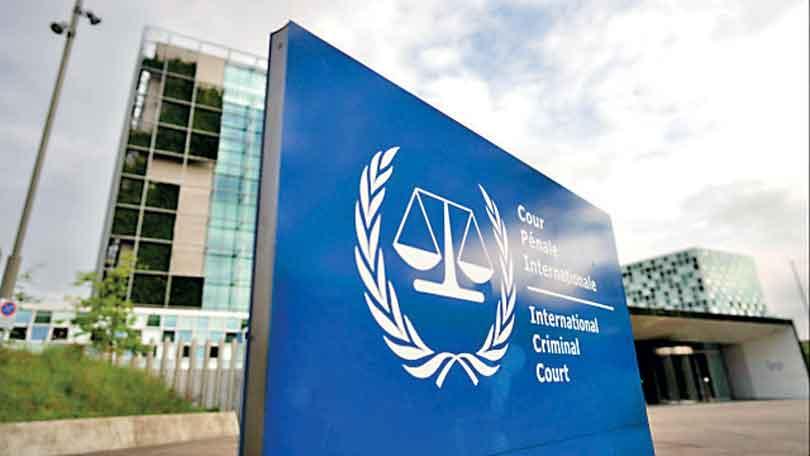
The US has intensified its campaign against the International Criminal Court
 If the decline of US military power is disputed, what is indisputable is its moral decline. Many may have reacted shockingly after US Secretary of State Marco Rubio’s declaration of war against the International Criminal Court (ICC). But there is very little to be shocked about. Indeed, since the end of World War II, the US has not been known to pursue a foreign policy grounded in high moral principles.
The ICC was established in 2002 to prevent crimes against humanity and punish perpetrators, but in a lengthy op‑ed in the Wall Street Journal on Monday, Rubio argued that the global court interferes with US military and law enforcement operations, jeopardising American sovereignty, and therefore should be dismantled.
The US is not a signatory to the Rome Statute that established the ICC, just as it is not a signatory to numerous international instruments designed to bring about a fair and just world order.
Declaring war against the ICC effectively means opposing its objectives, such as preventing genocide and other grave war crimes. The court’s foundation lies in the global shame and failure to prevent the Holocaust during WWII, the Cambodian killing fields in the 1970s, and the Rwandan and Bosnian genocides in the 1990s. Unlike the ad hoc Nuremberg tribunal and the courts set up to hear the Rwandan and Bosnian cases, the ICC — more like a global policeman and judiciary — is empowered to investigate, issue arrest warrants, conduct trials, and punish the guilty without fear or favour.
The ICC drew criticism, however, when it was seen pursuing war crimes suspects in less powerful countries while avoiding big‑league criminals shielded by the West. In March 2023, it quickly issued an arrest warrant for Russian President Vladimir Putin but was painstakingly slow to act against Israeli leaders when the Gaza genocide unfolded later that same year. The crime Putin is accused of — unlawfully deporting and transferring Ukrainian children from occupied territories to Russia — pales in comparison to Israel’s massacre of children and civilians in the Gaza Strip.
The US hailed the ICC in the Putin matter, but when the court began investigating Israel, Washington was galvanised into launching a campaign to discredit and dismantle the tribunal.
In his op‑ed, Rubio invoked images of US border patrol agents and elected leaders “dragged before an international court” to be tried by foreign judges. The exaggeration is unwarranted when the ICC lacks jurisdiction to investigate crimes committed in states that are not party to the Rome Statute. Neither the US nor Israel has ratified the statute; nor has the Court opened investigations into excesses by US Immigration and Customs Enforcement (ICE) officers on American soil.
The ICC began probes into US and Israeli conduct since Afghanistan and Palestine were parties to the Rome Statute. Last year, Trump issued an executive order declaring a “national emergency” after he slammed the ICC for what he called “illegitimate and baseless actions targeting America and our close ally Israel”. He then imposed a raft of sanctions on court officials, including Chief Prosecutor Karim Khan and six judges.
Moreover, the US views the Rome Statute’s 2010 Kampala Amendments as a threat to its foreign policy, particularly in view of its action in Venezuela and Iran. The amendments stipulate that “the planning, preparation, initiation or execution, by a person in a position effectively to exercise control over or direct the political or military action of a state, of an act of aggression which, by its character, gravity and scale, constitutes a manifest violation of the Charter of the United Nations.”
Only criminals dream of a world without police, courts, and prisons. Accordingly, only a war criminal — or one who intends to commit war crimes — prefers a world without the ICC.
According to CNN, the US State Department’s plan to “dismantle” the ICC will involve pressuring other nations to abandon the Court. Indeed, this marks a moral low in US foreign policy and a blow to efforts at building a rules‑based world order.
Whatever little respect Washington shows for a rules‑based order is power‑driven. The US often accuses rivals of flouting international law in an attempt to mask its own disregard for that order. US policymakers often treat morality as a commodity or political currency.
Matters worsened under Donald Trump, particularly in his second term. Trump believes he can deceive the world into seeing him as a par excellence peacemaker, but those who praise his “peace efforts” do so only to massage his ego.
Among them was Pakistan’s military strongman Asim Munir, who, during a White House visit last year, declared Pakistan would nominate Trump for the Nobel Peace Prize — ignoring, appallingly, the Trump administration’s complicity in Israel’s genocide in Gaza. No wonder, in Trump’s reckoning, Pakistan outranks rival India, which mistakenly thought it held the advantage as a bulwark against China in the Indo-Pacific and as a member of the Quad — the quadrilateral security arrangement with the US, Japan, and Australia.
Then there was Venezuelan opposition figure María Corina Machado, who presented her Nobel Peace Prize medallion to Trump as a gesture of gratitude for his role in ousting Nicolás Maduro.
Trump relishes the kind of praise Munir and Machado heap on him. That this is a serious symptom of narcissistic personality disorder is lost on his voter base, most of whom remain credulous. The fanatics among them even believe Trump was sent by God to bring peace to the world. My foot. Little do they know their president is the butt of jokes among political commentators.
But behind the humour lies horror: the call to dismantle the ICC, the ongoing illegal war against Iran, complicity in the Gaza genocide, violations of Venezuela’s sovereignty, and the blockade on Cuba that prevents the communist nation from receiving essential fuel — a denial that has led to deaths and hardships on an unprecedented scale.
Trump’s policy is live and let die — not live and let live, as morality demands. In the 1950s, George Kennan, a US diplomat in charge of training, advised ambassador‑designates to remember a cardinal rule in US foreign policy. He told them: “We have about 50 per cent of the world’s wealth, but only 6.3 per cent of its population…. Our real task in the coming period is to devise a pattern of relationships which will permit us to maintain this position of disparity…”
Under Trump, Kennan’s advice has been taken to extremes.
In a further blow to morality, the call for a fair distribution of resources is viewed as political treason in the US. Vilifying socialism and progressive ideas is part of the task on behalf of the billionaire club. A case in point is his sudden tirade against a non‑existent communism he claims to see in Democratic Party progressives and in the growing support for Palestine among US youth.
Eliminating the ICC won’t be easy. The rest of the West that backs the Court is unlikely to endorse Rubio’s and Trump’s vision for an anarchic world. After the war on the ICC, will the Trump‑Rubio combine call for abolishing the International Court of Justice and dismantling the United Nations system?