
Reply To:
Name - Reply Comment
 In the history of Sri Lankan democracy, few leaders have ascended with a mandate as mathematically absolute as President Anura Kumara Dissanayake. With a two-thirds “super-majority” in Parliament, the Executive and Legislative branches are, for the first time in decades, a singular engine of potential change. Yet, in early 2026, the administration finds itself in a paradoxical chokehold: it possesses the power to pass any law, but lacks the political space to maneuver.
The “space to maneuver” in politics is defined not by seats in a chamber, but by the trust of the street. As 2026 unfolds, that trust is fraying under the weight of three specific pressures: the “Governance Gap” of an untested parliament, the “Gravity of Debt” in a post-default economy, and the “Credibility Crisis” stemming from allegations of internal corruption.
|
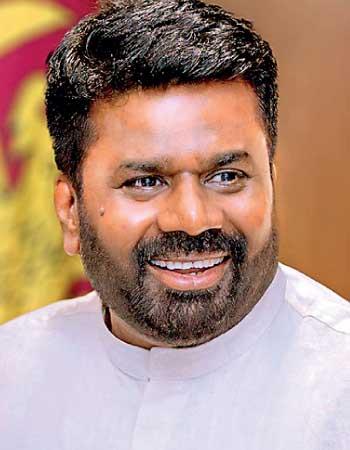
Anura Kumara Dissanayake |
|
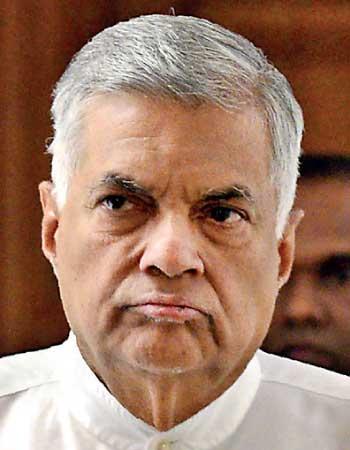
Ranil Wickremesinghe |
The Governance Gap: The Weight of the Inexperienced
The landslide victory of the NPP/JVP brought a wave of over 150 new faces into Parliament. While the public voted for a “system change,” they did not necessarily vote for a “learning curve.”
The Problem: Many new MPs lack the technical expertise to navigate the complex machinery of the state. This has led to a reliance on the existing bureaucracy—the very “system” they were elected to dismantle.
The Result: Legislative output is slow, and policy implementation is often clumsy, making the government appear stalled despite its massive majority.
The Center of Gravity: Economic Realities vs. Over-Promises
The President’s campaign was built on a foundation of high aspirations: lower taxes, reduced utility bills, and expanded social safety nets. However, the “economic center of gravity” is unforgiving.
The IMF Reality: Sri Lanka remains tethered to IMF structural adjustments. The President’s inability to drastically reduce the cost of living while maintaining fiscal discipline has led to a cooling of public fervor.
The Fade: Every day that electricity bills remain high and the rupee fluctuates, the “limitless” support of the public shrinks, effectively narrowing the President’s room to take bold, controversial risks.
The Litmus Test: The “Selective Justice” Trap
Nothing erodes a revolutionary mandate faster than the perception of hypocrisy. While the government has been praised for its crackdown on the “old guard”—including the landmark arrest of former President Ranil Wickremesinghe in late 2025—it is now facing its own “mega-level” corruption allegations.
The Norochcholai Coal Scam (2026): Allegations have surfaced that the government imported substandard coal with calorific values well below the 5,900 kcal/kg standard. Reports suggest shipments were “mixed” with high-quality coal to hide the fraud, leading to potential machinery damage and higher electricity tariffs for the public.
The 323 Containers Scandal: The illegal release of “red-flagged” containers from the Colombo Port without physical inspection remains a gaping wound in the government’s credibility. Despite a Presidential committee finding the release “illegal,” the lack of prosecution against current officials has fueled claims of a cover-up.
A significant structural challenge lies within the hallowed halls of Parliament itself. The landslide victory brought in a wave of fresh faces—first-time parliamentarians. While this “clean break” from the old guard was a primary selling point for the electorate, it has created a functional vacuum.
Governance is not merely about voting “aye” or “nay” it requires an intricate understanding of parliamentary procedure, legislative drafting, and the nuances of statecraft.
The Credibility Gap: High Aspirations vs. Economic Gravity
For any government, the economy is the center of gravity. The President ascended to power on a platform of radical change, promising to alleviate the burdens of IMF-mandated austerity while simultaneously reviving growth. However, the 2025 and 2026 economic snapshots reveal a sobering picture.
While inflation has been kept within single digits (around 2.3%–4.5%), the cost of living remains historically high. The “over-promises” made during the campaign—such as significant tax cuts and massive social welfare increases—have hit the hard wall of fiscal reality. With interest payments consuming over 40% of government expenditure, the President has found that he cannot simply “spend” his way into popularity. As aspirations fade, the public begins to view the government not as a revolutionary force, but as a reluctant administrator of the status quo.
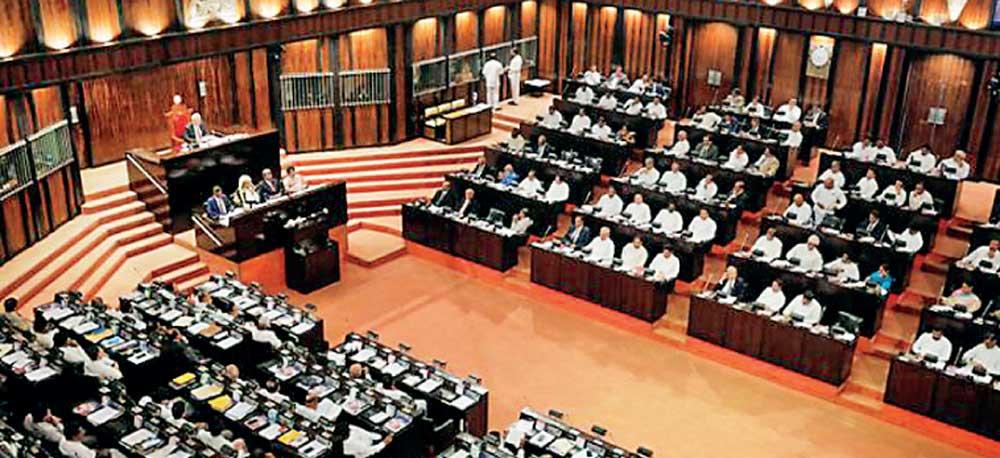
The parliament
The Corruption Conundrum: Selective Justice?
“A government that promises ‘not to steal a single rupee’ faces a much higher bar of accountability. When scandals emerge within their own ranks, silence is interpreted as complicity.”
The Narrowing Path Forward
The paradox of the current President is that while he has the legal power to do anything, he lacks the political space to do what is necessary. Every unpopular economic decision (required by the IMF) chips away at his base. Every unprosecuted internal scandal erodes his moral authority.
When a government with a two-thirds majority cannot justify its own “mega-level” corruption allegations, it signals a paralysis that no amount of parliamentary seats can fix. The President is currently a giant in a room with a shrinking ceiling; he has the strength to move mountains, but barely enough space to turn around.
Without a swift pivot toward transparency regarding the coal and container scandals, and a more pragmatic communication strategy regarding the economy, the administration risks becoming a “lame duck” despite its overwhelming numbers.
Strategic Communication & Action Plan
To reclaim the “space to maneuver,” the President must move from defensive silence to proactive transparency.
Step 1: The “Clean House” Doctrine (Immediate)
The government must stop treating internal allegations as “opposition conspiracies.”
Independent Special Prosecutor: Appoint a truly independent prosecutor—not a party loyalist—to investigate the Norochcholai Coal Scam and the 323 Containers release.
Ministerial Accountability: If the Energy Minister or Port officials are found to have bypassed the National Procurement Committee, they must be removed immediately. A two-thirds majority is useless if it is used to shield misconduct.
Step 2: Radical Economic Transparency
The “Reality Check” Address: The President should deliver a televised address that reconciles campaign promises with current IMF constraints. Honesty about the timeline of relief is better than the slow rot of “fading hope.”
Tariff Rebates: Direct the “fines” collected from the coal suppliers (reportedly around US$ 2 million) directly into a consumer rebate to prove that the public isn’t paying for the “mafia’s” mistakes.
Step 3: Leveraging the 2/3 Majority for Structural (Not Political) Gain
The Proceeds of Crime Act (2025): Fully activate this law to seize assets from anyone involved in the recent coal and container scams, regardless of party affiliation.
Public Dashboard: Launch a real-time “Governance Dashboard” showing the status of every major government procurement over 50 million LKR.
Conclusion
The President is at a crossroads. He can continue to use his two-thirds majority as a shield for his administration’s shortcomings, or he can use it as a sword to cut through the burgeoning corruption within his own ranks. Absolute power does not grant absolute space. If the public perceives that the “new” era is simply the “old” corruption in a different color, the mathematical majority in Parliament will become a prison of the government’s own making.
(The writer is a battle hardened Infantry Officer who served the Sri Lanka Army for over 36 years, dedicating 20 of those to active combat. In addition to his military service, Dr Perera is a respected International Researcher and Writer, having authored more than 200 research articles and 16 books. He holds a PhD in economics and is an entrepreneur and International Analyst specialising in National Security, economics and politics. He can be reached at [email protected])