Reply To:
Name - Reply Comment
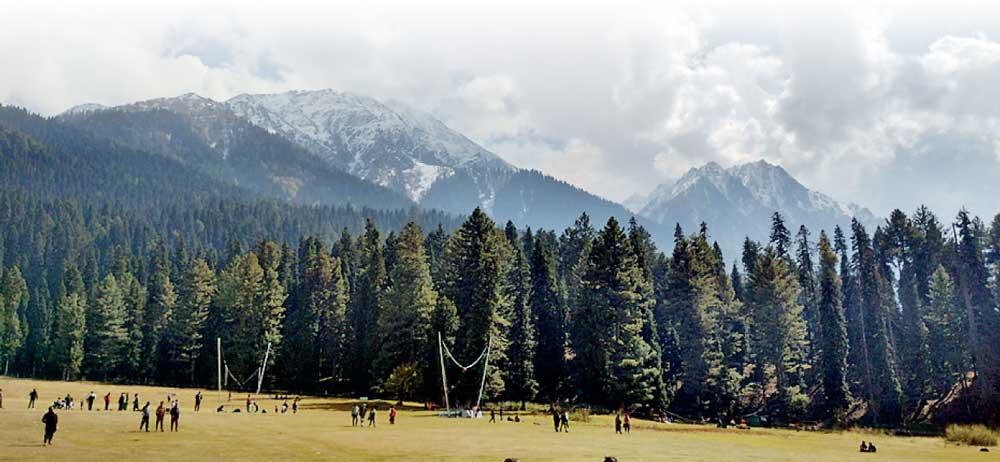
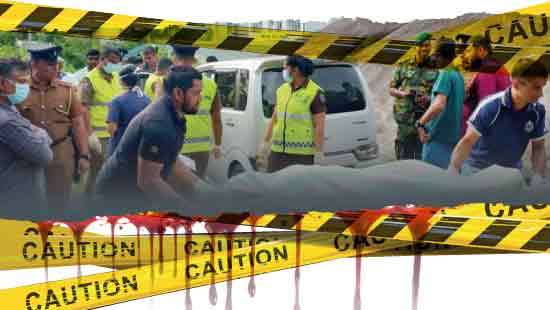
A peaceful day turned to Hell on Earth: The site of the attacks, the picturesque Baisaran Valley, where 26 people lost their lives
 Last week, terrorists associated with The Resistance Front, an offshoot of Pakistani-based Lashkar-e-Taiba, attacked the scenic tourist spot of Pahalgam in Kashmir valley, massacring 25 tourists and a horse rider in the deadliest terrorist attack since the 2008 Mumbai attack.
The attack has rekindled the perennial hostility between India and Pakistan, as India suspended the Indus Valley Water Treaty, which was signed in 1960, and deported Pakistani passport holders. In a tit for tat, Pakistan suspended trade and walked back on the Simla agreement that demarcated the Line of Control between the two countries’ disputed border. The two nuclear-armed rivals have exchanged fire across the border during the week. In the past, after terrorist attacks in the Indian-administered Kashmir, India has carried out attacks inside Pakistan, ostensibly targeting terrorist bases.
In 2016, after a terrorist attack on an army position in Uri and in 2019, after a car bomb killed 40 soldiers in Pulwama, India carried out ‘surgical attacks’ inside Pakistani territory. Fear has mounted that India would respond in the same kind of way this time around, as Modi has pledged to ‘track and punish every terrorist and their backers”.
Pakistan has regularly denied arming Kashmir militants and framing its support as moral and diplomatic. However, jihad is an essential pillar of Pakistan’s foreign and security policy
A Pakistani retaliation to an Indian attack would increase the threat beyond the skirmishes of the past. The chances are high this time, considering that the timing and the nature of the Pahalgam attack denote the calculations of the Pakistani military, which has a past track record of escalating its conflict with India whenever the military loses the plot to civilian leadership and has to compete for popular support. The military has been facing popular unrest against the backdrop of a chronic economic crisis and after the imprisonment of the popular but parochial leader of the main opposition, Imran Khan.
Since then, the Modi administration revoked the special status of Jammu and Kashmir and described the rising tourist numbers to an all-time high as a measure of stability. The attack had shattered that façade.
South Asia is an unwitting victim of Indo-Pakistan rivalry. South Asian Association for Regional Cooperation (SAARC) is a skeleton compared to its much accomplished regional peers, such as ASEAN, due to the bilateral rivalry.
As the Daily Mirror reported, the South Asian Games scheduled for this year, after repeated delays, are also in doubt.
South Asia is the least integrated region by trade, with only 5 per cent of total trade by regional countries being traded within the region. Travel between regional countries is also heavily constrained. All that led the South Asian countries to seek other regional agreements, such as the Regional Comprehensive Economic Partnership (RCEP) and enter into bilateral agreements with each other and beyond the region. Many observers view the Kashmir conflict, which dates back to the Hindu ruler of the Muslim majority Jammu and Kashmir princely state, Maharaja Hari Singh’s hesitant accession to India at the independence, as at the heart of Indo-Pakistan rivalry. Since its independence, India and Pakistan have gone to war in 1947, 1965, 1971 and 1999 in Kargil.
However, a more nuanced explanation would be that the Pakistani state’s internal character is the primary catalyst.
Pakistan was founded as a homeland for the subcontinent’s Muslims, on the demands of Muslim elites who had the best of both worlds in British India—Muhammad Ali Jinnah, the founder of Pakistan, had his palatial residence in Malabar Hills, Mumbai’s exclusive neighbourhood—but, similar to the Northern Tamil elites of Sri Lanka, they feared being drawn into a sea of the numerical majority.
Thus, the new country founded on elitist calculations lacked a national mission, and the void was soon replaced by Islam. The homeland for Muslims thus became a land for Islam. At the partition, Pakistan (Eastern Pakistan, present-day Bangladesh included) received 19 per cent of its population and a disproportionate share (33 per cent) of its military. Thus, the military became the predominant institution of the new state, effectively displacing civilian politicians and bureaucracy to the second fiddle. (The very spectre of Pakistan’s militarisation compelled India’s first prime minister, Jawaharlal Nehru, to underinvest in the Indian military, well until the Indo-China border war in 1962).
A disproportionately large military needs its mission to justify its existence hence, Kashmir became the primary grievance. Over time, Pakistan defined its whole existence in opposition to its larger rival, India.
A series of irrational policies, such as the Jihadification of Kashmir conflict and wider security policy—at the same time getting bombed by the Pakistan Taliban, an offshoot of Afghan Taliban that was trained and groomed in Madrasas in Peshawar by the Inter-Services Intelligence, and state-sponsored Islamisation and radicalisation of the grassroots etc, can only be rationalised, only one view the Pakistani state under that prism, which Pakistan has positioned itself, against its own wider national interest. That also explains why the military torpedoes whenever the civilian political leadership wrestle a degree of control, and moves to repair ties with India.
Until there is a qualitative improvement in Pakistan’s international structure, effectively providing the civilian political leadership with substantial political autonomy and bringing the military under civilian political control, it is unlikely that the Indo-Pakistan rivalry will be resolved, no matter what happens in Kashmir.
Thus, the internal structures of the government—depending on how sophisticated and outward-looking and how the power is distributed among the institutions of the state - could make or break a state. Also, about internal structures, with political institutions taking a pivotal part, and the type of folks who define them in Sri Lanka, the Rajapaksa-scion Namal and SJB MP Harsha de Silva want the government to announce its stance on a hypothetical Indo-Pakistan war. “Sri Lanka is a country that aspires for peace. The government must announce what it will do if tensions escalate into a war in the region,” Daily Mirror quoted Namal Rajapaksa as saying. “Samagi Jana Balawegaya (SJB) MP Dr Harsha de Silva has said the public should be informed of Sri Lanka’s position in the event of a full-blown war between India and Pakistan.”
“He said the government should declare its stance in this regard, given the defence cooperation MoU signed with India.” (Daily Mirror)
How many countries have announced their stance on a hypothetical war between nuclear-armed rivals?
Any UN permanent members, even China, the key backer of Pakistan? Any Muslim countries? In how many countries have opposition politicians demanded that their governments announce their stance on a war in which they have no stake?
This is not stupidity. Namal, no matter the allegations of irregularities in the Law college exam, is no fool. Harsha de Silva is touted as the future leader of the SJB. This is sheer hypocrisy and callous opportunism.
Also, about internal structures, why Sri Lanka failed to fulfil its potential, despite so much promise at independence, but Hong Kong pulled off an economic miracle, may also be due to differential internal structures. Perhaps more than anything else, educated native elites (we didn’t have the types of Idi Amin, but Chelvanayakams and Bandaranaike) who succeeded the colonial Sahibs in our countries were more disingenuous and opportunistic than their predecessors. That may even be a cultural problem. (Sometimes, entrenched corruption in places like Nigeria can not be explained without resorting to a permissive culture with low moral barriers.) More than actual corruption, Sri Lanka suffers from an overblown corruption perception, propagated by equally morally bankrupt groups to win petty electoral advantage. We are now dutifully waiting for the NPP to bring back stolen money from Uganda.
It is also true that when universal suffrage is implemented at a low social and economic scale, the electorate could easily be conned and manipulated with little effort. No one in the Congress Party or the Muslim community leadership has yet alleged that the Pahalgam terrorist attack was a false flag for Modi to win elections. But, Sri Lankan politics is even lower, and its competing stakeholders are competing to exonerate the Islamist terrorists and the very ideology behind the Easter Sunday attacks in an elusive search for a mythical mastermind.
The international structure of a state would make or break it. Pakistan is a case in point. Though on a different scale and with different maladies, Sri Lanka is not that different.