
Reply To:
Name - Reply Comment
 The timing of this intelligence leak — coinciding with Maaveerar Week (21–27 November), anticipated northern and eastern provincial elections, and the recent visit of the Sri Lankan Opposition Leader to India — suggests a calibrated political signal
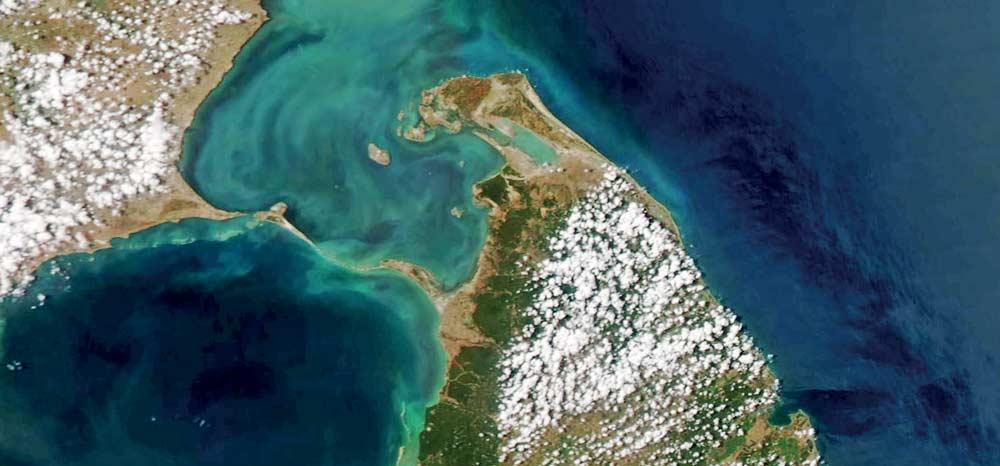
The Palk Strait, separating Tamil Nadu from northern Sri Lanka, has historically served as a lifeline for both legitimate trade and illicit movements. During the LTTE’s height, this shallow waterway was a critical conduit for arms, explosives, fuel, and narcotics
A recent and telling incident was the discovery of a T-56 assault rifle, magazines, and live ammunition concealed within the Jaffna University library roof. This recovery underscores the lingering operational and ideological influence of militant elements within certain academic or activist spaces — echoing LTTE’s wartime practice of using universities and civil institutions as operational cover
By Mahil Dole
|
Dawood_Ibrahim |
This analysis is inspired by a recent article published in the Colombo Gazette, which reported that Indian intelligence agencies have issued warnings about a possible alliance between the Dawood Ibrahim (D-Company) criminal syndicate and remnants of the Liberation Tigers of Tamil Eelam (LTTE).
According to the report, the D-Syndicate, under financial strain following crackdowns in western and northern India, is attempting to exploit South Indian and Sri Lankan maritime routes to expand its narcotics trade. Intelligence intercepts reportedly indicate that former LTTE operatives and sympathisers are assisting the syndicate in re-establishing smuggling corridors once used during the LTTE’s peak.
This brief analyses the strategic plausibility of such a nexus, its political timing, and its potential connection to broader Indian–Sri Lankan diplomatic and domestic developments, including the upcoming provincial council elections, the visit of Sri Lanka’s Opposition Leader to India, and the approach of Maaveerar (Great Heroes’) Week.
The Principal Actors
The Dawood Ibrahim (D-Company) Syndicate emerged in the 1980s as one of South Asia’s most powerful transnational criminal networks. Headquartered historically in Karachi, D-Company is engaged in narcotics trafficking, money laundering, extortion, and arms smuggling, maintaining connections across the Gulf, Africa, and Southeast Asia. It has been under international sanctions for its alleged links with terror financing and organised crime.
The Liberation Tigers of Tamil Eelam (LTTE), founded in 1976 under Velupillai Prabhakaran, waged a protracted insurgency to create an independent Tamil homeland in northern and eastern Sri Lanka. Militarily defeated in 2009, its diaspora networks and sympathisers continue to operate globally, maintaining ideological narratives and, at times, financial channels.
The National Investigation Agency (NIA) of India functions as the country’s premier counter-terrorism body. It has investigated multiple LTTE-related and transnational crime cases involving arms, narcotics, and financial flows, particularly through Tamil Nadu and the Palk Strait.
Political and Strategic Context
This renewed focus on the Palk Strait and the possible LTTE–D-Company nexus emerges amid a delicate political and diplomatic phase between India and Sri Lanka. India’s central government has long sought to balance three overlapping priorities:
1. Securing its southern maritime frontier against narcotics and arms smuggling.
2. Managing Tamil Nadu’s political sensitivities, especially on Tamil issues in Sri Lanka.
3. Countering Chinese influence through economic diplomacy and regional engagement with Colombo.
Against this backdrop, reports of a transnational criminal alliance serve to reaffirm India’s security leadership narrative in the Indian Ocean. It strengthens New Delhi’s position to justify closer surveillance and cooperation in the Palk Bay region, while indirectly signalling to both Sri Lankan authorities and Tamil Nadu politicians that maritime vigilance must transcend ethnic or regional sympathies.
The timing of this intelligence leak — coinciding with Maaveerar Week (21–27 November), anticipated northern and eastern provincial elections, and the recent visit of the Sri Lankan Opposition Leader to India — suggests a calibrated political signal. It both cautions Sri Lanka of persistent extremist undercurrents and reinforces India’s image as the indispensable maritime security partner.
The Palk Strait: A Historic Smuggling Corridor
The Palk Strait, separating Tamil Nadu from northern Sri Lanka, has historically served as a lifeline for both legitimate trade and illicit movements. During the LTTE’s height, this shallow waterway was a critical conduit for arms, explosives, fuel, and narcotics.
Even after the group’s defeat, law-enforcement agencies periodically intercepted heroin consignments and arms shipments linked to LTTE-connected diaspora elements.
For D-Company, the Strait represents untapped logistical potential—a network of fishing vessels, informal landing points, and sympathetic or coerced facilitators. For remnants of the LTTE, collaboration offers financial resources to maintain influence, especially among diaspora youth and cyber-activists. This convergence of motives—profit and purpose—creates an environment ripe for tactical cooperation.
Maaveerar (Great Heroes’) Week: Symbolism and Security Implications
The Maaveerar Naal (Great Heroes’ Day), first commemorated in 1989 to honour Lt. Shankar, the LTTE’s first fallen cadre, is regarded by LTTE sympathisers as a “day of edification” or “day of rising.” Observed between 21 and 27 November, it culminates on 27 November, the day of Shankar’s death, and coincides with Prabhakaran’s birthday (26 November 1954).
The Jaffna University premises have long been the epicentre of commemoration, centred around the controversial Martyrs’ Monument, which — despite official bans — remains intact today. The site continues to be a flashpoint for tensions between students, sympathisers, and security forces, particularly during the November commemorations.
A recent and telling incident was the discovery of a T-56 assault rifle, magazines, and live ammunition concealed within the Jaffna University library roof. This recovery underscores the lingering operational and ideological influence of militant elements within certain academic or activist spaces — echoing LTTE’s wartime practice of using universities and civil institutions as operational cover.
These developments justify continued surveillance, demonstrating that commemoration and militancy can overlap when ideology, memory, and opportunity intersect.
Historical Continuity: The Ideological Core
When the Indian Peace Keeping Force (IPKF) intensified operations in August 1987, Prabhakaran delivered one of his most defiant messages to his cadres:
“The methods of our war may change. But the aim of our war will not change.”
This quote, memorised by many within the Tamil diaspora even today, reflects a philosophy of adaptability without ideological compromise. The LTTE’s battlefield success rested on its capacity to assimilate changing methods—military, diplomatic, or criminal — while maintaining its central objective of Tamil Eelam.
In strategic thought, this mirrors a Kautilyan principle: that methods must shift according to circumstance, but the objective must remain immutable. The LTTE’s transition from insurgency to a global financial and propaganda network demonstrated this pragmatism. It also explains why modern manifestations of LTTE-linked activity, even when disguised as criminal enterprise, cannot be dismissed as isolated incidents—they stem from an enduring ideological current.
Assessing the Credibility of the D-Company–LTTE Nexus
The Colombo Gazette report and its cited Indian intelligence sources highlight a plausible convergence of interests. Both entities have historical exposure to narcotics and maritime smuggling, and both rely on diaspora-based financial systems.
However, direct and current evidence of institutional collaboration remains limited and largely inferential. It is more likely that individual intermediaries or opportunistic former operatives serve as connectors rather than any formal organisational partnership.
Nevertheless, the strategic value of such reporting is significant:
Political and Diplomatic Undercurrents
The timing of these revelations, ahead of Sri Lankan provincial council elections, also carries domestic political weight. Allegations of an LTTE revival can shape public perception in Sri Lanka’s north and east, influence electoral discourse, and strengthen calls for enhanced Indo–Sri Lankan security cooperation.
Simultaneously, it may help New Delhi manage southern domestic politics, especially in Tamil Nadu, where parties routinely invoke Tamil issues for electoral mobilisation. By projecting vigilance against criminal-terror networks, the central government can assert its national security credentials without directly confronting regional sentiment.
Conclusion
The alleged Dawood Ibrahim–LTTE nexus represents less a proven operational reality than a strategically useful narrative — one that serves multiple political, diplomatic, and security objectives across the Palk Strait. Yet, its plausibility is reinforced by historical precedent, persistent ideology, and recurring security incidents, such as the Jaffna University arms recovery.
As the region enters a politically charged November period, marked by Maaveerar commemorations and election preparations, vigilance is essential.
Even if the LTTE’s separatist ideology no longer commands mass legitimacy, its networks, memories, and tactical adaptability endure—mirroring Prabhakaran’s own words from 1987.
In this sense, the story of the LTTE and its possible entanglement with transnational crime is not merely a security issue; it is a continuing test of regional political foresight and cooperation between India and Sri Lanka, where maritime vigilance, ideological containment, and diplomatic sensitivity must all work in concert.
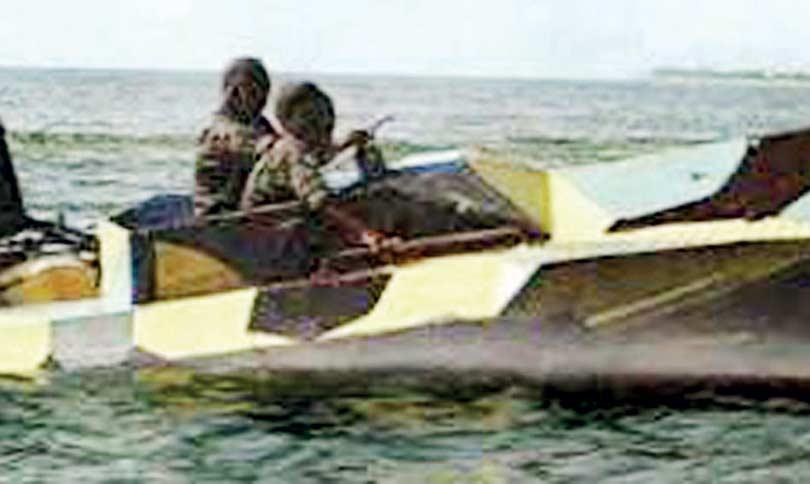 The LTTE used the Palk Straits for smuggling
| Mahil Dole, SSP (Retired), is the former Head of the Counter-Terrorism Division of the State Intelligence Service of Sri Lanka, and has served as Head of the Sri Lankan Delegation at three BIMSTEC Security Conferences. With over 40 years of experience in policing and intelligence, he writes on regional security, interfaith relations, and geopolitical strategy. |