Reply To:
Name - Reply Comment
There seems to be an issue with the government’s decision-making process which is sometimes manifested by conflicting statements or acts by government institutions or ministers on various issues.
For instance, while the police had commenced removing unnecessary and hazardous accessories from buses and even ministers had participated in cleaning various places such as drainage systems, railway stations under President Anura Kumara Dissanayake’s “Clean Sri Lanka” project, Deputy Minister of Transport and Highways, Dr. Prasanna Gunasena was quoted by Daily Mirror days ago as saying that the project would only commence on February 1.
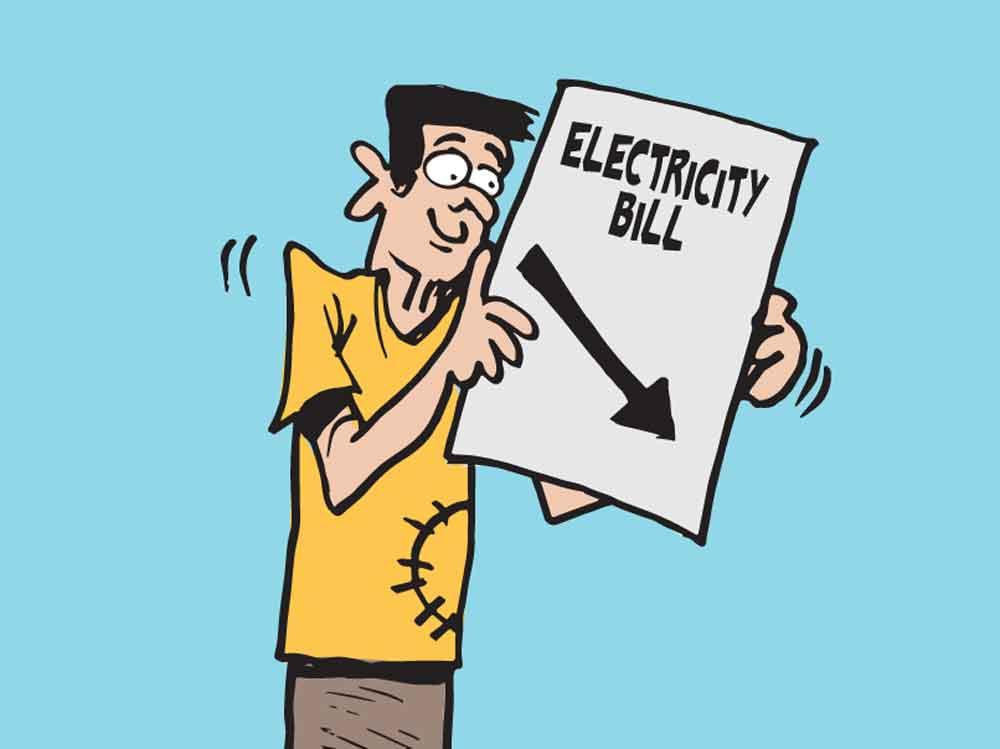
The power tariff reduction on last Friday, though it earned much acclaim from the people who have been hard pressed by the on-going economic woes, was another matter that pointed the fact that the government’s left hand doesn’t know what the right hand is doing.
Energy Minister Kumara Jayakody, on January 9 told Parliament that electricity tariff could not be reduced overnight and it would take up to three years. He seemed to not know what President Dissanayake and other senior leaders of the National People’s Power (NPP) had promised the people on the matter before the recent Presidential and Parliamentary elections.
Apparently to his astonishment, the Public Utilities Commission of Sri Lanka (PUCSL) announced last week an average 20 percent tariff reduction for which he too as the subject minister gave his nod immediately. On what grounds the minister predicted the three-year period for the tariff reduction is not clear. Yet, it points to the fact that he is not in touch with the stakeholders of his subject, especially the PUCSL. Despite the PUCSL being an independent commission, he is not barred from exchanging views with it, before making a serious statement in Parliament. However, unlike the former PUCSL Chairman Janaka Ratnayake who was sacked by the last government over his opposition to power cuts and tariff hikes proposed by the CEB backed by the government, current PUCSL Chairman is fortunate not to face such an eventuality.
However, Peter Breuer, Senior Mission Chief of the International Monetary Fund (IMF) for Sri Lanka on March 21, 2023 cited five key pillars on which their programme is built and the first pillar was “an ambitious revenue-based fiscal consolidation” which included “cost recovery-based energy pricing.” Hence, it is not clear if the PUCSL’s decision was incompatible with the ongoing IMF programme.
It must be recalled that the electricity tariff was increased twice in 2022, first 75 percent on average in September and then 70 percent on average in November, and the people alleged that the practical effect of the two increases was a four or fivefold increase of their electricity bill in some cases. It also had a heavy chain reaction on the prices of other goods and services. However, when the tariff was reduced last year, people did not get a reverse benefit out of it. This time too, it is difficult to expect such benefits since they are decided by the individual producers of goods and services.
Sri Lanka’s power supply is a fragile issue which is nothing but an outcome of long-drawn-out mismanagement and corruption. The last government announced that 70 percent of power would be generated through renewable sources by 2023. Yet, things have not been moving towards that end. President Gotabaya Rajapaksa questioned officials several times on the delay to approve renewable energy projects.
Auditor General’s Department too in a Performance Audit Report said in February, 2022, “The existing process has become a laborious and time consuming process as investors are unable to obtain the necessary approvals and licenses. Developers must obtain approval from 10 relevant line agencies to obtain a Generation License. At the time of issuing the energy license, the project developer has to renew the approvals obtained from the Central Environmental Authority, the Forest Department and the Wildlife Department due to expiration. Therefore, it is observed that a developer has to spend 2 to 5 years to obtain a generation licence.” Has this situation changed since then?
The reasons for this lethargy and the culprits of it have been discussed in the media so many times and those facts are now in public domain. It is up to the NPP government which received a massive anti-corruption mandate to resolve it now.