Reply To:
Name - Reply Comment
By Panduka Keerthinanda
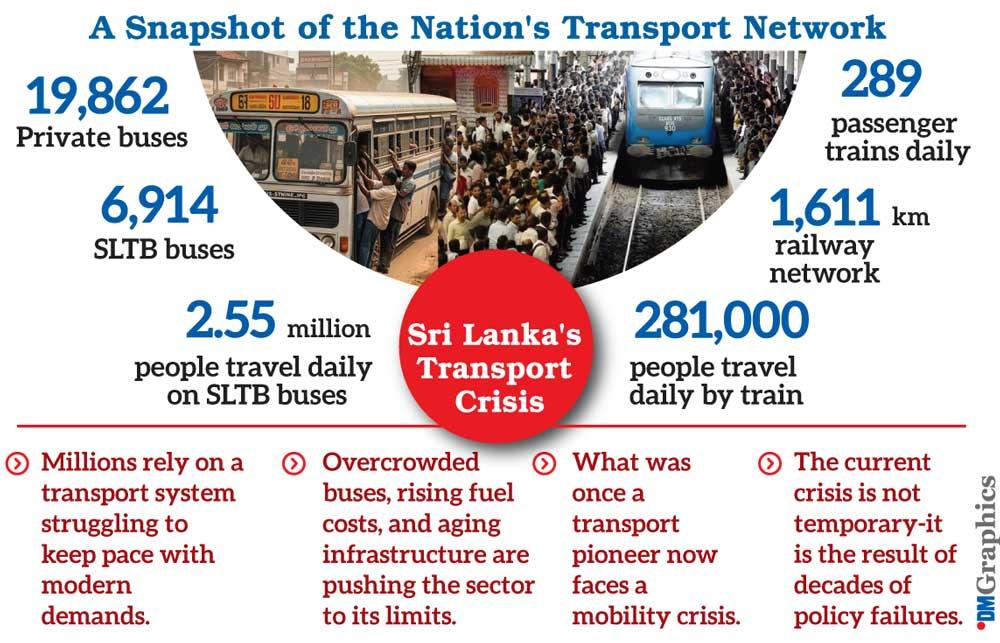
Daily commuters in Colombo face overcrowded buses and long queues, while the price of a litre of petrol has soared past Rs. 400. As private bus operators reduce services by 50% due to unsustainable fuel costs, Sri Lanka’s transportation sector needs a lifeline for the sake of millions of commuters who are experiencing a crisis. Yet, from the ashes of this crisis emerges an opportunity for a long-overdue revolution.
A glorious past, a troubled present
Sri Lanka’s transportation history is a tapestry of ambition, innovation, and missed opportunities. The nation’s journey has evolved from ancient networks of waterways and bullock cart tracks to modern road grids, a mountainous railway system introduced by the British to transport coffee and tea, and a nationalized public bus network.
Railway era
The year 1864 marked a watershed moment when the first operational railway line was established, connecting Colombo to Ambepussa. This British colonial enterprise was primarily designed to serve the plantation economy, transporting coffee and later tea from the hill country to the port of Colombo. The railway system became the backbone of intercity travel, threading through misty mountains and verdant valleys; a marvel of engineering that still captures the imagination today.
The arrival of the automobile signaled a new chapter. The first petrol-driven car entered Ceylon in 1902, followed by the first petrol Oldsmobile in 1904. These luxury vehicles were initially the preserve of the colonial elite, but they foreshadowed a fundamental shift in how people and goods would move across the island.
Colombo’s Electric Tramways: A Visionary System
Perhaps the most ambitious urban transport project of the era was the Colombo Electric Tramways, opened on January 11, 1900, with the ‘Grand Pass Route’ being the first section to function, followed by the ‘Borella (Maradana) Route.’ Soon, most parts of the city were covered, and it became a convenient mode of transport for city dwellers.
The Colombo Electric Tramway and Lighting Co Ltd was formed in 1901 to operate the Tramways and generate electric current for street lighting and other purposes. Between 1927 and 1928, the supply of electricity was taken over by the Government, reflecting the growing recognition of transport as a public good.
The Brief Trolleybus Interlude
The trolleybus system in Colombo operated from 1953 to 1964. Introduced to replace the city’s ageing electric tram network, the system featured both single- and double-decker British-built vehicles. It was a sophisticated solution for its time cleaner and more flexible than trams. However, it was eventually shut down due to maintenance costs and labour strikes, a pattern that would repeat itself across subsequent decades.
Nationalisation and its aftermath
On January 1, 1958, the government nationalised the bus industry by forming the Ceylon Transport Board (CTB), later known as the Sri Lanka Transport Board. This was a bold socialist experiment aimed at providing affordable, universal public transport. For a time, the CTB was the largest bus operator in the country, with a vast fleet and extensive routes.
Yet, by the late 1970s, the state monopoly was failing. Due to deteriorating state services, the private sector was invited to invest, resulting in 5,000 private buses hitting the streets by 1980. This privatisation was meant to introduce competition and efficiency, but it instead created a fragmented, often chaotic system that lacked coordination and accountability.
The LRT: A vision abandoned
In 2019, the Japan International Cooperation Agency (JICA) agreed to provide Sri Lanka with a US$ 1.85 billion loan to construct a Light Rail Transit (LRT) system; a 17-kilometre railway track from Colombo Fort to Malabe across 16 railway stations. The loan was offered with a grace period of 12 years and a repayment timeframe of 40 years, exceptionally favourable terms that reflected Japan’s commitment to Sri Lanka’s development.
The LRT was meant to be transformative; a modern, efficient, and environmentally friendly solution to Colombo’s chronic traffic congestion. It would have connected the capital’s economic heart with its expanding suburbs, reducing reliance on private vehicles and cutting commute times.
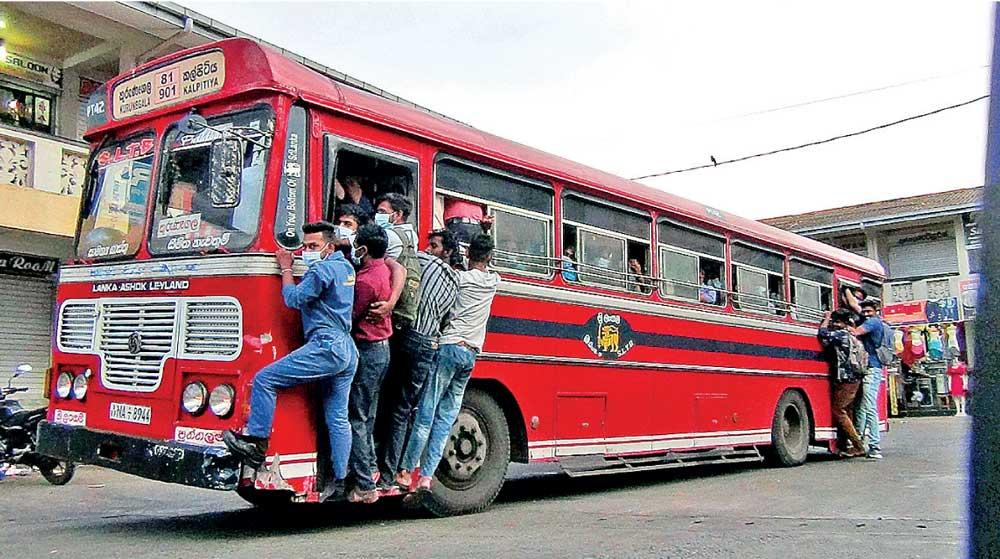
The inefficiencies of successive regimes which forces the public to rely heavily on public transport has resulted in a nation being choked by traffic
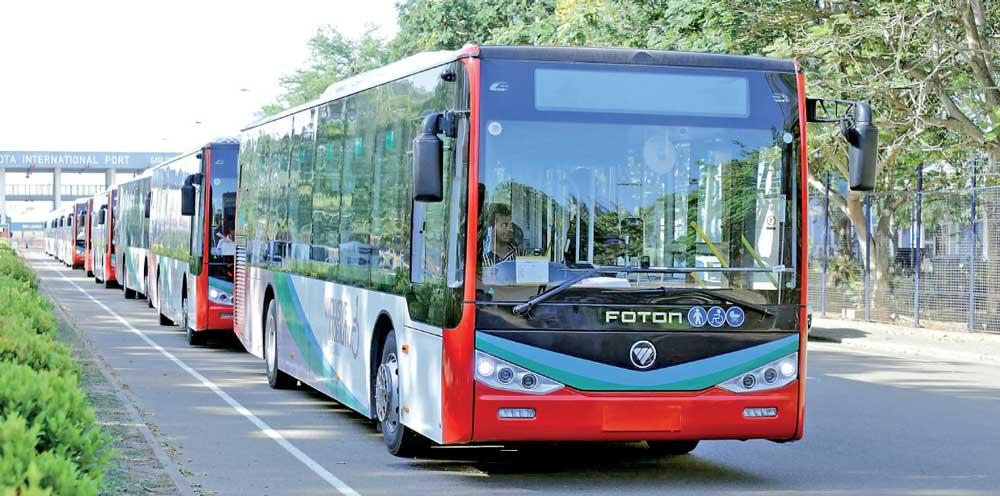
The Government’s proposed “bus cluster system” presents a revolutionary solution. The Government of Sri Lanka is implementing a major bus cluster programme as part of its national transport transformation
Yet, in a move that stunned many, President Gotabaya Rajapaksa’s Government wrote a letter asking the transport ministry to cancel the light rail project because of high costs. The cancellation was justified on fiscal grounds, but critics argued it was a shortsighted decision that sacrificed long-term benefits for short-term savings.
This pattern grand plans announced, then abruptly abandoned has become a hallmark of Sri Lanka’s transport policy. Historically, policy shifts from the 1958 nationalisation of buses to the unilateral cancellations of the Japanese-funded LRT and other modernisation projects have compounded inefficiencies and driven the public to rely heavily on private vehicles. The result is a nation choked by traffic, dependent on imported fuel, and bereft of a coherent vision for its transport future.
Current crisis: Symptoms of a deeper malaise
Sri Lanka’s current predicament is not just the result of external shocks it is the product of decades of policy missteps. Sri Lanka’s public transportation network is failing. Some of the issues are as follows:
1. An outdated public transport system
The fleet is ageing, and the infrastructure is crumbling. The railway system, a backbone of public transit, suffers from severe track deterioration. On the Coastal Line, outdated tracks have forced speed restrictions of up to 70%, causing significant delays. While the government plans to replace 10,000 tracks, the network remains a relic of a bygone era. Other railway lines, such as the Kelani Valley line, are also in need of urgent modernization. This lack of maintenance is not just inconvenient; it is a drag on the economy and commuter morale.
2. Fuel price hammer
Sri Lanka imports nearly all its petroleum, making it acutely vulnerable to global price shocks. The recent Middle East conflict caused the price of Brent crude to surge over $100 a barrel, pushing local diesel prices to Rs. 407 and petrol to Rs. 434. This has been devastating. Private bus owners report that operating costs have risen by 20-25%, leading to service cuts that leave students, workers, and families stranded. The recent 5% hike in container transport rates will further drive up the cost of goods. The old model of absorbing or subsidizing fuel costs is no longer viable.
3. A sector in stalemate
The government and transport operators are locked in a cycle of confrontation. Operators demand fare revisions and fuel subsidies; the government, constrained by an IMF programme, that mandates cost-recovery, must avoid blanket bailouts. This leaves the public caught in the middle. The dispute highlights a fundamental flaw; the system relies on a fragmented, outdated model that crumbles under any external pressure.
The path forward: What the government’s future programme should be
1. Modernise and electrify the railways
The government’s plan to electrify suburban railway lines from 2027 is a critical first step. This is the future of mass transit. The “Metro electric railway project” for the Colombo suburbs must be accelerated and expanded. A modern, reliable, and clean train network can move large numbers of people efficiently, reducing dependence on road transport and fossil fuels.
The ongoing partnership with India, including the advanced signalling system on the Maho-Anuradhapura line, should be leveraged for other major corridors. We need a rail network that is fit for the 21st century, not a museum piece. Crucially, the lessons of the LRT cancellation must be heeded: Sri Lanka cannot afford to reject visionary projects based on short-term fiscal concerns. The cost of inaction is far greater than the cost of investment.
2. A Bus System for the 21st Century: The “Cluster” Model
The current fragmented bus model is broken. The Government’s proposed “bus cluster system” presents a revolutionary solution. By grouping buses under professional companies, the system would foster accountability and efficiency. This is not just a cosmetic change. Under this model, the government would be able to provide targeted support to companies, rather than subsidising unaccountable individuals, to ensure services are maintained even when fuel prices spike. This is the best option to end the recurring cycle of strikes and disruptions.
3. Diversify and decarbonise energy mix
This is the most critical long-term strategy. We cannot build a resilient transport system on imported oil. The government must aggressively pursue its plan to promote electric vehicles, particularly in tourist zones, and accelerate the transition to renewable energy.
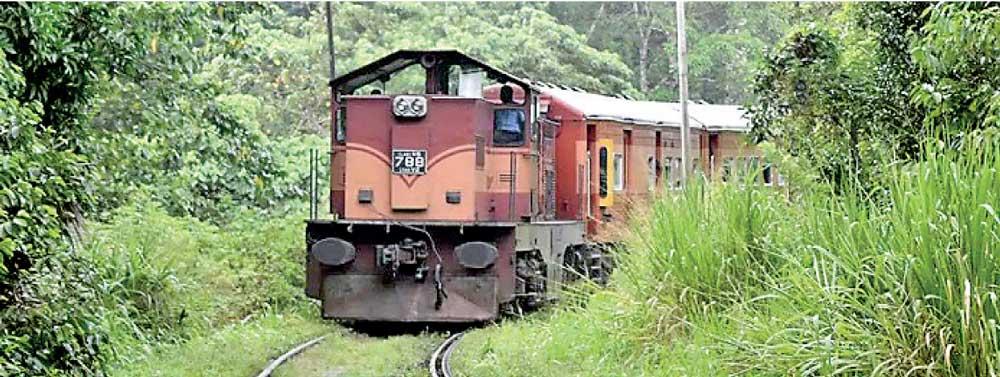
Other railway lines, such as the Kelani Valley line, are also in need of urgent modernization
 Creating a Policy Framework for EVs: This involves not just incentives for purchase but also building a national charging infrastructure.
Investing in Domestic Renewables: Solar, wind, and hydropower must become the mainstay of our energy grid. This is the only way to decouple our transport costs from volatile global oil markets.
Expanding Fuel Reserves: The plan to build six new storage tanks is a necessary short-term measure to create a buffer against future shocks.
The message from the public, from the operators, and from the analysts is clear: Sri Lanka cannot continue on this path. The current “crisis” is not a temporary blip; it is the new normal. The government’s future programme must be bold and decisive. It must break the old cycle of short-term fixes and build a transportation system that is modern, efficient, and resilient.
We must learn from our history not just the triumphs like the pioneering tramways, but also the failures like the abandoned LRT. Each generation has inherited a transport system that is slightly more degraded than the one before. This generation has the opportunity and the obligation to reverse that trend.
This revolution is not just about trains and buses. It is about the dignity of the millions of commuters who rely on public transport every day. It is about a nation that can move forward, unburdened by the crippling cost of imported fuel and a crumbling infrastructure. The wheels of change are starting to turn; the government must now ensure they roll forward with speed and purpose.
The transportation revolution Sri Lanka needs cannot be postponed. The path forward requires courage, vision, and an unwavering commitment to the public good. Our ancestors built tramways and railways that were the envy of Asia; we owe it to future generations to build a system that once again makes Sri Lanka a model of sustainable, efficient, and equitable mobility.
“The time for incremental change is over. The time for revolution is now.”