Reply To:
Name - Reply Comment

 Science is not an isolated pursuit; it is foundational to economic growth, public health, national security, and environmental protection
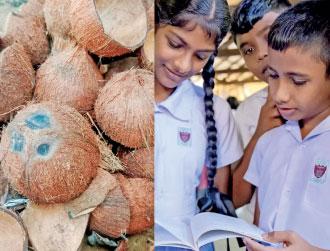
Agricultural waste like coconut shells and rice husks can be converted into high-grade activated carbon
Graphite can be recovered using eco-friendly, acid-leaching techniques
|
From extracting coconut husks for high-grade activated carbon, to recovering disposable graphite, the excitement in the eyes of schoolchildren when they see how a solar cell works, science, when harnessed in a productive manner, will yield a lot of economic and productive benefits for Sri Lanka |
 |
In the 21st century, the progress of a nation is inextricably tied to its strength in science and technology. Sri Lanka, with its rich natural resources and educated population, has tremendous potential to harness scientific research for national development. Yet, despite decades of progress, we remain behind in converting research into practical, scalable solutions that can uplift the lives of our citizens.
Having served in both Sri Lankan and foreign research institutions, I have seen firsthand how transformative science can be when backed by vision and support. During my work at Shizuoka University in Japan and later at the National Institute of Fundamental Studies (NIFS), I have led projects that not only advance scientific understanding but also address real-world challenges in energy, environmental degradation, and access to clean water.
This isn’t just science, it’s a solution
One of our most impactful breakthroughs has been the development of a method to convert agricultural waste such as coconut shells and rice husks into high-grade activated carbon. This material is now used to manufacture supercapacitor battery packs with fast-charging capabilities, long life, and minimal environmental impact. These supercapacitors are particularly well-suited for applications like solar energy storage, electric mobility, and rural electrification.
This is not just science, it is a solution. It proves that with innovation and the smart use of local materials, Sri Lanka can build its own sustainable energy systems tailored to our needs and resources.
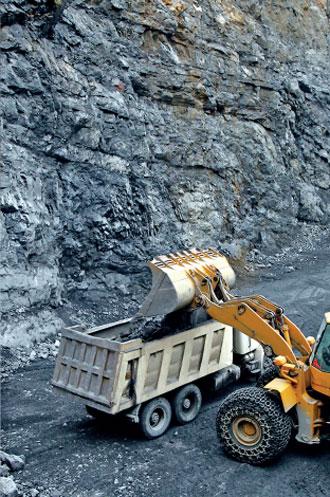
Our work on recovering graphite from mining waste is another example of science driving sustainability. Sri Lanka possesses some of the world’s purest vein graphite, but mining operations often discard valuable graphite attached to wall rocks. We have developed an eco-friendly, acid-leaching technique to recover this material, which can then be used in solar cells and electronic devices. This approach not only reduces environmental impact but also adds economic value to what was once discarded.
Through such projects, science becomes a tool for circular innovation where nothing goes to waste and every resource is optimised.
While developing technologies is vital, inspiring the next generation is equally important. At NIFS, we actively engage schoolchildren, especially from rural and under-resourced areas, in hands-on science activities. The excitement in their eyes when they see how a solar cell works or build a simple battery using charcoal and saltwater reminds us of the immense potential that lies untapped.
We must invest in this enthusiasm. Science must not be confined to elite universities or urban centres; it must reach every corner of the country. Only then can we cultivate future innovators, not just exam-scorers.
Bridging research and application
A key issue we face is the gap between academic research and industrial application. Too often, groundbreaking discoveries remain confined to laboratories due to a lack of funding, infrastructure, or policy support. Countries like South Korea, Singapore, and Israel have surged ahead by building strong bridges between scientists, industries, and governments.
Sri Lanka needs to do the same. We must foster public-private partnerships, encourage the commercialisation of research outcomes, and create platforms where scientists and entrepreneurs can collaborate meaningfully.
We also need to recognise and reward inventors and researchers who develop solutions to national challenges, whether in clean energy, healthcare, water purification, agriculture, or disaster resilience.
Science is not an isolated pursuit; it is foundational to economic growth, public health, national security, and environmental protection. The COVID-19 pandemic reminded the world of the importance of scientific readiness. Climate change, too, demands urgent innovations in energy, agriculture, and water management.
If we, as a nation, prioritise science not only in rhetoric but through genuine investment and action, we can build a resilient and self-reliant Sri Lanka.
To achieve this, we must:
Let us envision a future where Sri Lanka leads in clean energy technologies, sustainable agriculture, and green innovations powered by science developed on our own soil.
The time for action is now. Let science light the path to our nation’s prosperity.
(The writer is a Research Professor at the National Institute of Fundamental Studies)