Reply To:
Name - Reply Comment
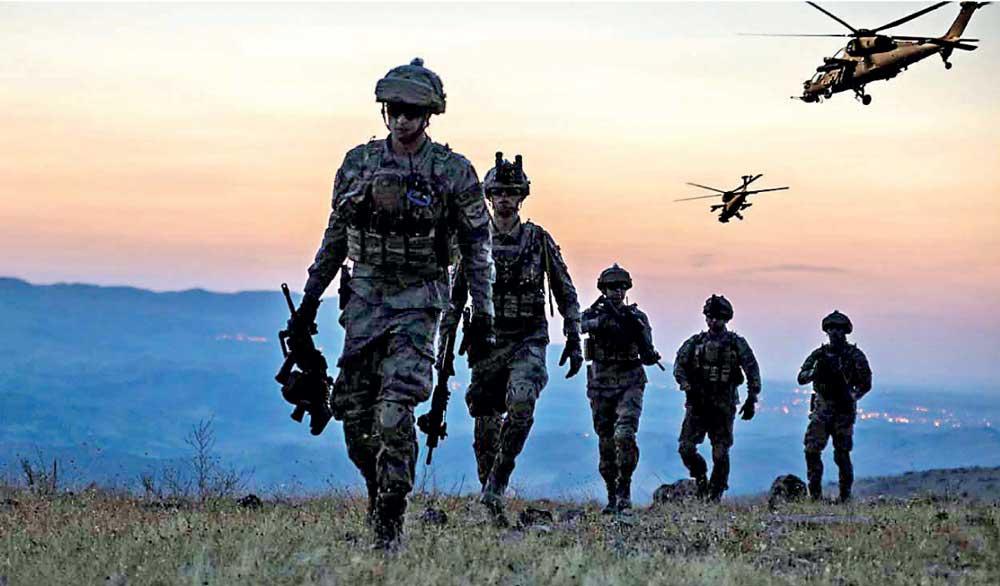
Sri Lanka must also reflect on whether it is pursuing a defensive or offensive posture in politics and diplomacy
 Sri Lanka stands today not merely as a nation recovering from crises, but as one being tested quietly yet profoundly on whether it has truly learned from them. The past two decades, culminating in the Easter Sunday attacks and the recent economic collapse, have exposed both the strengths and fragilities of the State’s defence architecture, intelligence systems, political leadership, and governance processes. What emerges is not a story of total failure, nor one of complete resilience but a complex landscape of lessons partially learned, systems unevenly reformed, and opportunities still at risk.
At the level of defence and intelligence, Sri Lanka has demonstrated that it possesses capable human capital and institutional experience. The dismantling of the LTTE remains one of the most decisive counter-insurgency successes globally. Yet, the Easter Sunday attacks revealed a deeper, more uncomfortable truth: intelligence without integration is ineffectual. Information existed, warnings were issued, but coordination, accountability, and timely decision-making faltered. This was not a failure of collection it was a failure of fusion, prioritisation, and command responsibility. Since then, there have been efforts to improve inter-agency coordination, but structural reforms remain incomplete, and political interference continues to cast a long shadow over operational independence.
The political decision-making ecosystem has been equally instructive. Short-termism, populist pressures, and fragmented governance have repeatedly undermined long-term national interests. Policies have often been reactive rather than strategic whether in national security, economic management, or foreign relations. The absence of continuity across administrations has prevented the institutionalisation of critical reforms. In essence, Sri Lanka has suffered from a chronic condition where strategy is subordinated to survival politics.
The implementation and enforcement gap is perhaps the most persistent weakness. Sri Lanka does not lack laws, policies, or commissions of inquiry. What it lacks is consistent enforcement, institutional discipline, and consequences for failure. This erosion of accountability has affected public trust and weakened deterrence whether in combating corruption, enforcing financial discipline, or ensuring national security protocols. A State that cannot enforce its own decisions ultimately risks losing both credibility and control.
Navigating internal and external geopolitics presents an even more delicate challenge. Sri Lanka’s strategic location in the Indian Ocean places it at the intersection of major power competition, particularly between India, China, and the United States. While this offers opportunities, it also demands a level of diplomatic sophistication that balances national interest without over-dependence. Historically, Sri Lanka has oscillated between alignments, often driven by immediate economic needs rather than coherent long-term strategy. The lesson here is clear: non-alignment must be strategic, not situational.
The economic crisis has further underscored the inseparability of economic security and national security. Unsustainable debt, weak fiscal discipline, and overreliance on external borrowing exposed the country to systemic collapse. While stabilisation efforts are underway, the deeper question remains: has Sri Lanka restructured its economic thinking, or merely postponed the next crisis? Without productivity-driven growth, export diversification, and governance reform, recovery risks becoming temporary.
Amidst these structural concerns lies perhaps the most critical question: Are we investing in our future generations? The signs are troubling. Brain drain continues at an alarming pace, with skilled professionals seeking stability and opportunity abroad. Education and innovation ecosystems remain underfunded and disconnected from global competitiveness. Youth frustration, if unaddressed, could evolve into social volatility. A nation that fails to create pathways for its young risks not only economic stagnation but a gradual erosion of national cohesion. Sri Lanka must also reflect on whether it is pursuing a defensive or offensive posture in politics and diplomacy. A defensive posture reacting to crises, managing pressures, and avoiding risks may ensure short-term stability but limits long-term growth. An offensive posture, in contrast, would involve proactively shaping regional partnerships, leveraging its geographic advantage, and positioning itself as a hub for trade, logistics, and dialogue. This requires confidence, clarity of vision, and institutional alignment qualities that must be cultivated deliberately.
Regional stability is both a necessity and an opportunity. Sri Lanka cannot afford instability in its neighbourhood, nor can it remain passive within regional frameworks. Strengthening ties within South Asia and the Indian Ocean region, while maintaining balanced relations with global powers, will be essential. Stability must be seen not as a passive condition but as an active strategic objective. Finally, the evolving landscape of non-traditional security threats, climate change, cyber vulnerabilities, transnational crime, and pandemics demands a redefinition of national security itself. Climate-related risks, from flooding to coastal erosion, are no longer environmental concerns alone; they are economic and security threats. Similarly, cyber threats and financial crimes can destabilise institutions without a single shot being fired. Sri Lanka’s preparedness in these domains remains limited, requiring urgent investment in both policy and capability.
The imperative ahead
Sri Lanka can no longer afford the comfort of analysis without action. The failures are not abstract, nor are they historical; they are systemic, recurring, and, if left uncorrected, will define the nation’s future far more than any external threat. Intelligence gaps, politicised decision-making, weak enforcement, and economic mismanagement are not isolated shortcomings; they are interconnected weaknesses that continue to erode national resilience.
What is most alarming is not that these failures occurred but that the conditions which produced them still persist. Institutions remain vulnerable to interference, accountability is inconsistent, and strategic thinking is too often sacrificed for short-term political survival. A nation that does not correct its structural flaws will inevitably relive its crises, each time at a higher cost.
The real danger now is not sudden collapse, but gradual decline marked by brain drain, institutional decay, loss of strategic autonomy, and the quiet surrender of opportunity. While others in the region are positioning themselves for the future, Sri Lanka risks becoming trapped in a cycle of recovery without transformation.
The choice before the country is stark and unavoidable. Either Sri Lanka undertakes decisive, disciplined reform strengthening intelligence integration, depoliticising national security, enforcing accountability without exception, and aligning economic policy with long-term national interest or it accepts a trajectory of diminishing relevance and recurring instability.
History will not be kind to hesitate. Nor will future generations forgive a leadership that understood the risks but failed to act. The time for reflection has passed. What remains is execution.
Sri Lanka has learned many lessons but learning alone is insufficient. The real test lies in institutionalising those lessons into systems that endure beyond individuals and political cycles. The country stands at a pivotal moment: it can either continue navigating crises in a reactive manner or transition into a state defined by foresight, discipline, and strategic coherence.
The choice is stark but clear. If Sri Lanka fails to act decisively, the consequences will not be immediate collapse but a gradual decline marked by lost opportunities, weakened institutions, and a generation that looks outward rather than inward. But if it succeeds, it can transform its vulnerabilities into strengths and emerge not just stable, but strategically significant in a rapidly changing world.
(The author is a former senior law enforcement officer and national security analyst, with over four decades of experience in policing and intelligence, including serving as Head of Counter-Intelligence at the State Intelligence Service of Sri Lanka and a graduate of the Asia Pacific Center for Security Studies in Hawai, USA)