Reply To:
Name - Reply Comment
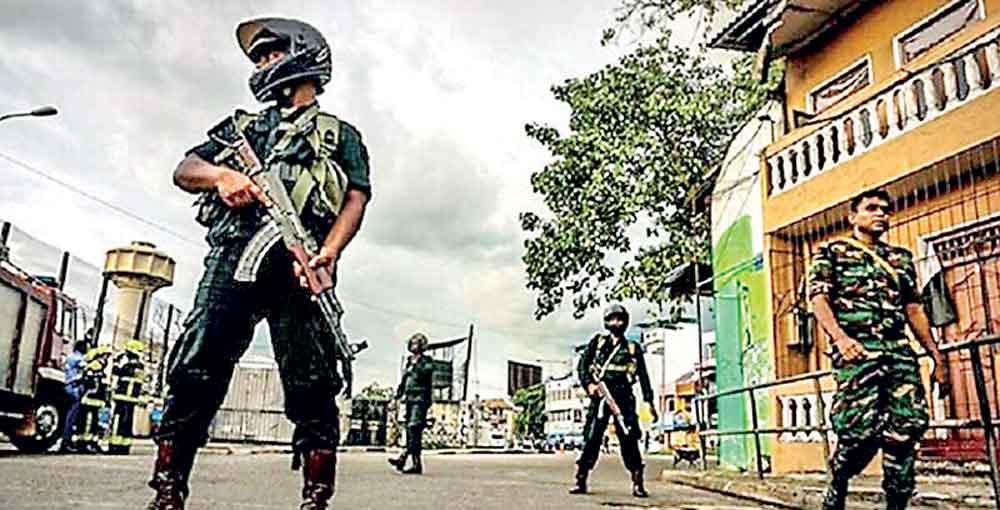
Modern national security demands a whole-of-society approach, encompassing not merely military strength or intelligence capacity, but also the alignment of governance, economy, social cohesion, and environmental stewardship. FILE PHOTO
By Mahil Dole
National security in the twenty-first century can no longer be confined to the traditional domains of political sovereignty, territorial integrity, and regime stability. For nations like Sri Lanka, emerging from decades of internal conflict and adapting to global transformations, the concept of security must evolve into one that safeguards people, ecosystems, and institutions from multifaceted threats — both man-made and environmental. This article redefines national security within a moderate political and global framework, arguing for a strategic shift from the conventional stability model to a resilience-based paradigm that aligns governance, development, and climate adaptation in an era of uncertainty.
The end of the old security order
National security has historically been interpreted through a narrow lens — the protection of the state from external aggression and internal subversion. This conception, born of colonial legacies and Cold War anxieties, prioritised the survival of the state apparatus over the well-being of the people. In Sri Lanka, the post-independence decades reinforced this model, focusing on territorial defence, political control, and counterinsurgency.
However, the 21st century has altered the terrain of insecurity. Climate change, pandemics, cyber warfare, disinformation, and economic vulnerability now pose threats as grave as terrorism or invasion. The traditional triad of political, social, and economic stability is insufficient to safeguard a nation in the face of such systemic and transnational risks.
It is therefore time to redefine national security — from a static shield against perceived enemies to a dynamic system of resilience that allows a nation to adapt, recover, and thrive amid continuous shocks.
The shift from stability to resilience
Traditional thinking equated stability with control: stable governments, stable prices, and stable borders. Yet stability without adaptability breeds fragility. The COVID-19 pandemic, global supply-chain disruptions, and extreme weather events have demonstrated that rigid systems collapse under stress, while resilient systems flex and recover.
Resilience means absorbing shocks without losing coherence — politically, economically, socially, and ecologically. For Sri Lanka, this implies building institutions and communities that can endure crises without falling into chaos or polarization.
This transformation demands a whole-of-society approach — not merely military strength or intelligence capacity, but the alignment of governance, economy, social cohesion, and environmental stewardship.
National Security in the Age of Climate and Global Complexity
In the modern era, security is inseparable from sustainability. Rising sea levels threaten coastal cities and ports; drought and erratic rainfall endanger agriculture and food security; global warming fuels resource competition and migration. These phenomena are no longer environmental issues alone — they are strategic threats that undermine economic sovereignty, public trust, and national cohesion.
Sri Lanka’s geopolitical position in the Indian Ocean — a crossroads of trade routes and strategic rivalries — adds complexity. Climate-induced maritime insecurity, fisheries disputes, and energy competition in the Indo-Pacific will increasingly shape regional dynamics.
Thus, modern national security must integrate climate resilience, economic diversification, and regional diplomacy within its core doctrine. The protection of biodiversity, water systems, and coastal ecosystems is as vital as defending airspace or borders.
Elements of the New Security Doctrine
To operationalise this vision, Sri Lanka needs a National Resilience Framework — a strategic reorientation from state protection to people-centered security. This framework should rest on six interdependent pillars:
Human Security: Prioritising health, education, and livelihoods as the foundation of social stability.
Environmental Security: Embedding climate adaptation, disaster preparedness, and sustainable resource use into all national plans.
Economic Security: Ensuring supply-chain resilience, energy diversification, and equitable access to opportunities.
Information and Cyber Security: Countering disinformation, cyber threats, and narrative manipulation that erode social trust. Institutional Integrity: Promoting accountable, transparent governance that resists corruption and politicization.
Regional and Global Cooperation: Engaging constructively with India, ASEAN, and global partners on climate, migration, and maritime governance. The Strategic Roadmap: From Vision to Action The transition from a control-based to a resilience-based security model must be phased, realistic, and inclusive.
Immediate (0–12 months): Setting the Foundations Declare resilience and sustainability as core principles of national security.
Establish a Presidential Taskforce on Climate and Resilience integrating defence, finance, environment, and local government.
Conduct a National Risk Audit identifying vulnerabilities in food, water, energy, and critical infrastructure.
Integrate climate and resilience indicators into national budgeting and development planning.
Short Term (1–3 years): Mainstreaming Resilience
Revise the National Security Policy to include environmental and digital domains. Launch community resilience hubs in vulnerable districts for early warning, training, and disaster response.
Promote climate-smart agriculture and renewable energy transitions to secure livelihoods.
Introduce resilience bonds and green financing mechanisms to attract private investment.
Medium Term (3–7 years): Institutionalizing Change Embed resilience criteria in every sectoral policy — transport, health, tourism, and industry.
Develop a Blue Economy and Coastal Protection Strategy balancing development and conservation.
Create a national insurance framework to protect farmers, small businesses, and disaster-prone communities.
Strengthen regional cooperation with India, the Maldives, and ASEAN on maritime and disaster management.
Long Term (7–15 years): Transforming the National Mindset Transition toward a low-carbon economy driven by innovation and green technology.
Establish resilience education in schools, universities, and public service training. Build public trust through transparent governance and inclusive participation in decision-making.
Foster a culture of adaptive governance that learns, reforms, and evolves with changing realities. Geopolitical Implications: The Moderate Path Forward Sri Lanka’s strategic location makes it both vulnerable and valuable in the evolving Indo-Pacific order. The global contest for influence between major powers — the United States, China, and India — will increasingly hinge on the control of critical maritime routes and sustainable development narratives.
By adopting a moderate and resilience-oriented security posture, Sri Lanka can position itself not as an arena of competition but as a platform for cooperation. A neutral, environmentally secure, and politically stable Sri Lanka enhances its bargaining power and moral authority in regional diplomacy. This approach aligns with the principles of non-alignment redefined for the 21st century — not neutrality through distance, but relevance through responsibility.
Toward a Secure and Sustainable Future
The redefinition of national security is not merely a conceptual exercise; it is a political and moral necessity. A nation that measures its security by the strength of its armies alone will eventually be defeated by drought, disease, disinformation, or despair.
True national security in this century lies in resilient institutions, informed citizens, and sustainable ecosystems. It demands moderation over extremism, cooperation over confrontation, and foresight over reaction.
For Sri Lanka — a nation tested by conflict, disaster, and division — this redefinition is not optional. It is the only path toward lasting peace, prosperity, and dignity in a world defined by interconnected vulnerability.
The writer (who is a Senior Superintendent of Police (Retired)) is the former Head of the Counter-Terrorism Division of the State Intelligence Service of Sri Lanka, and has served as Head of the Sri Lankan Delegation at three BIMSTEC Security Conferences. With over 40 years of experience in policing and intelligence, he writes on regional security, interfaith relations, and geopolitical strategy.