Reply To:
Name - Reply Comment
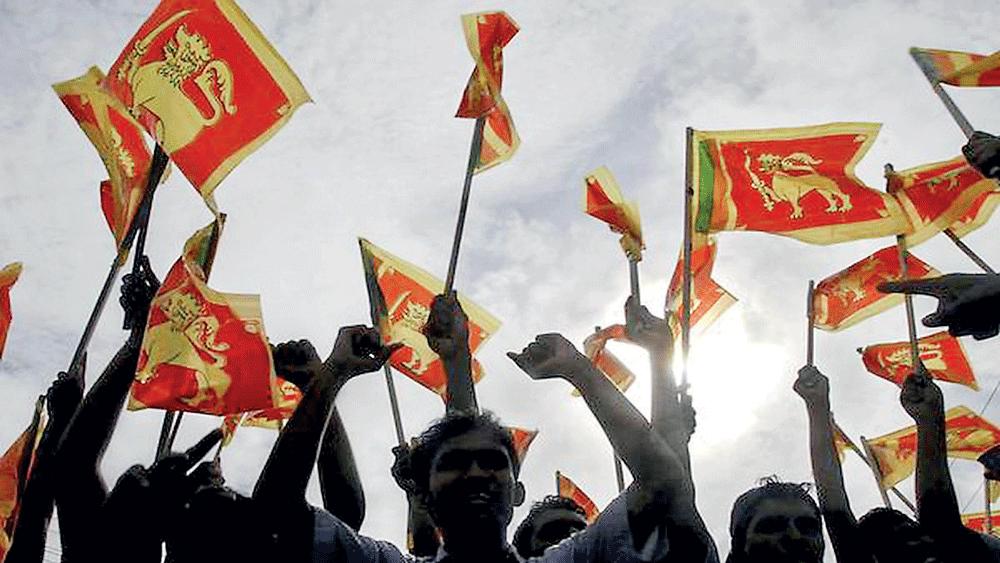
When the war ended in 2009, all Sri Lankans exhaled a collective sigh of relief
While the entire nation suffered during the war, the Tamil community bore the brunt of the conflict
The LTTE remains a forbidden entity in countries including the United States, United Kingdom, European Union, India, Australia and Malaysia
 The Liberation Tigers of Tamil Eelam (LTTE), once considered one of the most ruthless terrorist organisations in the world, remains a proscribed entity in countries such as the United States, United Kingdom, European Union, India, Australia and Malaysia. This designation reflects the horrific atrocities committed by the LTTE against innocent civilians in Sri Lanka, transcending ethnic and religious boundaries, Sinhalese, Tamil, and Muslim alike
The LTTE’s brutality was systematic and inhumane. Children were forcefully recruited as soldiers, denied the right to education and a future. Suicide bombings became their signature weapon, devastating villages, mosques, temples, and vital national infrastructure, including the Central Bank, the airport, and the harbour. From the massacre of innocent monks in Aranthalawa to the slaughter of worshippers in the Kattankudy mosque and the horror of Kent and Dollar Farm massacres, the scars of their terror remain deeply etched in our collective memory.
Their violence was indiscriminate. Prime Minister Rajiv Gandhi of India, President Ranasinghe Premadasa, Tamil political leaders, academics, journalists, and public servants were all victims. The LTTE also ethnically cleansed Sinhalese and Muslims from parts of the North and East. No one was spared.
While the entire country suffered during the nearly three-decade conflict, the Tamil community bore the brunt of it as the North and East became the main theatre of war. The LTTE, however, extended the conflict to the South and Colombo, unleashing a reign of terror across the island.
When the war ended in 2009, all Sri Lankans exhaled a collective sigh of relief. And among those who benefited most from the end of the war were the Tamil civilians themselves, liberated from the grip of a violent separatist movement and given an opportunity to reintegrate into national life. Today, Tamils are an integral part of Sri Lanka’s social, economic, and political fabric, entitled to equal protection under the Constitution. Let me be clear, Sri Lanka is not a perfect nation, but is there any country in the world that is? What we are is a functioning democracy with universal franchise, free healthcare, free education and a social safety net that does not discriminate between ethnic or religious groups. Sri Lanka is a nation in progress, rebuilding from the past, and striving to ensure that all its citizens enjoy peace, dignity and equality.
No one denies that there was collateral damage during the final stages of the war. War is, by nature, tragic. But the fact remains: the State of Sri Lanka worked tirelessly to protect and support the entrapped civilian population, even while knowing that a portion of those resources would inevitably be diverted by the LTTE to fuel its war machinery. Throughout the conflict, the government ensured the delivery of food, medicine, and essential services via a dedicated Essential Services Department headed by a Commissioner. Through government agents operating in LTTE-controlled areas, free public services, including healthcare and education, were continued.
That is why, in the final phase of the conflict, it was the civilians who ran towards the Sri Lankan armed forces, not away from them. They knew where safety lay even while the LTTE was using them as human shields until the very last moment.
With all our faults, Sri Lanka is not an apartheid state. We did not conquer someone else’s land. We defended our territorial integrity. We did not starve our people, nor does our Constitution permit us to do so.
Despite the LTTE’s defeat, its vast international network, which raised funds, procured arms, and lobbied foreign governments, remains active in different avatars. Many of these actors, operating under the guise of human rights activism, continue to promote a separatist agenda, misleading a new generation of youth and perpetuating divisions. And yet, how many of them have been sanctioned, prosecuted, or even called out by the very countries that now rush to impose one-sided sanctions on Sri Lanka’s war veterans?
This is the hypocrisy we must confront. Sri Lanka chose a path of reconciliation. We did not prosecute 12,197 surrendered LTTE cadres. Instead, we rehabilitated them, gave them a second chance, and reintegrated them into society. In recent years, nearly 27 convicted LTTE operatives, including those responsible for the Central Bank bombing, were pardoned by the President in an effort to build trust, promote reconciliation and move forward as a united nation.
Reconciliation takes time. It requires patience, understanding and a collective effort from all communities. It cannot be achieved through external pressure, selective condemnation, or unilateral sanctions that only serve to embolden extremist voices and satisfy diaspora vote-bank politics abroad.
The call to release convicted LTTE members as “political prisoners” while simultaneously punishing those who fought to liberate our nation from terrorism is not only unjust, it is profoundly immoral. It ignores the suffering of all Sri Lankans and undermines the sacrifices made to restore peace.
When the war was on, we all suffered. When the war ended, that suffering ended. What we need now is not a return to the dark days of division, but a determined march towards a future where we address the genuine grievances of our people, Tamil, Sinhalese, Muslim, Burgher, and others, not through the lens of separatism, but through unity, equality, and justice.
Let us reject extremism in all its forms, let us not succumb to the vicious agenda of a few separatist diaspora ideologies, resist the distortions of the past, and work together to build a Sri Lanka that celebrates its diversity and stands tall as one nation.
The writer was the Former Foreign Minister of Sri Lanka.