Reply To:
Name - Reply Comment
Unlike a negotiated trade agreement, GSP+ is a concession that can be taken away by the EU if Sri Lanka does not keep its commitments
 Agreement in principle has been reached on a massive trade agreement between the major economic powerhouses of India and the EU. This is a major and positive element of the reconstitution of international economic relations following the depredations of Donald Trump. But it requires attention and action on Sri Lanka’s part.
As soon as the agreement comes into effect, tariffs on textiles, apparel, marine, leather, footwear, chemicals, plastics/rubber, sports goods, toys, gems, and jewellery sectors, comprising more than US Dollar (US$) 33 billion of exports that are currently subjected to import duty between 4-26 percent in the EU and are crucial for employment generation, will be subject to zero duty. Sri Lanka has been enjoying zero duty on major exports such as apparel, rubber products and bicycles from 2017 May when the GSP+ concession was regained.
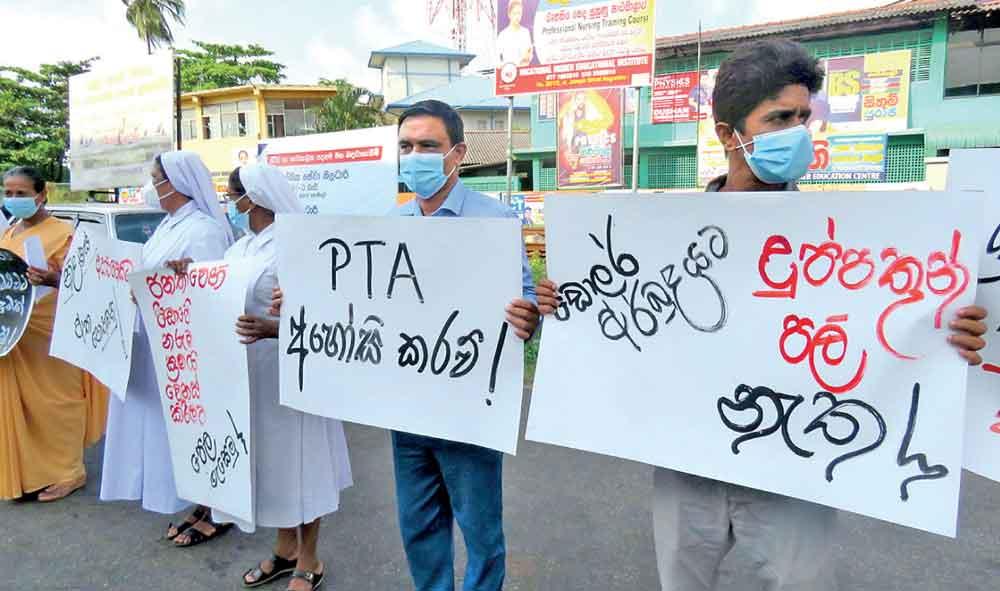
 Unlike a negotiated trade agreement, GSP+ is a concession that can be taken away by the EU if Sri Lanka does not keep its commitments, as happened in 2010. In May 2025, at the eighth Meeting of the EU Working Group on Governance, Rule of Law and Human Rights, the Government “confirmed the commitment to repeal the Prevention of Terrorism Act (PTA) and briefed the Working Group on the timeline to replace it with new counter-terrorism legislation in compliance with international norms and standards.”
Meeting international norms
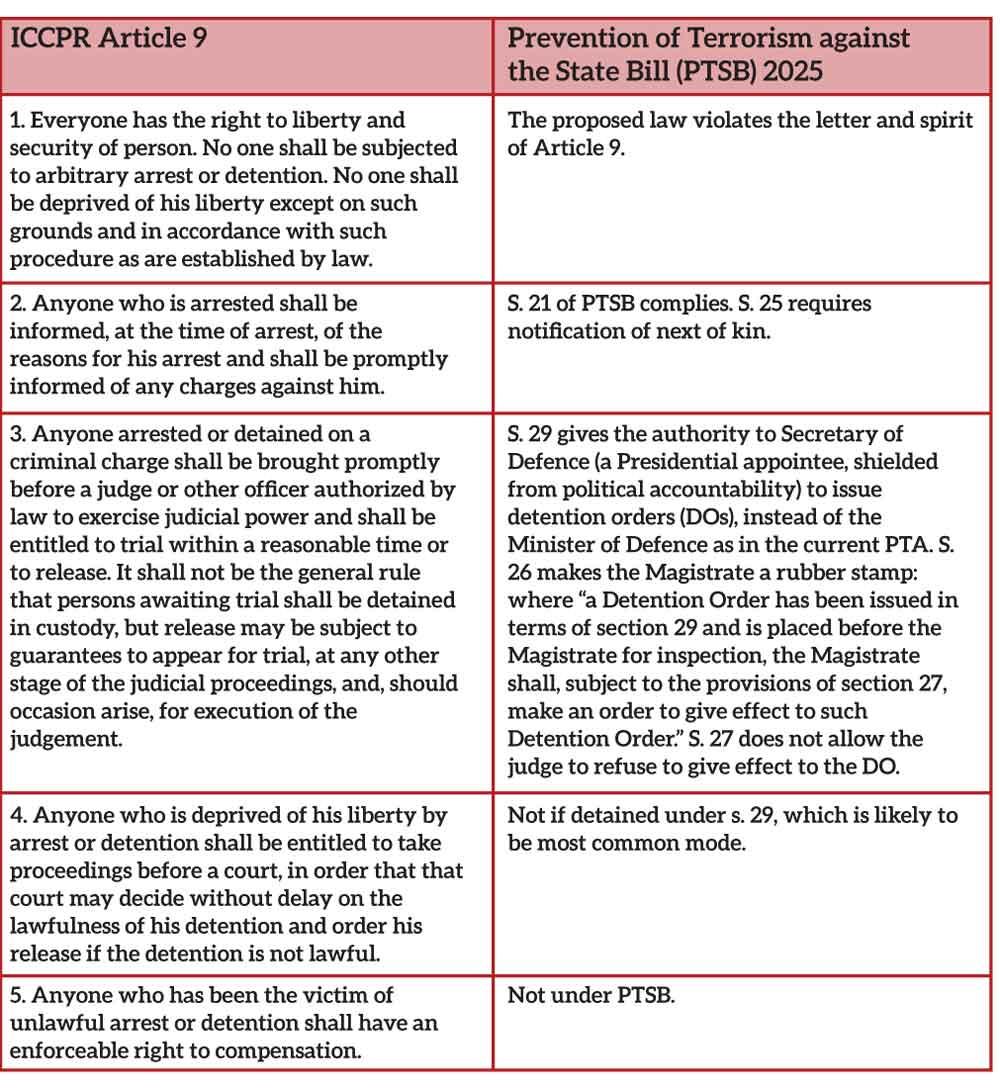
The International Covenant on Civil and Political Rights (ICCPR) is the overarching document that sets out international norms and standards in this area. Sri Lanka acceded to it on 11 June 1980.
Under the draft, the politically appointed Secretary to the Ministry of Defence will issue detention orders (DO) under section 29. The magistrate will have no authority to modify or decline to implement of the DO. This is non-compliant with ICCPR Article 9(3). At a minimum, the magistrate must have authority refuse to implement or to modify the DO. Ideally, the ‘judge’ referred to in the ICCPR would a High Court judge who is more likely to exercise his/her discretion withstanding pressure from the executive.
The draft PTSB is not compliant with international norms. It will endanger exports to Europe that are even more important now in light of the risks associate with exports to the US. Because India will have zero tariffs in sectors important to Sri Lanka, the consequences will be worse than in 2010.