Reply To:
Name - Reply Comment
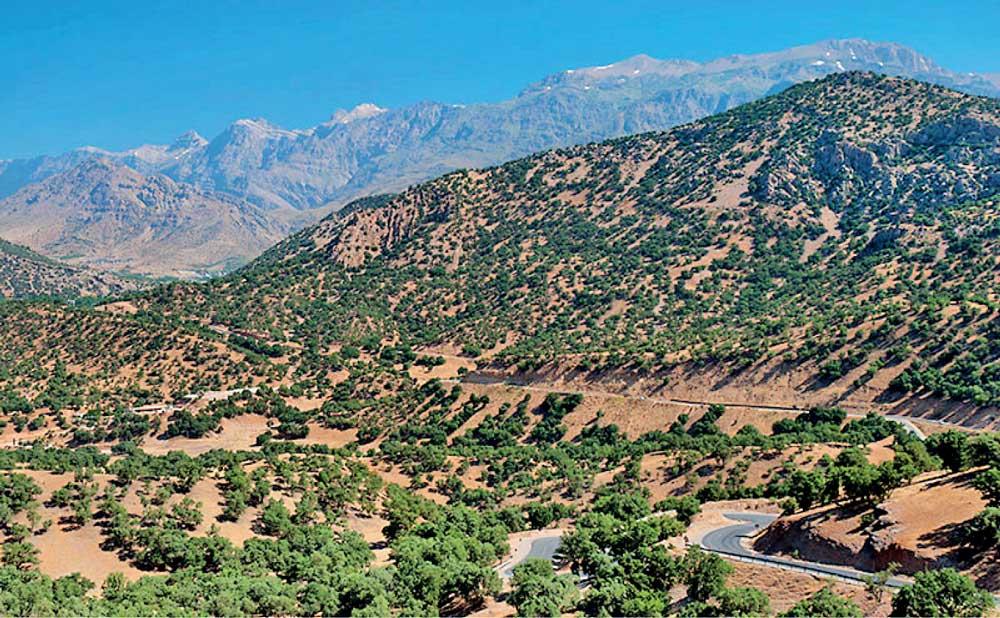
This mountainous landscape shown in the picture provides Iran with an extraordinary level of strategic depth if a ground war does occur

In the volatile landscape of 2026, where conflict between the United States and Iran has reached unprecedented levels of aerial and naval engagement, one strategic axiom remains remarkably durable: a large-scale American ground invasion of Iran is not merely unlikely; it is practically unthinkable.
While political rhetoric occasionally flirts with the idea of “total victory,” military planners in Washington have long understood that Iran is a unique fortress. The premise that the possibility of “American boots on ground in Iran is zero” is not based on a lack of US military capability, but rather on an unyielding convergence of geography, historical precedent, modern military doctrine, and current geopolitical realilties.
Natural Fortress: Geography as Destiny
The primary and most immutable barrier to a ground invasion is Iran’s topography. Iran is not a desert plain like Iraq; it is a massive, high plateau rimmed by some of the most formidable mountain ranges on earth.
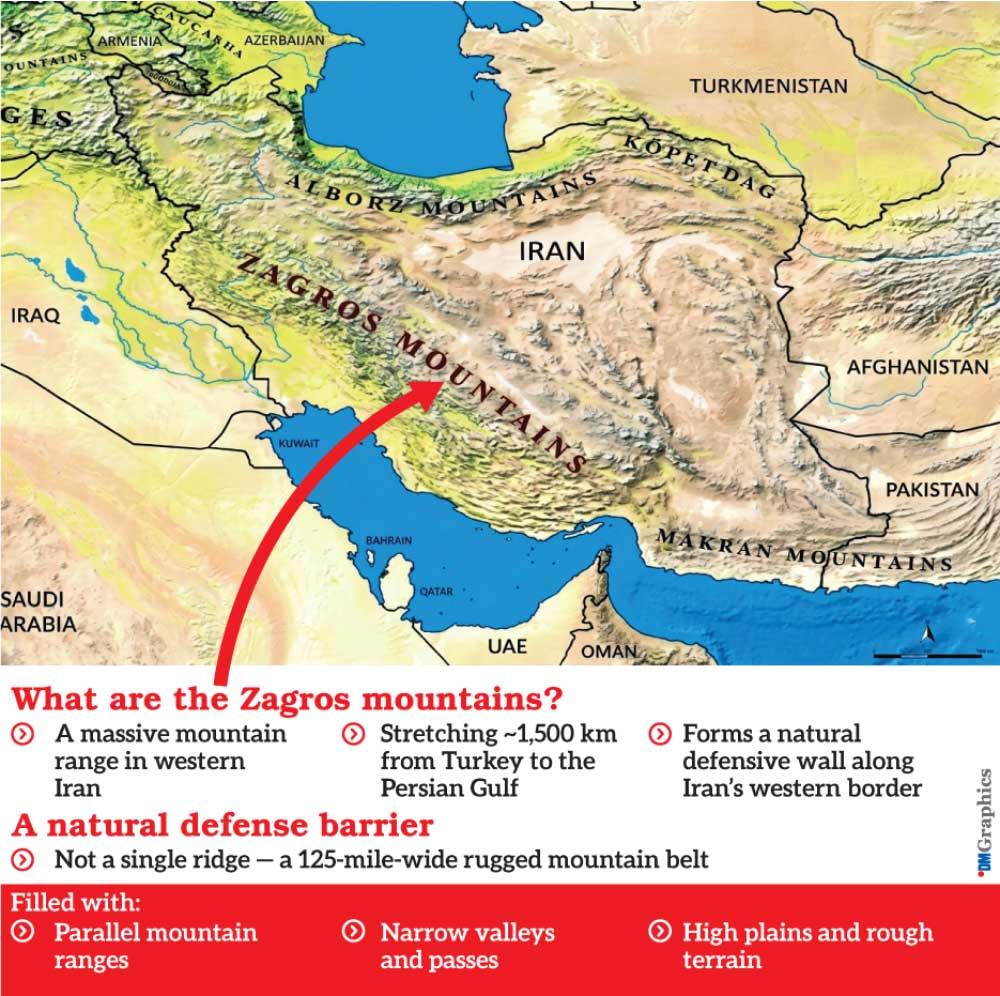
The Western Barrier: To the west, the Zagros Mountains stretch 1,500 kilometres from the Turkish border to the Persian Gulf. This is not a single ridge, but a 125-mile-wide belt of parallel, rugged ranges interspersed with high plains. Mechanised, armored warfare, which relies on speed and secure supply lines, becomes highly predictable and vulnerable here. Invading forces are forced into narrow passes where air power is mitigated by terrain, and defenders hold every high-ground advantage.
The Northern Rim: To the north, the sharp, volcanic peaks of the Alborz Mountains shield Tehran and the vital Caspian coastal strip, falling precipitously from 10,000 feet to below sea level.
The Vast Interior: Beyond the mountain rings lie vast, arid central basins and salt deserts. Even to capture major power centers like Tehran, an invading force must first breach the Zagros and then traverse these hostile, dispersed terrains.
This landscape provides Iran with an extraordinary level of strategic depth. Military installations and nuclear infrastructure are often dispersed across the plateau or buried deep within mountains, making them resilient even to sophisticated air campaigns. Geography, in this context, is a massive “force multiplier” for the defender.
The Myth of Unconquerability: Historic Preservation of Identity
While the prompt suggests no country has been able to invade Iran, a more accurate historical assessment is that while Iran has been conquered, it has never been successfully “held” or assimilated, and its national identity has proved remarkably resilient.
Foreign powers, including the Greeks, Arabs, Turks, and Mongols, have traversed the plateau. However, the unique result has consistently been that the distinct Iranian cultural and political identity reasserts itself, often influencing and absorbing the invaders.
Furthermore, the memory of modern resistance is potent. The Iran-Iraq War (1980–1988), the deadliest conventional war between regular armies of developing nations in history, demonstrated that even when chaotic following a revolution, the Iranian nation could mobilize massive popular resistance (the Basij) to repel a sustained invasion. This historical resilience suggests that any modern occupation would face an entrenched, motivated insurgency that geography would protect.
The Architecture of Endurance: Modern Military Doctrine
Recognising its conventional inferiority against a superpower like the US, Iran has spent decades developing a defense strategy optimised for its terrain.
Mosaic Defense: This doctrine is the core of Iranian resilience. Rather than a centralised command structure that could be paralysed by a “decapitation strike,” Iran has organised its defence into multiple, regional, and semi-independent layers. The state’s 31 provinces operate as autonomous command cells. If the central command in Tehran is cut off, local units retain the authority and capability to launch an insurgency.
Asymmetric and Irregular Warfare: Iranian thinking treats war not as a contest of firepower but as a test of endurance. By relying on “mosaic defence,” short-range missiles, and rapid reinforcement units, Iran aims to turn its territory into a layered arena of long-term attrition, making any battlefield victory unthinkable to resolve quickly.
The Present Conflict: Deterrence in Action
The ongoing conflict of 2026, known as Operation Epic Fury, perfectly illustrates why ground troops remain off the table.
Despite massive US and Israeli air strikes since February 28, which targeted nuclear sites and leadership, the conflict has remained airborne and naval. Why? Because the cost asymmetry of a ground move is too high.
Political Unpopularity: As the current air campaign drags on, it is already becoming unpopular in the US. A ground invasion, requiring hundreds of thousands of troops to control a population of nearly 90 million, would be an unimaginable drain on resources and lives.
Insurgency Nightmare: Experts agree that an insurgency in Iran, protected by the Zagros Mountains, would make the occupation of Afghanistan look like a mild challenge.
Geopolitical Impact: A ground war would jeopardise relations with major powers. China (Iran’s biggest oil purchaser), Russia, and India are all invested in regional stability.
Why a Ground Invasion Would Dwarf the Afghanistan Failure
As the 2026 conflict between the United States and Iran escalates under Operation Epic Fury, the specter of a ground invasion looms. However, military analysts and historians agree: while the twenty-year campaign in Afghanistan was a strategic failure, an attempt to put “boots on the ground” in Iran would result in consequences far more catastrophic for American power, the global economy, and regional stability.
Scale of resistance and demographics
Afghanistan, at the time of the 2001 invasion, was a fractured state with a population of roughly 20 million and a decentralised, primitive military. Iran in 2026 is a sophisticated nation-state of nearly 90 million people with a deeply entrenched national identity. Unlike the Taliban, who were a non-state actor, the Iranian military and the Islamic Revolutionary Guard Corps (IRGC) possess a formal “Mosaic Defense” doctrine. This strategy decentralises command into 31 autonomous provincial cells, ensuring that even if Tehran falls, a nationwide, high-tech insurgency would begin instantly. American forces would not be fighting a ragtag militia, but a disciplined, technologically capable population with a “homeland or death” mandate.
Geophysical and urban complexity
Afghanistan’s terrain was brutal, but Iran’s is a natural fortress. The Zagros Mountains create a 1,500-kilometre barrier that funnels invading forces into narrow kill zones, negating American advantages in armor and speed. Furthermore, Iran is highly urbanised. A ground war would require the “clearing” of massive metropolitan hubs like Tehran, Isfahan, and Mashhad. The logistical burden of occupying a country nearly four times the size of Iraq, with a terrain that combines Alpine-style mountains with vast salt deserts, would require an estimated 500,000 to 1 million troops—a commitment the US military cannot sustain without a national draft and a total war footing.
Economic and global catastrophe
In Afghanistan, the economic fallout was largely limited to the US federal budget. In Iran, a ground invasion would trigger a global “Energy Armageddon.” Iran sits on the Strait of Hormuz, the world’s most critical oil chokepoint. While the current 2026 air campaign has already pushed oil prices toward $120 per barrel, a ground invasion would likely lead to the permanent sabotage of energy infrastructure. The resulting global depression would dwarf the 2008 financial crisis, alienating every major US ally and potentially drawing China and Russia—both of whom have deep strategic interests in Iranian stability—into a direct confrontation with Washington.
“Axis of Resistance”
Unlike the isolated Taliban, Iran leads a regional “Axis of Resistance.” A ground invasion would instantly activate battle-hardened proxies from Lebanon (Hezbollah) to Yemen (Houthis). These groups, armed with 2026-era precision drones and missiles, would target US bases and interests across the entire Middle East. The war would not be “contained” within Iranian borders; it would become a multi-front regional conflagration that would drain American blood and treasure at a rate ten times faster than the Afghan “forever war.”
A ground invasion of Iran would not be a sequel to Afghanistan; it would be a total systemic collapse of the post-WWII international order. The combination of Iran’s topographical defense, asymmetric military doctrine, and its stranglehold on global energy makes the cost of a ground war prohibitive.
Conclusion
The possibility of significant American boots on Iranian ground is zero because the “endgame” required for such an operation is unattainable. Modern warfare doctrine has validated what geography decided millennia ago: Iran is a natural fortress optimised for a long, grinding war of attrition that no modern democracy has the political will or economic capacity to endure.
The current 2026 air campaign is likely the limit of engagement. The US will likely continue to push Iran toward the negotiating table using economic and aerial pressure, rather than attempting to conquer its geography. In the end, geography is destiny, and Iran’s mountains remain its ultimate shield.
A U.S. ground invasion of Iran would likely mirror the catastrophic “quagmires” of Vietnam and Afghanistan, but on a far more devastating scale. While air superiority can degrade infrastructure, a terrestrial campaign faces Iran’s “mountainous fortress” geography—terrain even more punishing than the Hindu Kush. Unlike the decentralised insurgencies of the past, Iran possesses a professional, million-man military specifically trained for asymmetric “mosaic defense,” designed to bleed an occupying force through attrition.
With a landmass four times the size of Iraq and a highly nationalist population of 85 million, any attempt at occupation would require hundreds of thousands of troops, leading to casualty rates not seen since the mid-20th century. Furthermore, such an escalation would likely draw in rivals like Russia and China, who could provide advanced weaponry to insurgents, transforming the conflict into a permanent, resource-draining proxy war. Ultimately, “boots on the ground” would likely result in a strategic stalemate, domestic political collapse, and a multi-decade withdrawal.
For America, the result would likely be a “super-quagmire” that ends its status as a global superpower.
(The writer is a distinguished International Researcher, Author and analyst with a career spanning over 36 years of service in the Sri Lanka Army, including 20 years in active combat. A seasoned Infantry officer, the writer holds a PhD in Economics and has authored 17 books and over 200 research articles. His multifaceted expertise bridges the gap between National Security, Global Politics and Economic strategy. As an entrepreneur and International analyst, he provides strategic insights into the intersection of security and economic policy. He can be reached [email protected])