Reply To:
Name - Reply Comment
Issuing a statement, the Minority Professional Hub, a think Tank of Minority Groups, has expressed concern over the government’s decision declaring “Vesak Week” from May 27 to June 2, 2026 and the adjustment of public holidays under Gazette Extraordinary No. 2485/14.
‘’The Minority Professional Hub (MPH), comprising members from across all districts of Sri Lanka and reflecting minority perspectives within the national context, wish to point out that Sri Lanka is a diverse ethnic and religious country where coexistence is sustained through mutual respect and equal protection by the law
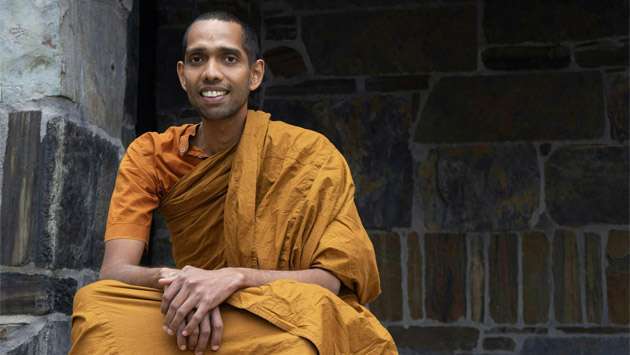
In this spirit, the MPH acknowledges and respects the religious and cultural significance of Vesak to the Buddhist religious community. The recent “Peace Walk” initiative further reflects the shared commitment across communities to uphold harmony, unity, and interfaith respect in our nation.
However, the current decision raises a serious concern regarding its impact on the Muslim minority community, particularly in relation to “Udhiyah (Qurbani)”, a time-bound religious obligation that must be performed within a specific time and prescribed days, It cannot be postponed or rescheduled. This overlap with Vesak Week restrictions, particularly on the May 28 and 29 and on May 30, 2026, creating a direct religious contradiction regarding some Islamic practices.
The Secretary to the Ministry of Public Administration, Provincial Councils, and Local Government issued Circular No. EA/1/2/Vesak/2026, dated April 17, 2026. The circular instructs relevant authorities to follow Circular No. 3/2026 and make the necessary arrangements accordingly. However, it does not clearly indicate that the Muslim community may observe Udhiyah during the Vesak Week period, which did not clearly indicate that the Muslim community may also engage in the observance of Udhiyah during the Vesak Week period; therefore, government departments should make the necessary arrangements, including ensuring that Local Authorities keep slaughterhouses open and provide access to animal slaughter in terms of fulfilling their religious obligation of Udhiyah.
Due to the ambiguity of the circular, it appears that certain government departments have interpreted it in line with existing practices and have already issued instructions to Local Authorities to close slaughterhouses and prohibit animal slaughter. This has resulted in significant concern and tension within the Muslim community.
At the same time, public assurances have been made at the national level. On 28th of April, 2026, the Cabinet Spokesperson, Dr. Nalinda Jayatissa, stated that no community would be affected and that both religious observances could take place without disruptions, citing previous instances. The coexistence of these administrative restrictions and public assurances reflects a clear inconsistency between policy direction and implementation. This lack of alignment raises serious concerns regarding the coherence, clarity, and reliability of the government’s decision-making process, and creates uncertainty for affected communities attempting to comply with both religious obligations and state directives.
This raises serious concerns under the Constitution of Sri Lanka. Article 10 guarantees freedom of thought, conscience, and religion, while Article 14(1)(e) ensures the freedom to manifest religion or belief in worship, observance, practice, and teaching. The present circumstances place these guarantees into question, as the Muslim community is faced with limitations in practising an essential religious obligation due to a state decision.
From a practical standpoint, this is not merely a policy misalignment but a structural conflict. Udhiyah occurs once annually within a fixed religious window. Missing this period means the obligation cannot be fulfilled for that year. Therefore, any restriction during this specific timeframe has a direct and irreversible impact on religious practice.
Furthermore, concern arises from emerging public discourse around this issue. Statements encouraging the Muslim community to perform their religious obligations in a manner that is subordinate to the observance of another community create a perception of unequal prioritisation. Such narratives risk reinforcing the idea that one community’s practices must be adjusted or limited in favour of another, which undermines the principle of equality.
Additionally, the absence of Muslim representation at key decision-making levels, coupled with assurances that decisions would be made considering all communities, raises serious questions regarding inclusivity. The current outcome suggests that the concerns of the Muslim community were not adequately considered. This reflects a gap in inclusive governance and creates a perception of bias that must be addressed.
The situation also carries broader social implications. In areas where Muslims live as minorities, there is an increased risk of pressure, misunderstanding, and tension. If not handled carefully, such conditions may be exploited by extremist elements to create division between communities. Preventing such outcomes requires proactive, balanced, and rights-based decision-making. In light of the above, the MPH strongly urges the government to take immediate and corrective measures to ensure that the rights of all communities are upheld without discrimination and equal treatment and protection by the law
1. Reassess the Current Decision: Undertake an immediate review of the Vesak Week declaration and associated public holiday adjustments to ensure that they do not conflict with time-bound religious obligations such as Udhiyah.
2. Ensure Constitutional Guarantees of Religious Freedom: Take all necessary measures to uphold Articles 10 and 14(1)(e) of the Constitution by enabling the Muslim community to observe Udhiyah within the prescribed timeframe, without restriction or interference.
3. Provide Practical and Lawful Accommodation: Establish clear, structured, and lawful mechanisms that allow for the observance of Udhiyah in a manner that respects both Vesak observances and the religious rights of the Muslim community, without diminishing either.
4. Guarantee Non-Discriminatory Enforcement: Issue formal directives to all relevant administrative and law enforcement authorities to ensure that regulations are implemented in a fair, consistent, and non-discriminatory manner across all communities.
5. Address Harmful or Unequal Public Narratives: Take proactive steps to discourage and correct public statements or narratives that suggest the subordination of one community’s religious practices to another, and reaffirm the State’s commitment to equality and non-discrimination.
6. Strengthen Inclusive Decision-Making Processes: Ensure that minority communities are meaningfully consulted in policy decisions that directly impact their religious practices, in order to prevent similar conflicts in the future.
7. Safeguard Social Cohesion and Prevent Escalation: Implement appropriate monitoring and response mechanisms to prevent the escalation of communal tensions, and ensure that all actions taken during this period contribute to maintaining peace, trust, and coexistence.
The Minority Professional Hub reiterates its respect for all religious communities in Sri Lanka and emphasises that protecting the rights of one community must not come at the cost of another. Failure to address this issue risks not only the violation of constitutional guarantees but also the erosion of confidence in equitable governance.
We respectfully call upon the government to act decisively, fairly, and inclusively in resolving this matter.’’