
Reply To:
Name - Reply Comment
Around 1977, at the age of 45, he wrote, “My head is swirling with doubts and problems…they concern my career and where I am going, and what I am going to do with the remainder of my life
There are many instances of self-prophecy in my father’s life, some dating back to his childhood. He knew he was wired for excellence, but at this point in his life, the prospect of making a difference seemed to be elusive
|
“I am here only to help my country”: Lakshman Kadirgamar’s letters highlighted his efforts to solve Sri Lanka’s pressing issues, which demonstrate his true dedication to the nation |
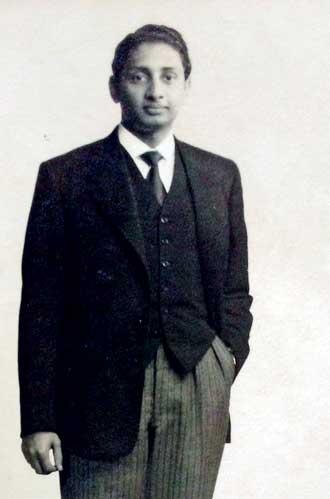
 Once again, I have been gifted with material that provides further invaluable insight into the nature of my father, Lakshman Kadirgamar. April 12, 2025, marks his 93rd birth anniversary, while August 12, 2025, will mark 20 years since his assassination.
With the passing of my mother, Angela Kadirgamar, in November 2024, the task of clearing out her affairs has fallen upon me. It is a deeply heart wrenching task, yet one that has yielded unexpected surprises. My mother was a hoarder of sorts, unable to discard letters, cards and other historical memorabilia. I have inherited this trait of hoarding and, with it, the ability to transform such written content into stories that bring to life facts, memories and recollections of a bygone era.
Her preserved correspondence, written and received over a period of 65 years, has traveled from Oxford to Colombo, back again to Oxford, then on to Geneva and the French countryside, finally returning to Colombo again, to lie faded and yellowing in boxes and bags.
Imagine my surprise when I stumbled upon a pack of my father’s letters to her, commencing in 1956 when they first bumped into each other in London. Angela had been travelling in a taxi with a Ceylonese friend when a young man suddenly darted into the street, almost getting run over. That man was Lakshman, and he and Angela’s friend were both law students who knew each other.
Lakshman and Angela’s was a very short courtship. The earliest letters precede the months before their marriage in December 1956, and contain proclamations of love that I could never have imagined my father capable of. Hardly an overly demonstrative or emotional man, young Lakshman’s romantic declarations show a vulnerable side of his persona which, if not for the discovery of these letters, would never have come to light.
A Supportive Husband
In a letter written in 1972, Lakshman thanked my mother for “All the sweetness you have brought to my life in better times; your unfailing support and encouragement which has sustained me in all my undertakings over these many years; the two children you have given me…”
In 1973, back again in Oxford at the age of 43, with two children to raise and a house to manage with no domestic help, my mother, a gifted painter and sculptor, dedicated herself to studying art at the Ruskin School of Art at the University of Oxford. It was certainly not easy juggling school drop-offs and pickups, cooking, housework, attending lectures, and completing assignments with little or no help from my father, as he was commuting to London on a daily basis. What Lakshman did offer, however, was his unstinting support and encouragement for her artistic and academic pursuits.
In one letter written in December 1973 from Geneva, he advised her, “Please proceed firmly on the basis that you must—and will—finish your course at the Ruskin. As I said in my last letter, this is too big an opportunity in your life to trifle with it”.
Anticipating the move to Geneva and a cosmopolitan lifestyle, he reassured her: “Your days as a cook and hostess are over—in terms of the drudgery of it. You have something much bigger and more important to live for—and I wouldn’t dream of asking you to play that role again”.
In 1974, he reinforced his heartfelt belief in my mother, “You are not a housewife/artist. You are an artist in your own right and on your own merits. You must be ambitious. You must create. You must excel. You must persevere. I will do everything in my power to help you. You have a great talent. And I love you”.
Seeking a Role to Play
In this same letter (his letters generally ran to multiple pages), he bares his soul to my mother. “I am also an independent creature. I am an actor, a politician (in the wide sense). I must fill a role—and I must find it. This international world is my métier. I am so relieved after two years of living in England—much as I like it in many ways—to be myself in the concourse of nations. I told you some time ago that ambition was dead. It is, in the sense that I just cannot see how I can play the role that I feel in my bones I ought to play. But I must find it. When we set up our establishment in Geneva, I must not go to sleep. I must meet people and read and work and do things. There may be something interesting to do around the corner. I must be ready for it. We must excel in our different ways. And we must excel together”.
The fact that my mother preserved his letters is testament to the great, though imperfect love they had for each other. Though decades had passed and my parents had gone their separate ways, my mother repeatedly asked about my father throughout the final days of her life. She was semi-conscious and semi-paralysed by then, and we did not have the heart to remind her that he was long gone. We assured her that they would meet again.
JVP Worries and Leaving Ceylon
On April 13, 1971, my mother wrote to Lakshman, who was away in London, describing the situation in Colombo with JVP unrest bubbling at the surface, resulting in curfews, and fears of what the future held. Though a foreigner, my mother’s deep love for and understanding of the situation in Ceylon at the time was invaluable to Lakshman, as he contemplated our family’s future. Her detailed letters kept him abreast of the ground situation.
Their final decision, as a result of the troubling times and the looming threat of ‘Sinhala only’ in the judicial and educational system which would have severely impacted Lakshman’s legal practice and our education, resulted in our leaving Ceylon in the summer of 1971.
Regrets
Lakshman regretted the decision throughout his life, for he felt adrift, directionless and almost homeless throughout his years in Europe.
“As for me. I no longer have (if I ever had) any grand purpose, point or plan in my life. Like Henry V of Agincourt who cried ‘My kingdom for a horse’, I can only cry ‘give me a country, a platform’. I have neither and am not likely ever to have them,” he wrote in 1973.
This letter, written from Geneva where he had relocated ahead of my mother, brother and me from Oxford, found him in a deep depression, filled with regret for leaving Ceylon, his law practice, legal fraternity and everything beloved and familiar. Trapped in the UN system with limited opportunities to advance or make a difference, his letters to my mother during this period were soul-baring.
Settling into the first of many rented houses in Geneva, he penned these thoughts on July 7, 1974. “As I unload my [law] books, waves of nostalgia come over me. I was getting depressed, especially since on resuming work at the ILO, it seems so dull and pointless. But then I began to take myself in hand. I remind myself that the past is dead and gone and buried; that there is nothing in Ceylon now. The Bar I knew is finished. I remind myself how lucky I really am – how I have so much when my contemporaries have so many problems.”
Discontent
While it was generally thought that Lakshman was content and intellectually stimulated by his UN work, the letters he wrote to my mother from England, Switzerland and during his international travels, detailed how miserable he was with his UN job, first at ILO, then at WIPO.
Around 1977, at the age of 45 he wrote, “My head is swirling with doubts and problems…they concern my career and where I am going, and what I am going to do with the remainder of my life”.
There are many instances of self-prophecy in my father’s life, some dating back to his childhood. He knew he was wired for excellence, but at this point in his life, the prospect of making a difference seemed to be elusive.
However, 23 years after having left Ceylon, in 1994, he would find more than a platform when he took up the mantle of Foreign Minister of Sri Lanka. Though he had doubted it at times, there was most certainly a grand plan for his life after all. It is evident with all that I have discovered of late, that this man was predestined for greatness, the rare greatness of truly serving one’s country.
In his own words, “I am here only to do one thing, and that is to help my country as best as I can to solve the gravest problem of our time, and if I can make a miniscule contribution towards that effort, that will be enough for me till the end of my days. I seek nothing else”.