Reply To:
Name - Reply Comment
At least five known incidents of youth deaths by suicide happened in Sri Lanka during the first three months of 2025.
At least five known incidents of youth deaths by suicide happened in Sri Lanka during the first three months of 2025. While the situations varied, each incident took away a young life which could have been prevented if proper interventions had been sought. In a recent incident, the young victim had posted a status on social media prior to taking his own life. The post, which is widely being shared on social media with users continuing to comment on the loss of an innocent life, indicates the level of stress that the individual had to endure during his short lifespan.
According to the College of Community Physicians, over 200 cases of child suicide were reported in 2024 alone, and medical experts link the surge in cases to the negative impacts of social media. Studies indicate that social media usage affects children, adolescents and adults differently. Social media images have a significant impact on the body image and potential deviant behaviour of an average adolescent. However, one major difference between adults and adolescents is that adolescents are facing the most vulnerable and sensitive period of their lives. It is common to see digital content creators constantly uploading their skin care routines, diet plans and showing slim figures, portraying an unrealistic image to users. But for an adolescent, these unattainable and unrealistic body sizes could be her ultimate goal. As a result, they eventually fail, and this failure leads to body dissatisfaction, low self-esteem, eating disorders and/or depression. Global research indicates that excessive social media usage among children has been linked to increasing psychological difficulties.
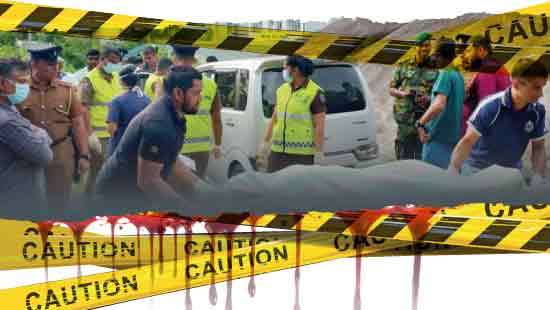
But in recent times, what is even more concerning than incidents of suicide themselves is the manner in which these incidents are being reported. Recently, an individual reportedly jumped off a luxury hotel in Colombo. Moments later, a letter believed to have been addressed to his mother was made viral on national media and social media channels. But this is not the first instance when such sensitive information was revealed to the public before an investigation had even been launched. Similarly, CCTV footage of daylight shootings, accidents and murders is often released to the media, often posing a risk to bystanders in the event that they are being identified.
Therefore, the gravity of revealing sensitive information with the objective of securing more views or hits, simply revictimises the victims and their next of kin. The trauma and societal pressure that families of victims of suicide have to endure are indescribable. They get revictimised during Police investigations, during news coverage, and there is certainly no escape for them.
One of the fundamentals when reporting an incident of suicide is to refrain from disclosing personal information about the victim. This includes the individual’s name, age and place of birth and most importantly, the method of committing suicide. These guidelines are clearly mentioned in the Code of Professional Practice for journalists of The Editors’ Guild of Sri Lanka, adopted by the Press Complaints Commission of Sri Lanka. Even if details are revealed in the public interest, the journalist’s definition of public interest should be clearly defined.
In a country like Sri Lanka, the stigma attached to people who have had suicidal thoughts or who have attempted suicide is beyond imagination. People are quick to label them as ‘mentally off’ rather than coming forward to assist them. We are a country with people (except a few) who love to make a mountain out of a molehill. So once an innocent life becomes a victim of suicide, the gossip and rumors become the order of the day. Therefore, it is safe to estimate the attention span of an average Sri Lankan as one week. They would be busy with another gossip the following week, and the news during the previous week had obviously become stale by then. Having said that, it is the duty of the media to report incidents of suicide in an ethical manner, so that people too would respect the victim. But what often happens is the opposite.
‘Your Thought’ is a space, a right of the readers to support or contradict and discuss the issues highlighted in the editorial and other articles in the editorial and op-ed pages. Designed as the reader’s editorial; our readers can send in their writings, with a word count not exceeding 200, to ‘Your Thought’, Daily Mirror Political Features Desk, No 8, Hunupitiya Cross Road, Colombo 2 or email to [email protected]