Reply To:
Name - Reply Comment
Political analysts attribute this regional phenomenon of youth uprisings to a shared sense of generational betrayal
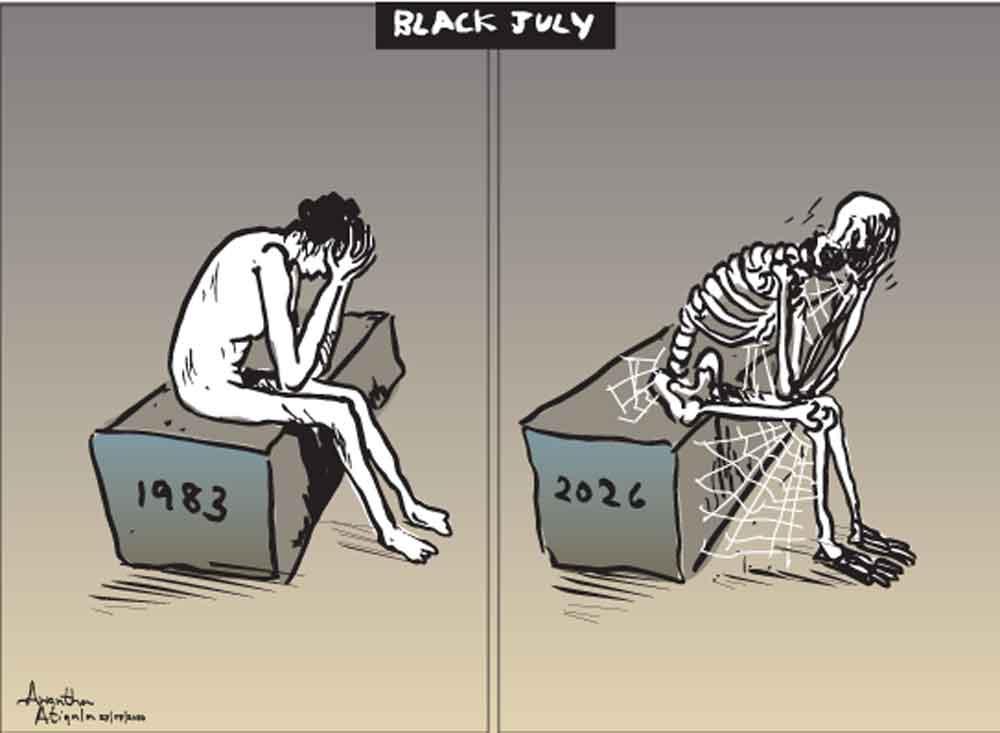
Sri Lanka has a long and rather bloodied history of protests, uprisings, insurrections, enforced disappearances and everything in between. The ongoing excavations at the Chemmani mass grave highlight the gravity of the atrocities committed in recent history. A recently excavated skeleton, referred to as Skeleton 429 was unlike other any skeletal remains that were being unearthed. The skeleton was discovered in a tight, seated posture with knees pulled sharply towards the chest and the torso slumped forward, leaving many unanswered questions.
July is a significant month for Sri Lanka as there are many memorials and events being organised to commemorate Black July. The violence was triggered when the Liberation Tigers of Tamil Eelam (LTTE) ambushed a Sri Lankan Army patrol in the Northern Province, killing 13 soldiers. This incident served as a catalyst for premeditated and widespread riots across the country. Long simmering tensions between the majority Sinhalese and the largely Hindu minority eventually led to the 26-year long armed conflict.
The country has come a long way since then. People have seen the best and worst of times, in the form of ethnic divisions, authoritarian rulers, political plots, people’s movements in the form of Aragalaya, and how corrupt regimes were eventually overthrown. In fact, Sri Lanka inspired citizens from many other countries to realise the power they have in their hands. Gen-Z protests in Bangladesh and Nepal are examples from the South Asian region. The Gen-Z uprising in Kenya is another example from another part of the world. In each one of these uprisings, people and mostly the Gen-Z stood up against political corruption, police brutality, and ban on social media and so on.
The ongoing student-led protests in India triggered by a comment made by India’s Chief Justice Surya Kant which referred to unemployed graduates as ‘cockroaches’ is the latest addition to the list of Gen-Z uprisings in South Asia. In response to the Chief Justice’s comment, Abhijeet Dipke, a 30-year old graduate in public relations from Boston University, initiated a sweeping satirical online movement called the ‘Cockroach Janta Party.’ However, the situation escalated when the government decided to cancel the National Eligibility cum Entrance Test (NEET), India’s undergraduate medical school entrance exam, after its question papers were found to have been leaked. The exam paper leak is said to have coincided with the birth of the cockroach movement. Protesters are now demanding the resignation of education minister Dharmendra Pradhan.
Supporting the youth-led protests is Sonam Wangchuk, a well-known Indian activist and educator, the inspiration behind the 2009 super hit Bollywood film ‘Three Idiots’. He is one of best-known public figures from Ladakh. His work has earned international recognition, including the Ramon Magsaysay Award in 2018, often referred to as Asia’s Nobel Prize. His deteriorating health has sparked widespread concern among his supporters, but he claims that he would end the hunger strike ‘only if the government took accountability for the recent failures in the education system.’
In Sri Lanka, many individuals have launched hunger strikes for serious causes – demanding accountability for enforced disappearances and various atrocities committed during the armed conflict, to various other struggles demanding justice. These hunger strikes are unlike those that have been politically motivated. Some local political figures have now become infamous for launching hunger strikes only to end it within a day or two.
Political analysts attribute this regional phenomenon of youth uprisings to a shared sense of generational betrayal. They observe that rapidly growing, predominantly young populations feel completely disconnected from entrenched political elites. Perhaps these leaderless, digitally empowered youth movements will eventually reshape the regional political landscape in South Asia.
‘Your Thought’ is a space, a right of the readers to support or contradict and discuss the issues highlighted in the editorial and other articles in the editorial and op-ed pages. Designed as the reader’s editorial; our readers can send in their writings, with a word count not exceeding 200, to ‘Your Thought’, Daily Mirror Political Features Desk, No 8, Hunupitiya Cross Road, Colombo 2 or email to [email protected]