Reply To:
Name - Reply Comment
 A good diet keeps illnesses at bay: A diet consisting of vegetables, fruits, whole grains, legumes, nuts and seeds, without processed, sugary, salty or trans fat foods, is the healthiest
7 to 9 hours of sleep is a biological necessity, not a luxury
 World Health Day, observed annually on April 7, is a global call to action to prioritise health and well-being. The latest evidence-based medicine provides a roadmap for maintaining fitness and vitality in an era where lifestyle diseases—such as obesity, diabetes, and hypertension—continue to challenge global populations.
This article delves into five key areas of good health habits, namely—nutrition, exercise, sleep, mental health and preventive care—rooted in cutting-edge research to help you thrive.
Nutrition: The Cornerstone of Wellness
What we eat shapes our health more than almost any other factor. The Dietary Guidelines for Americans (updated 2025) and research from The British Medical Journal (BMJ) advocate for a diet rich in whole and minimally processed foods. Vegetables, fruits, whole grains, legumes, nuts and seeds are nutritional powerhouses, linked to lower risks of heart disease, stroke and certain cancers. A 2024 study in The Lancet reaffirmed the Mediterranean diet’s supremacy, showing that its emphasis on olive oil, fish, and plant-based foods reduces inflammation and improves lipid profiles.
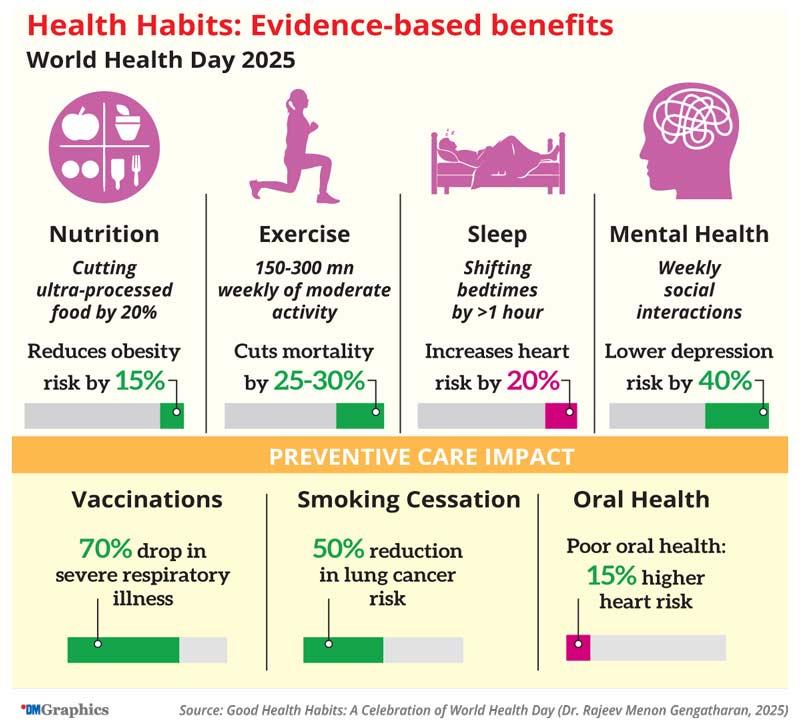
Conversely, ultra-processed foods—laden with sugar, salt, and trans fats—are a growing concern. A Nature Reviews Endocrinology review from 2024 found that cutting ultra-processed food intake by 20% slashes obesity risk by 15% and improves gut microbiome diversity.
Sugar remains a key target; the World Health Organisation advises keeping added sugars below 10% of daily calories, with even greater benefits below 5%. Hydration, too, is critical—1.5 to 2 liters of water daily supports metabolism, kidney function, and brain health, per the Journal of Human Nutrition and Dietetics.
Practical tip: Build meals around a “plate model”—half vegetables, a quarter protein and a quarter whole grains. Replace sugary drinks with water infused with lemon or cucumber, and limit processed meats, which the WHO classifies as carcinogenic in excess.
Exercise: The Body’s Best Medicine
Physical activity is a non-negotiable pillar of health, with benefits backed by decades of research. The American Heart Association’s 2025 guidelines recommend 150–300 minutes of moderate aerobic exercise (e.g., swimming) or 75–150 minutes of vigorous exercise (e.g., running) weekly, paired with muscle-strengthening activities twice a week.
A 2024 Journal of the American Medical Association (JAMA) study found this regimen cuts all-cause mortality by 25–30%, thanks to improved cardiovascular health, insulin sensitivity, and mood.
Sedentary behaviour, however, is a silent killer. Research in Circulation (2024) shows that sitting more than 7–8 hours daily negates some exercise benefits, increasing risks of diabetes and heart disease.
What is the antidote? Regular movement breaks—standing or walking for 5 minutes hourly.
High-Intensity Interval Training (HIIT) also shines in 2025, with Medicine & Science in Sports & Exercise reporting that 20-minute sessions (e.g., 30 seconds of sprinting, 90 seconds of rest) rival longer workouts for fitness gains.
Practical tip: Pick an activity you love—hiking, dancing, or yoga—and complement it with bodyweight exercises like planks or lunges. Set a timer to stand up every hour if you work a desk job.
Sleep: Restoring Body and Mind
Sleep is a biological necessity, not a luxury. The National Sleep Foundation’s 2025 recommendations call for 7–9 hours nightly, a target supported by Sleep Medicine Reviews. Quality sleep regulates appetite hormones (ghrelin and leptin), repairs tissues, and clears brain toxins linked to dementia, per Nature Neuroscience (2024). Chronic sleep deprivation, meanwhile, raises risks of obesity, depression, and immune dysfunction.
Consistency matters as much as duration
A 2024 Journal of Sleep Research study found that shifting bedtimes by more than an hour increases cardiovascular risk by 20%. Screen time remains a foe—blue light disrupts melatonin, delaying sleep onset. Experts now recommend a “digital curfew” 1–2 hours before bed.
Practical tip: Establish a fixed sleep schedule, even on weekends. Create a pre-sleep ritual —herbal tea, stretching, or reading—and keep your bedroom dark, quiet, and cool (16–20°C).
Mental Health: A Balanced Mind for a Healthy Body
Mental well-being is integral to physical health, a link reinforced by The Lancet Psychiatry in 2025. Chronic stress floods the body with cortisol, driving inflammation and raising risks of hypertension and diabetes. Mindfulness practices, like meditation or deep breathing, counter this by reducing cortisol by up to 30% in 8 weeks, per JAMA Internal Medicine. Exercise doubles as a mental health booster, with endorphins lifting mood and combating anxiety.
Social connections are equally vital. A 2024 American Journal of Epidemiology study found that weekly interactions with loved ones lower depression risk by 40%, while loneliness rivals obesity as a mortality risk factor.
Practical tip: Dedicate 10 minutes daily to mindfulness and nurture relationships with regular calls or meetups. Maintain a gratitude journal.
Preventive Care: Proactive Protection
Prevention is the ultimate health habit.
Looking at international guidelines, the U.S. Preventive Services Task Force (2025) urges annual screenings for blood pressure, cholesterol, and glucose, alongside age-appropriate cancer checks (e.g., mammograms from 40, colonoscopies from 45). Vaccinations—flu, shingles—remain essential, with The New England Journal of Medicine reporting a 70% drop in severe respiratory illness among vaccinated adults in 2024.
Oral health ties to overall wellness; brushing twice daily and flossing reduce gum disease, which JAMA Cardiology links to a 15% higher heart attack risk. Smoking cessation, supported by counseling or other methods, cuts lung cancer risk by 50% within a decade, per Chest.
Practical tip: Schedule your annual physical this World Health Day. Use a health app to track screenings, vaccinations, and exercise.
A Holistic Approach to Health
Good health habits weave together to form a tapestry of well-being. The latest evidence-based medicine, from The Lancet to JAMA, shows that no single habit stands alone—nutrition fuels exercise, sleep restores mental clarity, and preventive care catches issues early. This World Health Day, April 7, 2025, start small: swap one processed snack for fruit, walk 10 minutes daily, or set a bedtime alarm. Consistency trumps perfection.
Health is both a personal journey and a collective goal. By adopting these habits, we honour our bodies and contribute to a healthier world. Let’s make 2025 the year we turn evidence into action—one step, one bite, one restful night at a time.
The writer wanted to state that, “Every day presents a new opportunity to learn something that can enhance my practice and benefit my patients. With the ever-evolving landscape of medicine, I believe that staying updated with the latest research and advancements is not just a professional responsibility but also a personal joy,”.
The writer is a Medical Officer in Anesthesia and Intensive Care at the National Institute for Nephrology, Dialysis and Transplantation and the Secretary of the Clinical Travel Medicine Association of Sri Lanka. He has an insatiable thirst for medical knowledge and a passion for sharing it.