Reply To:
Name - Reply Comment
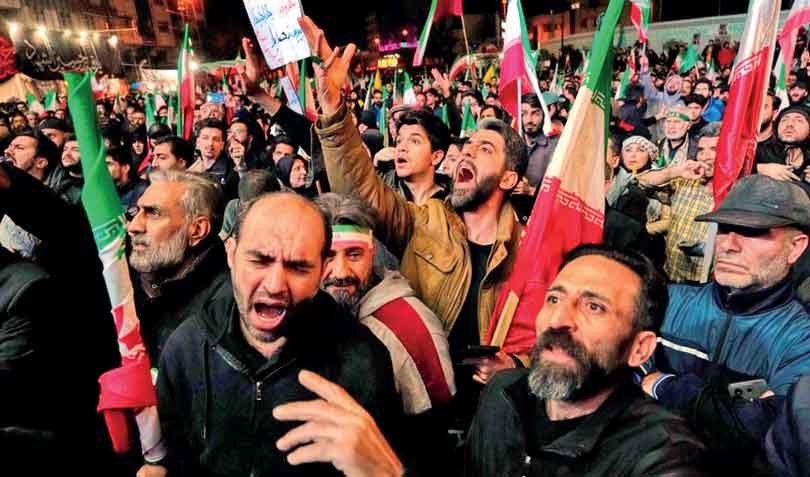
Iranians react after the US-Iran peace deal was announced
- The coming weeks will decide whether diplomacy can overcome decades of mistrust, or whether the region returns once again to the edge of war
- United States and Iran have a long history of accusing each other of breaking agreements
 Iran’s Speaker and chief negotiator Mohammad Bagher Ghalibaf warned that Iran’s “finger is on the trigger,” adding that if diplomacy fails, Tehran would again respond “with the language of power.”
“If it doesn’t get done in 60 days, it’s all right,” Trump said at the G7 summit. “We go back to bombing.” That reflects the central tension of the agreement: it is both a peace framework and a warning of renewed war.
The United States and Iran have signed an initial peace agreement aimed at ending their latest war and reopening key global trade routes, in what is being described as one of the most significant diplomatic breakthroughs in recent years. But, even as the deal takes effect, major questions remain over whether it can hold, or whether it will collapse under unresolved disputes, regional tensions, and deep mistrust on both sides.
The agreement, signed in Geneva during the G7 diplomatic context in France, and confirmed by both Washington and Tehran, immediately halts hostilities between the two countries and reopens the Strait of Hormuz, a critical global shipping route that had been heavily disrupted during the conflict. It also sets out a broader framework for a possible final settlement, including a proposed $300 billion reconstruction plan for Iran and the phased lifting of US sanctions.
However, the most sensitive issue, Iran’s nuclear programme, remains unresolved, and has been pushed into a 60-day negotiation period that diplomats say will be decisive for the future of the deal.
US President Donald Trump, who signed the memorandum of understanding during the G7 summit in France, called the agreement a major success and warned it would prevent an “economic catastrophe.” But he also made clear that failure to reach a final deal could lead to renewed military action, saying the US would “bomb the hell” out of Iran if talks collapse.
Iranian President Masoud Pezeshkian also signed the agreement, according to Tehran, but senior Iranian officials quickly signalled that trust remains extremely low. The deal follows months of escalating conflict that saw direct strikes between US and Iranian forces and wider regional instability. The war sharply increased global energy prices and disrupted trade through the Strait of Hormuz, through which nearly one-fifth of global oil and liquefied natural gas normally flows.
Iran had imposed what amounted to a partial closure of the waterway during the fighting, raising fears of a global energy shock. After the agreement, oil prices fell slightly in early trading, though they remain above pre-war levels, reflecting continued uncertainty. The agreement also allows Iran to continue limited nuclear activity for now, including maintaining its stockpile of enriched uranium under strict international supervision. That material will be “down-blended”, diluted to lower levels, on site under inspectors from the International Atomic Energy Agency (IAEA).
Still, key technical issues remain unresolved. Rules on enrichment limits, inspection access, verification, and timelines are all reserved for the 60-day negotiation window. Officials say this period is intended to produce a full nuclear agreement, but acknowledge it is an extremely tight deadline given that past negotiations on Iran’s nuclear programme took many months.
One senior US official described the arrangement as a “partial framework” rather than a final peace deal, saying many of the hardest issues have only been postponed. The agreement also includes major economic components. Iran could gain access to reconstruction funds if it complies, while the US has agreed to gradually lift sanctions, including some international restrictions, depending on progress in talks.
During the transition period, Iran will be allowed limited oil exports, banking services, insurance, and transport operations. Frozen Iranian assets may also be released under agreed procedures. At the same time, both sides have committed to avoiding new sanctions or major military escalation during negotiations.
Fragile foundations
The Strait of Hormuz has been temporarily reopened under the agreement, with shipping resuming under controlled conditions while mine-clearing operations begin. European countries including Germany, France, the United Kingdom, and Italy have welcomed the deal and signalled support for international efforts to secure maritime routes and stabilise energy flows. Despite these measures, analysts warn the agreement rests on fragile foundations. The 60-day deadline for a final deal is seen as ambitious, and the option of extension has raised doubts about whether negotiations will produce a lasting settlement or simply delay confrontation.
Critics in the United States have raised concerns that the deal does not go far enough to prevent Iran from developing nuclear weapons. Some lawmakers argue it gives too many concessions too early, including economic relief and access to financial systems before full compliance is guaranteed. There is also criticism that the agreement leaves out key issues such as Iran’s missile programme and its support for regional armed groups, including Hezbollah. These were not clearly addressed in the main text, despite playing a major role in the wider conflict.
Supporters say the deal is an essential first step after years of escalation and warn that without an immediate framework, the conflict could have widened into a regional war with global consequences.
But even supporters admit the hardest stage is still ahead. A key uncertainty is whether both sides can maintain trust during negotiations. The United States and Iran have a long history of accusing each other of breaking agreements, and neither has given up its core strategic positions. For the US, the central goal remains preventing Iran from developing a nuclear weapon. For Iran, the priority is ending sanctions while preserving its right to peaceful nuclear activity.
That fundamental disagreement has not been resolved, only delayed.
Regional politics add further complexity. Israel, led by Prime Minister Benjamin Netanyahu, has not endorsed the agreement and has repeatedly warned that any deal allowing Iran to maintain nuclear capabilities or regional influence would be unacceptable. Israeli officials fear the deal could strengthen Iran’s allies, especially Hezbollah in Lebanon. Israel continues to maintain a military presence in parts of southern Lebanon, which it says is necessary for security. But analysts warn this could become a flashpoint that undermines the fragile ceasefire framework between Washington and Tehran.
Netanyahu has long taken a hardline stance on Iran and insists Israel must retain full freedom of military action. Critics argue this position risks clashing with US diplomacy if Israeli operations continue in areas linked to Iran-backed groups.
Inside the United States, the agreement has triggered political debate. While Trump has promoted it as a major diplomatic win, some lawmakers, including members of his own party, argue it is too vague and does not sufficiently limit Iran’s nuclear programme or regional influence. Others point to uncertainty over the proposed $300 billion reconstruction fund, saying the wording leaves room for future financial commitments that could become politically controversial. As negotiations enter their 60-day phase, governments and markets are watching closely. Oil prices have eased slightly but remain volatile, and countries across Europe and the Middle East are preparing for either a lasting peace deal or renewed escalation. For now, the Geneva agreement stands as a rare moment of cooperation between two long-time adversaries. But whether it becomes a lasting peace or just another pause in conflict will depend on what happens next.
The coming weeks will decide whether diplomacy can overcome decades of mistrust, or whether the region returns once again to the edge of war.
[email protected]