Reply To:
Name - Reply Comment
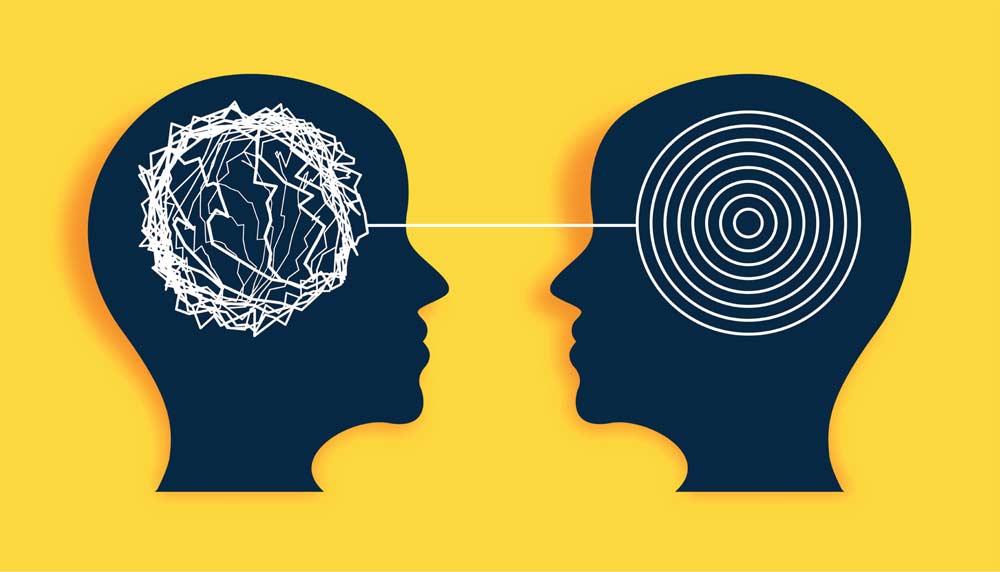
Social media does not directly resolve the real illnesses of life: our political, social, and economic tragedies, but instead, multiplies our psychological cravings.
FILE PHOTO
By Dr Manoj Jinadasa
It is imperative that, when we step into social media, we pause to consider what is present there and how it shapes our understanding of where we stand today, in other words, what social media reveals about contemporary life. I would like to immerse myself in the idea of how social media can act as a mirror reflecting our own lives. For example, why do I constantly share my ideas and writings on Facebook, YouTube, TikTok, Instagram, X, LinkedIn, and other regionally established social media platforms? Why am I so enthusiastic about telling others who I am, or what compels me to write and publish my daily or contemporary thoughts on these platforms? Equally, we may ask: does social media itself trigger us to express more about the immediate or contemporary scenarios of our daily encounters? This question forms the core of my present investigation.
This article focuses on three interrelated theoretical perspectives: public sphere theory, networked and affective publics, and psychopolitics and digital subjectivity. Together, these provide a critical lens through which to analyse how social media reshapes self-expression, public opinion, and the psychological dimensions of digital citizenship.
The Public Sphere and Digital Opinion
The starting point is Jürgen Habermas’s concept of the public sphere, defined as “the sphere of private people come together as a public” through rational-critical debate (Habermas, The Structural Transformation of the Public Sphere, 1989, p. 27). In traditional media, this sphere was mediated by political and economic elites, producing a narrowly controlled form of public opinion. Social media, however, complicates this model. As Nancy Fraser argues, publics today are not singular but “contested arenas in which groups with unequal power attempt to constitute competing interpretations of social life” (Fraser, Rethinking the Public Sphere, 1990, p. 62). Thus, social media may be understood as a new form of virtual public sphere, where opinion circulates less through reasoned deliberation and more through affect, speed, and networked connectivity.
Networked and Affective Publics
Building on this, danah boyd’s notion of networked publics explains how social media “restructures how information flows and how people interact with that information” (boyd, It’s Complicated, 2014, p. 8). Unlike the mass-mediated publics of television or newspapers, social media publics are persistent, searchable, replicable, and scalable. This means identity and expression are constantly curated and performed. Complementing this is Zizi Papacharissi’s theory of affective publics, which emphasizes that emotions, rather than rationality alone, drive digital communication: “affective statements… drive the narrative momentum of digital storytelling” (Papacharissi, Affective Publics, 2015, p. 125). Together, these frameworks explain why users, including the author, feel compelled to post daily reflections, because social media structures identity performance around affective resonance.
Psychopolitics, Digital Subjectivity, and Media Psychiatry
While publics and identities expand, there is also a psychological and disciplinary dimension. Byung-Chul Han’s theory of psychopolitics frames digital media as a technology of control: “Big Data allows psychopolitics to come into play, which seeks to influence people psychically, and not physically” (Han, Psychopolitics: Neoliberalism and New Technologies of Power, 2017, p. 49). This aligns with Shoshana Zuboff’s analysis of surveillance capitalism, where human experience is “unilaterally claimed as free raw material for translation into behavioural data” (Zuboff, The Age of Surveillance Capitalism, 2019, p. 13). The result is what this article calls a digital mental conflict, where selfhood and citizenship are refracted through algorithmic and addictive environments.
Social Media, Public Opinion, and the Virtual Psyche
In this context, it is evident that more people are connected and represented within platform cultures. This is one of the clearest reasons why we are present on social media so frequently in our daily lives. Why is this? Because social media has become a shared space of platform culture, where people mark who they are, what they want, and why they exist. Unlike mass media, which was monopolised by political, economic, or cultural elites, social media is no longer a marginalised or peripheral form of communication.
What social media introduces instead is a fragmented yet filtered notion of opinion, scattered and then consolidated into what may be called virtual public opinion, a cultural shape of digital networks in the new media age. Here arises the question: is this form of public opinion similar to, or different from, the one shaped by mass media?
Habermas reminds us that in the classical bourgeois public sphere, “public opinion was the outcome of rational-critical debate among private individuals assembled into a public” (Habermas, 1989, p. 136). By contrast, social media opinion is not simply rational but emotional, aesthetic, and networked. Papacharissi describes these formations as affective publics: “networked publics that are mobilised and connected, identified, and potentially disconnected through expressions of sentiment” (Papacharissi, 2015, p. 125).
Earlier, mass media images and cultural icons were sharply controlled by political and economic oligopolies. By contrast, social media appears more democratic, a platform where a diverse range of voices, local, regional, and global, intersect. José van Dijck notes that “platforms have become the very infrastructures of sociality, shaping how people connect, communicate, and create” (van Dijck, The Culture of Connectivity, 2013, p. 12). Public opinion today is therefore not confined to a narrow national context; rather, it expands and leaks across multiple cultural, political, and economic dimensions, forming intersectional trajectories within new media culture.
Yet, within this versatility, we must also recognise a contradiction. Social media often feeds us fantasies and ungrounded imaginaries—roses without soil—that rarely translate into tangible physical benefits for our lives. Sherry Turkle observes that “we expect more from technology and less from each other” (Turkle, Alone Together, 2011, p. 1). In other words, much of online culture gratifies only our psychological panorama and emotional needs.
The most nuanced characteristic of social media, then, is how it consolidates fandom culture and creates layers of virtuality. Pierre Lévy defines the virtual as “a mode of being distinct from the actual; the virtual is not the unreal but the potential, the latent” (Lévy, Becoming Virtual, 1998, p. 23). These layers shift much of our mental behaviour into online space, where there is little direct connection with our physical existence.
This has consequences. Social media does not directly resolve the real illnesses of life: our political, social, and economic tragedies, but instead, multiplies our psychological cravings. It functions almost like a psychedelic substance: a mental hallucinogen. Han describes this as psychopolitics: “Digital communication exploits the psyche. It does not operate through repression but through seduction and stimulation” (Han, In the Swarm: Digital Prospects, 2017, p. 11). Similarly, Zuboff warns that “surveillance capitalism unilaterally claims human experience as free raw material for translation into behavioural data” (Zuboff, 2019, p. 13).
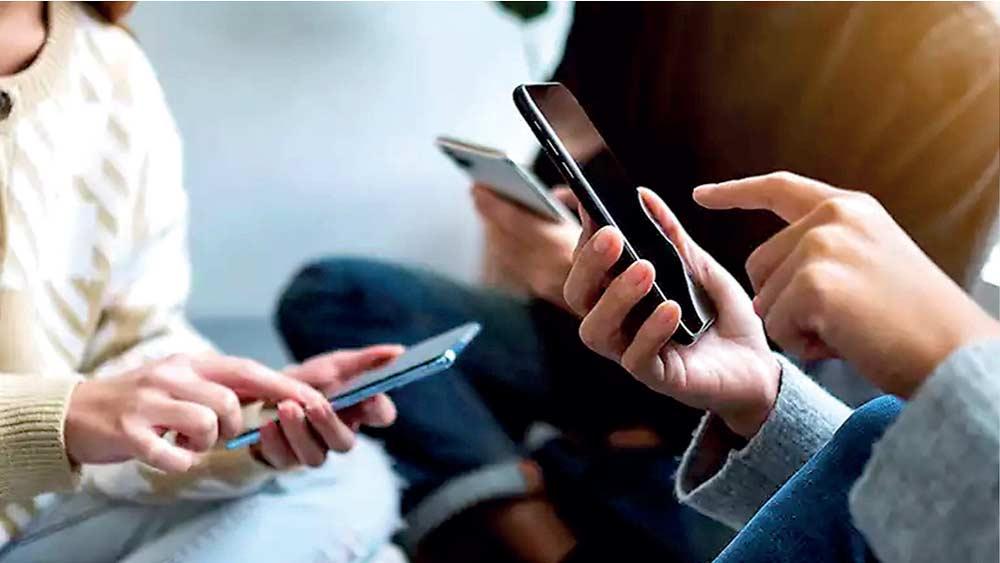
Thus, we increasingly feel estranged in our own society, as if surrounded by people from an alien world. Many, especially young people, appear more comfortable with gadgets and virtual profiles than with face-to-face encounters. Boyd notes that in networked publics, “interactions are often public by default, private through effort” (boyd, 2014, p. 8). This condition produces what we might call a digital mental conflict—a cultural crisis where citizenship is no longer grounded in the physical but remediated through networked virtuality.
The result is a new connection between media and psychiatry: digital citizenship and its psychological consequences. As Anna Lembke argues in her study of digital addiction, “our brains were not evolved for the constant onslaught of dopamine-triggering technology” (Lembke, Dopamine Nation, 2021, p. 45). The critical question that follows is: What is the remedy? How can we prescribe a media psychiatry that addresses these digital diseases? This will be the focus of my next discussion.
The writer is the Head, Department of Mass Communication, University of Kelaniya, Sri Lanka