

Reply To:
Name - Reply Comment
 In ‘Ion,’ Plato wrote about a dialogue between Socrates and Ion. Ion sang songs about trades and livelihoods in Greek society, and Socrates asks Ion just how much he knows about those skills mentioned in his songs
 Resuming our discussion of writer and critic Eric Illayapaarchchi’s in depth analysis of music (from his book ‘Kalaawa Soya Yema’ or In Search of Art), we come to a provocative thesis – that the singer’s unassailable position within the noosphere of the song is the result of hard work through millennia, evolving from the hunting-centered group chanting of the stone age to the individualistic, itinerant singer of the Medieval Age and succeeding centuries. He argues that in Sri Lanka, the intrusion of poets into songwriting challenged and diminished the singer’s status. But let’s start by looking at his analysis of the historical development of the song.
|
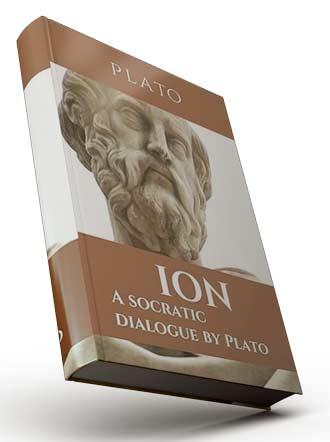
Ion is one of Plato's shortest dialogues that is conventionally interpreted through the lens of the deconstruction of artistic creativity |
|
Kalaawa Soya Yaama |
|
|
He quotes a folk tale about a man who killed a nightingale for food. After removing its feathers, the body looked very small. Disappointed, the man cried: “Oh nightingale, you are nothing but your voice!”
Similarly, the singer exists within the song, which encompasses his present, past and future. But, despite music’s lengthy history, the singer and what he or she sings is overwhelmingly ‘live’ and contemporary. This is the rationale behind gramophone and vinyl records, cassettes, CDs, concerts and radio listeners’ requests.
In ancient times, the song derived to a large extent from the singer’s mobility as well as trades and crafts practiced in a given society (My note: a group of such itinerant singers/musicians of the Mughal times are shown in the Indian film Baiju Bawra. Blues music originating in the cotton fields of the American Deep South in the 19th-20th centuries is another good example).
Going back to ancient Greece, the writer says Homer was a blind, itinerant singer – blindness, which makes it impossible to identify places, negates institutionalization and being rooted to a place. Blindness is connected to mendicancy not merely due to helplessness. Rather, it’s because blindness frees people from the prison of institutionalization (My note – the 1960s Hindi film Dosti celebrated the friendship between a blind singer and his crippled friend).
The author gives another example, this time away from music -- Charlie Chaplin’s art was born out of such rootless ‘vagabonding.’ The singer and the song enjoy a similar relationship. The author quotes the following passage from the autobiography of dramatist Ediriweera Sarachchandra.
“They say it’s Col. Olcott who introduced to Buddhists the habit of going from house to house singing about the Buddha’s birth. These songs are now called ‘devotional songs’ instead of carols. We stayed at Mr. Albrecht’s house and watched carols for two consecutive nights. This meant walking behind the carol cart from nine p.m. till three to four a.m. Leaflets containing the lyrics were distributed to everyone. We walked behind the cart, leaflets in hand, in order to memorise the carols. The two of us, after reaching Hewaheta, practised the songs after memorising them as best as we could.”
With his penchant for ranging far and wide within a subject, the author takes us from 20th century Hewaheta to classical Greece and quotes Plato (Ion, Socratic Dialogues, Plato).
Ion is an itinerant, rhapsodic singer, colourfully dressed in the European minstrel tradition. Such singers roamed ancient Greece, earning a living by singing and performing Homeric and other verses.
In ‘Ion,’ Plato wrote about a dialogue between Socrates and Ion. Ion sang songs about trades and livelihoods in Greek society, and Socrates asks Ion just how much he knows about those skills mentioned in his songs. He argues that the singer, too, must possess those skills exemplified in his songs.
Coming to Sri Lankan song in the 20th century, one can place this argument thus – Does Mohideen Baig who sings ‘Tikiri Menike ambula genalla’ know anything about paddy cultivation? Does Sunil Shantha who sings ‘Ko Hathuro Ko Hathuro’ in the film Sandeshaya know anything about soldiering? Does Milton Perera who sings ‘Siri Saara Bulath’ know anything about making that victual?
Socrates argues that Ion is unable to assess or make comparisons between the different skills possessed by tradesmen or craftsmen. He is simply a purveyor Homeric verse in song. Socrates says that as an itinerant singer, Ion exists in a web of inspiration and possession.
Ion’s ability is thus limited, and his existence is hence not ‘normal’ but more akin to a madness (My note: there is a saying ‘genius is allied to madness’). It’s not a matter of knowledge or skill, but an illogical result or divine gift.
Ion strongly disagrees with this description of himself as someone ‘possessed’. But, as Eric Illayapaarachchi points out, singers such as Elvis Presley, Michael Jackson, Madonna, Lady Gaga and Freddie Mercury too, amply display such ‘possessed’ behaviour.
Socrates, citing several passages by Homer, argues that only someone truly knowledgeable has the wherewithal to comment about their contents. A singer has only his singing ability, and no skills in carpentry, or knowledge of medicine and healing. But Ion counters that he is able to pass judgement on any skill or trade Homer writes about. This argument is ridiculed by Socrates.
This is how Socrates concludes his argument: ‘Well, then, allow us to present you with this unique, privileged status. You do not possess those skills which you sing about. But you are divine.’ (You aren’t skilled, but you are divine).
Therefore, the song brings us close to the divine. Even belatedly, we must bestow this divine status to our own Sinhala singers.
(To be continued)…