Reply To:
Name - Reply Comment
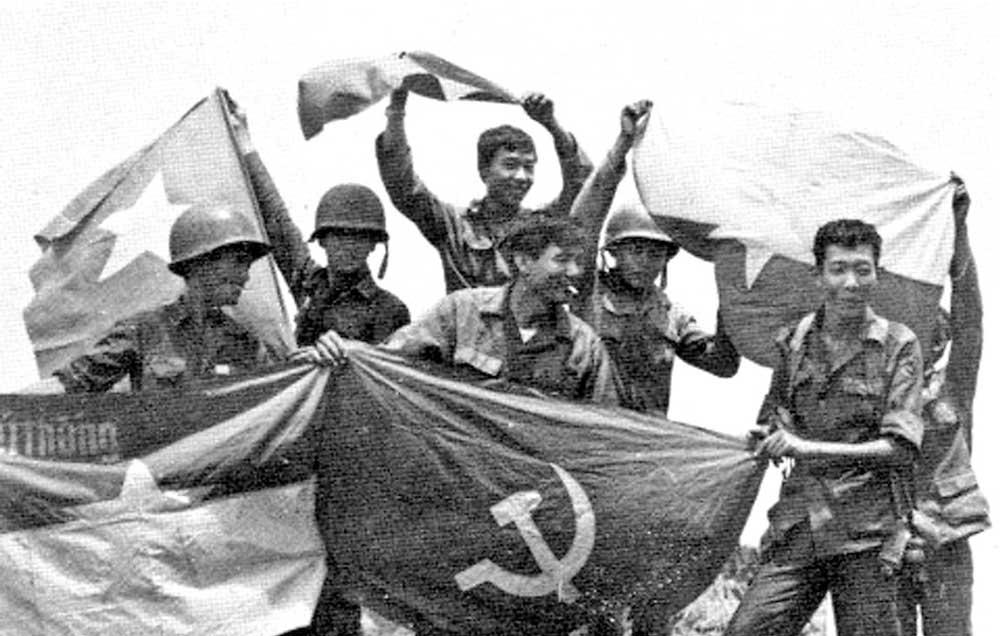
 Vietnamese President Luong Cuong has penned an exclusive article for the Daily Mirror to mark April 30, a landmark date that commemorates the Fall of Saigon in 1975. The historic day brought an end to the Vietnam War and paved the way for the reunification of North and South Vietnam. This article is published ahead of Sri Lankan President Anura Kumara Dissanayake’s official visit to Vietnam on May 3.
The victory of the resistance war against the US for national salvation, culminating in the Spring 1975 General Offensive and Uprising, was a monumental triumph in our nation’s millennia-long history of building and defending the country.
It “will forever be recorded in our national history as one of its most glorious pages and a shining symbol of the complete victory of revolutionary heroism and human intellect, and enter world history as a great feat of the 20th century and an event of immense international significance and profound historical importance.”
This great victory opened a new era in our nation’s history — the era of independence, reunification, and the whole country advancing towards socialism.
The victory of the resistance war against the US for national salvation was the result of many factors.
They were the wise leadership of the Party and President Ho Chi Minh, with sound revolutionary strategies and methods of warfare; the courageous, resilient, resourceful, and creative fighting spirit of our army and people throughout 21 years of long, arduous, and sacrificial resistance; the strength of great national unity, the immense support from the rear in the North, and the indomitable will of the southern frontline; the solidarity and close-knit bond among the three countries of Vietnam, Laos, and Cambodia, as well as the great, valuable assistance from the Soviet Union, China, and other fraternal Socialist countries, along with the support and encouragement from progressive, peace-loving people around the world.
The great victory was made possible by the outstanding achievements of the people’s armed forces and the sacrifices of millions of heroes and martyrs.
Although half a century has passed since the war, the lessons learned in building the people’s armed forces during the resistance war against the US for national salvation remain valuable, both in theory and practice, especially the following key points:
First, maintaining and strengthening the absolute, direct, and comprehensive leadership of the Party, along with the centralized, unified management and administration of the State over the people’s armed forces.
This is not only a profound lesson drawn from the resistance war against the US for national salvation, but also an immutable principle in building the people’s armed forces of our Party and State.
Right in the early phase of the resistance, the expanded 12th Plenum of the Party Central Committee (March 1957) issued a Resolution on army building and national Defense consolidation.
The Resolution set forth the motto of “actively building a strong people’s army, gradually moving towards regularization and modernization” and identified the building of the army and strengthening of national defense as the responsibility of the entire Party, military, and people.
Following the 12th Plenum’s Resolution, under the absolute, direct, and comprehensive leadership of the Party, the centralized and unified management and administration of the State, and the support and care of the people, our army continuously developed, growing ever stronger, with various branches such as the ground forces, navy, air defense-air force, and core army corps.
They, together with other forces and the entire people, built up a collective strength, defeating successive military strategies of the US and its puppet regime.
The People’s Public Security Force was placed under the Party’s “direct, comprehensive, and unified leadership in all aspects”.
For the Militia and Self-Defense Force, during the resistance war against the US for national salvation, the Party advocated “focusing on consolidation as the primary task, while steadily developing in all areas, especially in key regions” and “ensuring that all newly- established factories, worksites, and farms must set up self-Defense teams under the close supervision of special personnel”.
As a result, the militia and self-Defense force was steadily built and expanded, playing a dual role of supporting production while maintaining public order and security, and standing ready to fight when necessary.
In the time ahead, the global situation is forecast to remain volatile, with rapid, complex, and unpredictable developments. Domestically, the cause of Doi moi (Renewal), and national construction and Defense has achieved great, historically significant accomplishments.
The country’s potential, position, and international reputation have been elevated, creating an important foundation for Vietnam to rise and thrive in a new era of development.
However, alongside these favorable conditions, the country continues to face a host of challenges, with new complex issues, particularly unresolved limitations, weaknesses, and contradictions in society.
Hostile forces are intensifying their sabotage efforts, seeking to undermine the Party’s leadership and promote the “depoliticisation” of the armed forces.
In this context, maintaining and strengthening the Party’s absolute, direct, and comprehensive leadership as well as the State’s centralized, unified management and administration over the people’s armed forces, national Defense and security, and the protection of the Fatherland, has become all the more urgent, and remained a decisive factor in the growth, development, combat readiness, and victories of the people’s armed forces.
The new context requires us to continue promoting the building and rectification of the Party and the political system through resolute, concerted, continuous, and comprehensive guidelines and solutions across politics, ideology, ethics, organization, and personnel.
Alongside improving the effectiveness and efficiency of leadership in economic, cultural, social, and foreign affairs, the Party and State will continue to lead and direct the building and strengthening of the all-people.
Greater efforts will be made to build revolutionary, regular, elite, and modern people’s armed forces politically steadfast, with comprehensive quality and strong combat capabilities, serving as the core in the cause of national defense and security in the new situation.
Second, attaching special importance to building the political and spiritual factor of the people’s armed forces.
Our Party and State always attach great importance to the building and promotion of the political and spiritual factor of the people’s armed forces and the entire people, especially in the resistance against the US to save the country, when our army and people had to fight against a brutal enemy with the most powerful economic and military capabilities in the world.
Our Party clearly stated:
“In terms of ideology, we must further understand the viewpoint that by surmounting protracted hardships and practicing self-reliance, we will definitely win; we must foster an undaunted will and a heroic fighting spirit, overcome all difficulties and hardships, and be determined to kill the enemy to save the country, moving towards completely liberating the South and reunifying the Fatherland; we must heighten vigilance, skillfully preserve and conceal our forces, and prevent recklessness and impatience; we must educate the spirit of not being arrogant in victory and not being discouraged by defeat.”
Thanks to the building of a solid political and spiritual factor, the people’s armed forces were not afraid of hardships or sacrifices, did not submit to the brutal enemy, fought bravely, intelligently and creatively, and achieved glorious feats of arms, together with the entire people winning the great victory in the resistance war against the US to save the country, bringing glory to the country and the Vietnamese people in the Ho Chi Minh era.
The strength of the people’s armed forces is created by many factors of which, the political and spiritual factor are the most fundamental.
Grasping President Ho Chi Minh’s viewpoint of “People first, guns later”, in the current situation, building politically strong armed forces of the people continues to be identified as the task of leading importance, a matter of principle, as a basis for improving the overall quality and combat strength of the people’s armed forces.
Thoroughly implementing this principle, first of all, it is necessary to increase communications, education, dissemination, and awareness improvement for officers and soldiers of the people’s armed forces about the Party’s military, national defence, and security policies and guidelines.
Facing the emergence of new forms of war, types of operations, strategic spaces, and methods of waging war, the Central Military Commission – the Ministry of National Defense, the Central Public Security Party Committee – the Ministry of Public Security, and Party committees, commands, and administrations at all levels need to pay special attention to leading, directing, educating, and training officers and soldiers of the people’s armed forces in all aspects; and unceasingly improve their political mettle, patriotism, and revolutionary heroism, being ready to endure hardships and sacrifices, daring to fight, knowing how to fight, and staying determined to defeat all invaders and firmly defend the socialist Vietnamese Fatherland in any circumstance.
Third, building the people’s armed forces that are sufficient in number, well-organised, balanced in structure and composition, and highly capable in both overall quality and combat strength.
To meet the requirements of the resistance war against the US for national salvation, our Party and State continued to develop the people’s armed forces comprising three types: primary military troops, local forces, and militia self-Defense forces.
A Politburo resolution, adopted at the meeting from December 6 to 10, 1962, regarding the situation, direction, and immediate tasks of the revolution in the South outlined the approach for building and developing armed forces in the region. It stated the need to “widely develop guerrillas and militia, improve the quality of primary military troops and local forces”.
During this resistance war, our Party and State built and developed main forces including various branches and corps, establishing the primary military troops as the backbone of the operations in the South.
The air Defense – air force and navy force were developed and strengthened, working alongside the people and other forces to defeat the US imperialists’ air and naval destruction campaigns against the North.
Additionally, organizing and developing fronts, large main force units in various regions, and strategic transportation troops along the Truong Son Trail made the primary military force truly key to implementing the strategy of controlling the situation and attacking.
Under the Party and State’s leadership, local armed forces were rapidly developed nationwide, with improvements in quantity during the resistance against the US.
In the North, local forces were built to protect the Socialist North with many infantry, air-defense, engineering, and artillery units established. In the southern battlefield, all districts, townships, provinces, and cities set up such forces to promote armed and political struggles, advancing the three-pronged attack (military and political operations, and communication work against the enemy) across all three strategic zones (forests and mountains, rural plains, and urban areas).
The militia and self-Defense force was developed extensively following the principle of Party leadership. Each type of force was comprehensively trained and unceasingly improved in overall quality and combat strength to meet operational requirements.
Their close coordination with other forces created the collective strength of the people’s warfare, working with the entire population to achieve the Great 1975 Spring Victory.
Today, given requirements in new circumstances, the people’s armed forces need to continue studying, adjusting, reorganizing, and ensuring quality with appropriate numbers, composition, and structure.
They must grasp and seriously implement the Party and State’s policies on streamlining the political apparatus for effective operation and building of the People’s Army and People’s Public Security, especially the Politburo’s Resolution No. 05-NQ/TW dated January 17, 2022 on organising the Vietnam People’s Army for 2021-2030 and beyond, and the Politburo’s Resolution No. 12-NQ/TW dated March 16, 2022 on developing the People’s Public Security into a pure, strong, regular, elite, and modern one.
Meanwhile, the People’s Public Security force should be adjusted and streamlined at the ministry level, comprehensive at the provincial level, and strong at the communal level, and maintain a firm presence at the grassroots. Strong mobilisation reserves and widespread militia and self-Defense forces should be built across regions and at sea.
Focus should be placed on innovation and improving military training quality, tactical and technical proficiency, political education, and comprehensive training coupled with ensuring good logistics and technical support for the armed forces.
International integration and Defense and security foreign relations should be promoted to enhance overall quality and combat strength of the armed forces, meeting the requirements of national Defense and security in the new situation.
Fourth, ensuring good weapons and technical equipment for the people’s armed forces; actively researching and flexibly applying Vietnamese military art to respond to various warfare types and combat realities.
Along with ensuring weapons and equipment for the people’s armed forces, our Party and State paid special attention to researching, developing, and creatively applying military art in the new conditions of the resistance against the US.
Armed struggle played the decisive role, particularly in the final phase of the war, culminating in large-scale military campaigns.
The people’s armed forces units flexibly applied and continuously innovated combat art in each battle and campaign, the art of organizing and using forces, the art of force mobility, the art of establishing positions, the art of deception, and the art of choosing attack directions, spearheads, objectives, and methods, and many more, creating overwhelming advantages in strength to step by step achieve victories, leading to final success.
Today, in the context of rapid advancements in science, technology, and the Fourth Industrial Revolution, ensuring the provision of new-generation and modern weapons, military and security technical equipment for armed forces has become a trend in many countries around the world.
The modernisation of the armed forces, especially the People’s Army and the People’s Public Security, is a right policy of our Party and State, aligned with the country’s conditions and socio-economic development situation, as well as the global development trend of military and security science and technology.
To realize this policy, human development plays the central and decisive role while at the same time, it is also essential to properly ensure weapons and technical equipment for the people’s armed forces.
A sustainable and long-term solution lies in the development of Defense and security industries. It is also necessary to continue thoroughly grasping and effectively the implementing policies and guidelines on developing the Defense and security industries in line with the principle of proactiveness, self-reliance, self-sufficiency, dual-use capability, and modernity.
These industries must be closely linked with and become the spearhead of the national industrial sector, meeting the demand for modernising and properly supplying weapons and equipment for the armed forces in all situations.
At the same time, it is crucial to promote theoretical research, review practical experiences, and draw lessons from international practices.
Fifth, building and strengthening the close-knit and inseparable bond between the armed forces and the people, working together to successfully implement the Party’s people’s war strategy.
Under the leadership of the Party, during 1959–1960, the armed forces provided strong support for the people of the South in rising up and launching the Dong Khoi movement, gaining control over vast rural areas.
When the US shifted to the “local war” strategy (1965–1968), our armed forces and people continued the all-people resistance war, proactively launching offensives against the enemy across all three strategic regions, while also defeating the US’ sabotage war in the North.
The triumph of the 1968 Spring General Offensive and Uprising and the 1975 Spring General Offensive and Uprising, which marked the complete liberation of the South and national reunification, are the most vivid symbols of the power of the all-people resistance, with the people’s armed forces playing the core role under the wise leadership of the Party.
The victory of the resistance war against the US for national salvation was a monumental achievement of our nation in the 20th century.
It reflected the brilliant and clear-sighted leadership of the Party and President Ho Chi Minh in shaping the resistance strategy and building the people’s armed forces to meet the rigorous requirements of the struggle against the foreign invader.
The valuable lessons learned from this resistance war, including those on building the people’s armed forces, hold especially important significance and need to be studied, applied, and further promoted to contribute to successfully implementing the cause of building and safeguarding the socialist Vietnamese Fatherland in the new era.