Reply To:
Name - Reply Comment
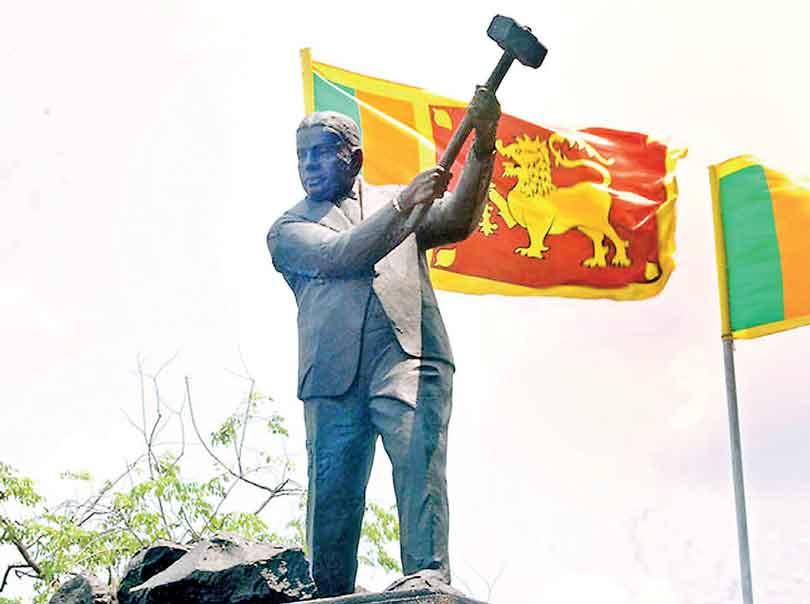
The late President Ranasinghe Premadasa, renamed Price Park in Pettah “Goonesinhapura” as a tribute to A.E. Goonesinha. A statue of A.E. Goonesinha stands near Pettah
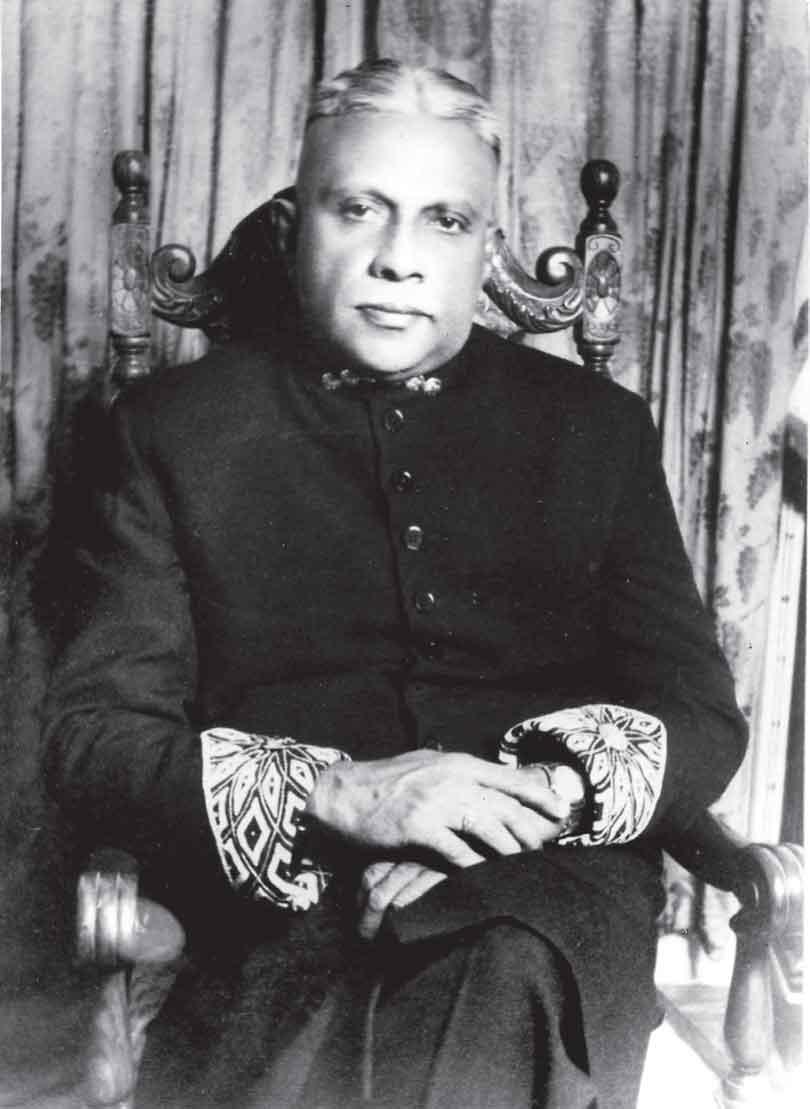
A.E. Goonesinha is considered the father of Sri Lanka’s Labour and Trade Union Movement
- Labour Day was first held in Ceylon in 1927 under the leadership of Alexander Ekanayake Goonesinha
- He was also a former Mayor of Colombo, a former Minister of State and Ambassador to Indonesia and Burma
- In 1931, by bringing Universal Franchise to Sri Lanka, A.E. Goonesinha fulfilled Sri Lanka’s right to vote
Writing about a historical figure is no easy task. Readers could tire of reading about the same feats year after year. However, every year there are readers who could gain knowledge of history created by our own men and women.
Today is 1st May, Labour Day (May Day), the day the workers celebrate their rights, their dignity and the appreciation of the work they do for man and country. Labour Day was first held in Ceylon in 1927 under the leadership of Alexander Ekanayake Goonesinha, the father of the labour movement and the trade unions in Sri Lanka. He was also a former Mayor of Colombo, a former Minister of State and Ambassador to Indonesia and Burma. He was married to Caroline Rupasingha who was the daughter of the owner of a graphite mine.
Labour Day was not created for political rallies and marches. It was created to celebrate the workers. However, what do we have today? Politics rules the day. Political parties take to the streets; and the workers and unions are split into political factions and made pawns of the politicians. Goonesinha was the man who gave workers a place in society, dignity of labour and rights, which were taken away by the British and ignored by Sri Lanka’s own “leaders”. Today, the very people who shout for human rights are those who despicably abuse them. Human rights are rooted in fairness, dignity, respect, and equality.
The campaign against tax
In 1891 the colonial government introduced a tax of Rs. 2.00 per year per male adult. Those who did not pay had to work on the roads for one day in lieu of the tax. Goonesinha campaigned against the tax levied by the Municipal Council and got the members of his Young Lanka League not to pay the tax and to work on the road instead. His determination in breaking metal himself for 8 hours with people joining him in great numbers and showing their support, resulted in the tax being finally withdrawn in 1923.
Dr. Kumari Jayawardene, author of “The Rise of the Labour Movement in Ceylon”, wrote that from 1915-1922 the Young Lanka League under the leadership of Goonesinha aimed at injecting new life into the nationalist movement which was felt languishing under the local leadership of “Old Guard” politicians who were comfortable in their positions.
In 1931, by bringing Universal Franchise to Sri Lanka, A.E. Goonesinha fulfilled Sri Lanka’s right to vote. He fought for this right to which the National Congress party was against as they wanted it given only to a few who supported the British and were favoured accordingly. The poorer classes were to be kept silent and only the favoured ones to make the rules. However, only a government based on Universal Adult Suffrage (Universal Franchise) means real independence. Goonesinha, the Ceylon Labour Union and Labour Party, were the only genuine advocates of Universal Franchise. Goonesinha did not switch from pragmatic politics to ideology-based party politics. He wanted to solve the problems of the working class and not the problems of a party so they could get re-elected.
K.M. De Silva, author of “A History Of Sri Lanka”, wrote: “Congress leaders set their sights on constitutional reforms per se; Goonesinha raised the issue of universal suffrage. Goonesinha was the one prominent political figure to advocate universal suffrage before the Donoughmore Commission.”
Goonesinha was neither “Left” nor “Right”, he was a Democrat at heart, a Social Democrat championing the Labour cause. However, his commitment to the Labour Party was snatched away when the Communist parties “hijacked” the workers for political reasons. Politics then, was dirty, selfish and party-based, just like today. Very soon there’ll be no more history books that tell of the very few honest and committed politicians of Sri Lanka. An emerging high-tech world will wipe it all away.
Goonesinha was a pragmatic politician. He only wanted to improve the conditions of the working class, the workers. He was not an ideologist, not a theoretician (Leninist, Trotskyist, Communist, Socialist) of the labour movement. His only goal was to fight social injustice in a democratic manner as a social democrat. - We should keep in mind that to support workers does not mean communism. Workers are not per se communists. Workers are human beings with a right to a fair share - not an equal share - of the wealth of the nation.
Goonesinha was not a ceremonial Buddhist but a follower of Buddhist principles. Moreover, he being part of the temperance movement, workers were not allowed to drink and cause mayhem during rallies. There were no liquor bottles distributed so that the workers could shout the loudest. They were disciplined rallies for labourers to celebrate their dignity and pride. He had no connections to tavern owners to keep the masses intoxicated in order to not revolt and to not ask for their fair share in the game of social justice and to not ask for the right to vote.
Goonesinha, himself, narrowly escaped death when an innocent man, mistaken for him, was shot and killed. In the 1915 riots he was imprisoned for giving refuge to a Malay family. Dowbiggins, the then police chief, confiscated 80 of his books of valuable literature (e.g. “The Rights of Man” by Thomas Paine) and burnt them. These were some of the personal injustices he had to face in the fight for justice for the workers. He was branded with many an accusation, similar to narratives used even today to brainwash people. Nothing has changed. In 1914 Goonesinha claimed in the National Monthly of Ceylon that “Toleration of everything is weakness. Cowards are bad enough, traitors we must not endure. Today many men consider it an honour to desert the ranks if they might obtain a title or a ribbon. When the public begin to look upon such men as mean and execrable few would covet their position.”
The late President Ranasinghe Premadasa, renamed Price Park in Pettah “Goonesinhapura” as a tribute to him. Price Park was where Goonesinha held the trade union and political meetings led by him, and where large crowds gathered to listen to his ardent speeches among contemporary leaders. This area is known as “Goonesinha Park”. - His statue has been erected at the entrance to Goonesinhapura, showing him with a hammer in hand breaking rock stones for Civil Disobedience in not paying the Poll Tax.
Goonesinha, a prominent freedom fighter and national hero, social worker, advocate of the poor, politician and trade union leader is remembered today as the father of Sri Lanka’s Labour and Trade Union Movement.