Reply To:
Name - Reply Comment
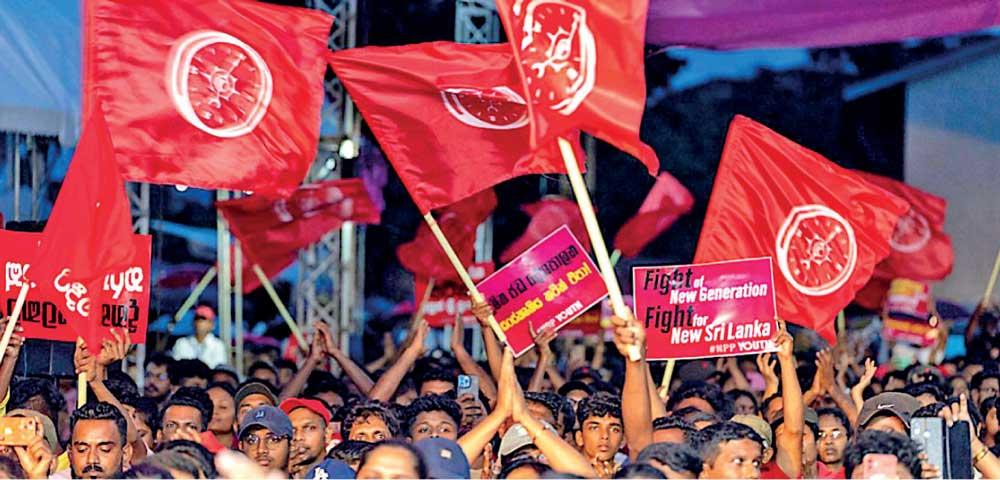
One could safely conclude that by electing the biggest provocateur to government, the worst fears have not been confirmed
 Sri Lanka ended 2025, a year that could have been much worse, on a positive note. The ravages of Cyclone Ditwah, which killed over 600 people, scores still missing, and the infrastructure damage estimated at $ 4 billion, had been a fatal blow at the end of the year.
Still, in 2025, Sri Lanka had avoided the worst.
The year began with the inexperienced and untested National People’s Power (NPP) at the helm of the government. Comparative international experience — from the post-Hassina mayhem in Bangladesh to the Arab Spring—would reveal that it is not stability and fiscal restraint but chaos and demagoguery that have generally followed similar political transitions. That Sri Lanka had managed to buck the trend itself is a relief.
In hindsight, the pre-election pledges to ‘remove the IMF plug’ and renegotiate the Debt Sustainability Analysis (DSA) now feel like a bad joke. However, the NPP had averted greater chaos by not delivering some of its most salient election rhetoric. Its recent conduct, in the aftermath of Ditwah, displayed even greater maturity. Despite certain global calls, including an open letter by some top economists to halt debt repayments—and a similar call by our own astute Sajith Premadasa — the government had continued to honour the IMF agreement and related debt repayments. Perhaps any other party, SJB or UNP, might have opted to pass the buck, with accrued interest payments, to a new government—exactly what Yahapalanaya did by piling up ISB debt and handing over the burden to Gotabaya Rajapaksa.
The economy has fared well too, growing at an average of 5 per cent during the first three quarters of the year, well above the IMF forecast, though the cyclonic disruption could have a toll on the last quarter. Interestingly, the growth was achieved while a large portion of the government’s capital expenditure, amounting to 1.2 trillion rupees ($5 billion), remained unspent during the corresponding period. That may suggest a more holistic, ground-up approach to growth, rather than the past reliance on state-led infrastructure drives. However, unused funds may indicate a lacuna in the state’s competence.
In foreign policy as well, the government has avoided political minefields. Probably the greatest was Trump’s import tariff, initially set at 45 per cent and later reduced to 20 per cent. Higher tariffs would have delivered a fatal blow to Sri Lanka’s cost-sensitive products, mainly apparel.
Another area of success was striking a delicate balance between the relationship with competing great powers, India and China. The communist orientation of the NPP’s main constituent party, JVP, led many observers to fear that the NPP would carry the country into China’s orbit. That policy shift, which Mahinda Rajapaksa tried in a small way, proved geopolitically perilous and unsustainable. The year 2025 saw Sri Lanka navigating these competing foreign policy relations without making a scene.
High Level Visits
The year saw a series of high-level visits by the president and prime minister to both India and China, as well as reciprocal visits, including last week’s visit by the Indian foreign minister and a high-level Chinese delegation. However, beyond that, Sri Lanka’s foreign relations with other major partners, Japan, the EU, and the US were in doldrums, partly owing to shifting geopolitical priorities of those countries, as well as the lack of personal rapport in Sri Lankan foreign policy under its new NPP leadership.
However, it is also clear that the foreign policy goodwill had not necessarily translated into economic benefits or investment. India may be an exception in certain contexts, but there was also tremendous underperformance. As for China, even the multi-billion-dollar Sinopec refinery in Hambantota, the tender for which was awarded during the Wickremesinghe administration, is still under negotiation.
That lacuna was first and foremost a result of the conflicting signals that the government kept sending on its economic policies. Policy vacillations and contradictions were partly owing to its own ideology and pre-election rhetoric. Some measures, such as rolling back proposed CEB reforms, had dented investor confidence in the government and made electricity more expensive and the grid more arcane. They also provide a glimpse into the government’s economic thinking, which seems to dampen investor interest. That might also explain why, for a country on a steady recovery path since the economic crisis, Sri Lanka has attracted only a nominal amount of foreign direct investment. These shortfalls would come to haunt the country in the coming years. Without clear, business-friendly economic policies and economic mechanisms devoid of red tape, Sri Lanka would squander another chance at economic take-off.
Also, in everyday life, the worst fears had not materialised. No JVP mobs were hunting political opponents, like their ideological allies in Bolivia or Venezuela. Refreshingly, though, the street protests and demonstrations that had been a daily occurrence under Wickremesinghe’s administration, and even the Rajapaksas, had trickled down to once in a blue moon. Since old grievances did not evaporate into thin air after the NPP was elected, one could safely conclude that by electing the biggest provocateur to government, Sri Lankans had cleared the streets of protesters.
Anti-Corruption Campaign
Another key area of interest is the government’s anti-corruption campaign, which has indicted some former ministers, and some of their own are facing investigation; however, none of those indictments refer to the mouth-watering billions of dollars in funds the NPP claims were siphoned. However, building institutional mechanisms that deter corruption and bribery, partly through degitalisation, may have a long-term positive impact.
All in all, the year was not a major feat in governance, economy, or foreign policy. However, it also avoided the worst and fared better than expected. It could not have been any better or different under a different political dispensation.
One could still say the government passed its test in the year 2025.