Opinion
Bondi Beach massacre proves terrorism has no religion
19 Dec 2025
 0
0
580
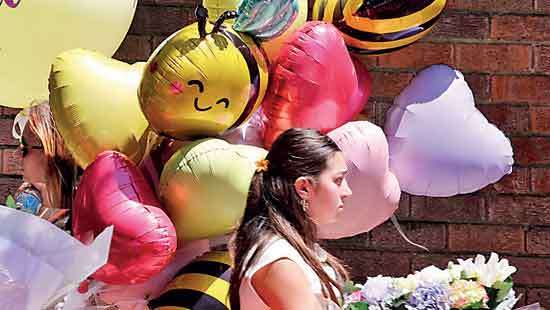
As Jews and peace-loving people in Australia and across the world mourn the victims of last Sunday’s Bondi Beach massacre—which claimed 15 lives, including that of ten-year-old Matilda, remembered by Australians as “our little ray of sunshine”—it is clear that the two terrorists who carried out this heinous crime stand far removed from the noble teachings of Islam they claimed to profess.
Should we celebrate as others suffer?
19 Dec 2025
3
2175
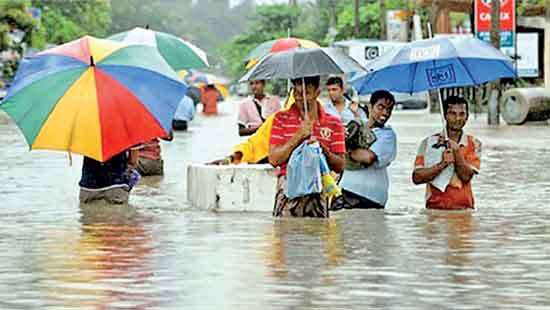
The festive season is upon us. But should we as Sri lankans go ahead with celebrations planned? I note with concern that some have decided to go ahead with festive merry making. Is it morally correct?
Another brutal elephant death highlights humanity’s wickedness
18 Dec 2025
3
523
Another heartbreaking elephant death was reported from Seeppukulama, Mihintale on Tuesday December 16. Villagers have attempted to chase this elephant that had suffered a previous injury in one leg and was blind in one eye by throwing burning torches at it. The elephant is suspected to have succumbed to burn injuries.

Natural disasters and economic inequality World Inequality Lab links poverty with climate change
18 Dec 2025
1
250
The devastation caused by Cyclone “Ditwah” in Sri Lanka cannot be understood in its entirety unless it is seen in the light of economic inequality in the country, and indeed in the comity of nations.

People should leave landslide areas like they discard old phones
18 Dec 2025
0
252
Unsuspecting Sri Lankans often fall prey when getting into land deals. There are still some visuals of billboards circulating on social media platforms which carry advertisements of lands for sale in areas which are prone to floods. There is a billboard, submerged two thirds by flood water, which states that the land on sale is the best available in the area. The question posed now is whether the fourth generation of children is ready to let go o
Using the clergy as cover won’t fool people
18 Dec 2025
0
215
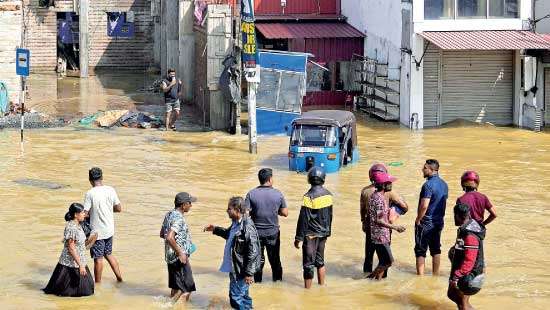
Recent events show that the much-promised “system change” has yet to take root. Attempts by sections of the clergy to publicly defend the government — arguing that there was no prior warning of an impending storm — ring hollow, when even a child could sense the change in weather through the chill, thunder, wind, and rain.

Al Haj A. J. M. Ismail Farook of Kahawatte Death of community leader brings tears to entire village
18 Dec 2025
0
788
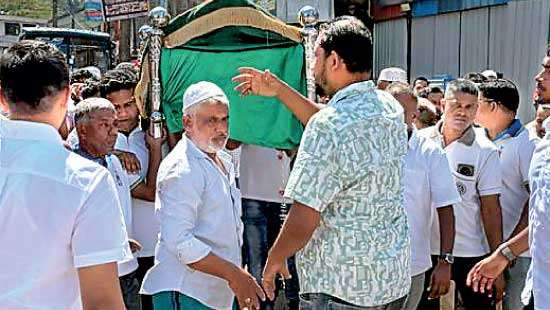
On December 13, 2025, Kahawatte in the Ratnapura district, mourned across all religious lines, a community leader, Al Haj A. J. M. Ismail Farook of Kahawatte, who passed away on December 12, 2025, after Jumma at his Colombo Ward Place residence. The Janaza was taken to Kahawatte for last rites and burial at the Kahawatte Jumma Mosque, where he had served as its Chief Trustee for three decades until 2024.
Navigating the Crucible: The search for visionary leadership in Sri Lanka’s crucial moments
17 Dec 2025
0
469
Sri Lanka, once envisioned as a potential economic powerhouse in South Asia, has navigated a tumultuous path since its independence in 1948.
From insight to impact ‘Great HR Quiz 2026’ shapes tomorrow’s HR leaders
17 Dec 2025
0
227
Sri Lanka’s most anticipated intellectual showdown in the people profession is back, bigger, bolder, and more future-focused than ever before.
Beyond Cyclone Ditwah: The government should turn disaster into an opportunity
17 Dec 2025
1
273
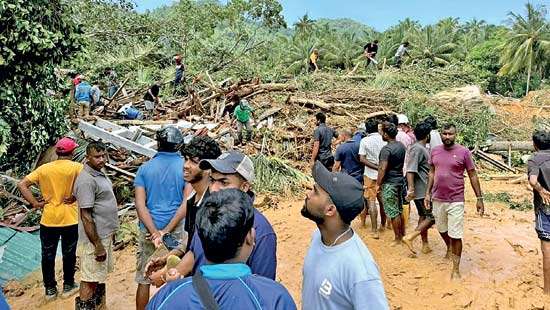
As Sri Lanka heads into the post-disaster reconstruction phase following Cyclone Ditwah, the government seems clueless about how to proceed.
When screens steal our children from us
17 Dec 2025
0
265
There was a time when evenings in Sri Lankan homes were filled with sound. The clatter of plates being set on the table, the familiar arguments over homework, a mother calling out to children to wash their hands before dinner, a father asking about school.

Don’t exploit a disaster
17 Dec 2025
1
141
The ugly side of relief distribution is now becoming more evident with various political actors trying to show their faces in these programmes.

Post disaster management is crucial
16 Dec 2025
0
239
Around 7000 people affected by floods and landslides caused by Cyclone Ditwah which made landfall in Sri Lanka on November 27 are said to be still staying in welfare centres, while over 6000 houses have been completely destroyed.

The Wounds That Billions Cannot Heal
16 Dec 2025
1
282
The storm that swept through our nation has left behind a landscape of broken homes, twisted roads, and shattered infrastructure. Engineers and economists are already adding up the billions needed to rebuild what was lost. Bridges can be restored, electricity can be reconnected, and houses will one day rise again where rubble now lies. But there is another kind of damage—quieter, deeper, and far less measurable.

All Governments Targeted Media Under Emergency: Silencing Critics: Emergency Powers & Media Freedom
16 Dec 2025
0
168
President Anura Kumara Dissanayake made a familiar promise to the nation on December 2nd: emergency regulations enacted for disaster reconstruction would not be misused for other purposes. “I assure every citizen that these emergency powers will not be misused,” he declared, explaining that the measures were necessary to provide legal and financial safeguards for efficient reconstruction following severe damage to essential sectors.
Presidential authority in times of emergency: A contemporary appraisal
15 Dec 2025
0
1559
The following is a keynote address delivered by Prof. G. L. Peiris at the International Research Conference of the Faculty of Law, University of Colombo held on December 12, 2025.
Cyclone Ditwah and Disaster Capitalism A warming planet, exhausted ecosystems and deep inequalities conspire together
15 Dec 2025
3
1665
Cyclone Ditwah tore through Sri Lanka with a frightening force, leaving behind washed-out villages, broken roads, drowned fields, and thousands of families trying to rebuild their lives from the mud. But as the waters recede and statistics slowly replace human stories, one uncomfortable truth remains pertinent.
When power meets the bottle, who pays the price?
15 Dec 2025
0
353
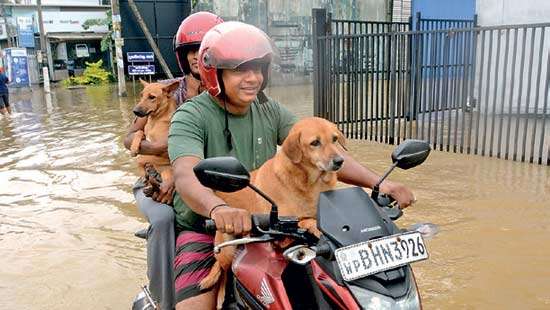
There is a familiar sinking feeling Sri Lankans experience every time news breaks about a politician involved in a road accident or public incident allegedly linked to alcohol.
Let’s prepare for the next disaster
15 Dec 2025
1
1053
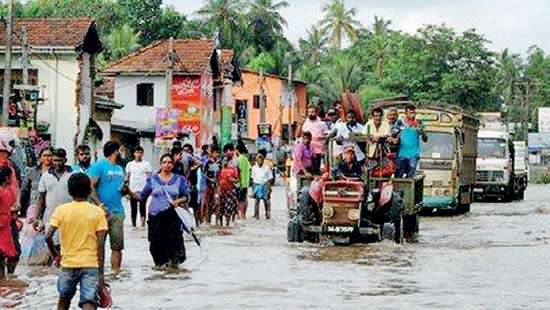
The recent cyclone disaster like the earlier Tsunami, has caught us all by surprise. Preventable loss of life and property has caused the country dearly.
How JR Amended his Constitution to Enable a Tamil MP Join The UNP Govt
13 Dec 2025
0
10873
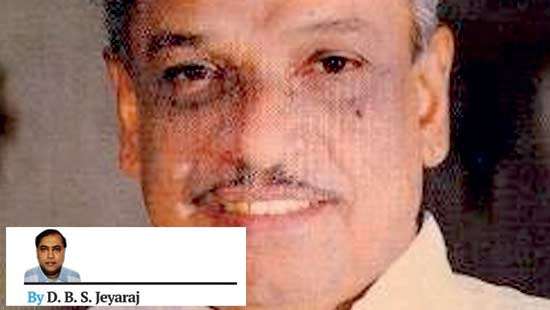
Chelliah Rajadurai, a veteran politician of Sri Lanka -- perhaps the oldest among former Parliamentarians -- passed away on December 7, 2025 at the age of 98. Rajadurai hailing from Batticaloa was a colourful personality who served as an MP, Mayor, Cabinet minister and High Commissioner in an eventful political career.
No one can predict how rivers will overflow Disaster warnings alone would not save human lives
13 Dec 2025
3
416
The Cyclone Ditwah that was formed in Southwest Bay of Bengal on November 26 and made landfall in Sri Lanka on November 28 has claimed at least 635 lives, leaving another around 200 persons disappeared by December 9. The numbers might slightly rise up.
Cyclone Ditwah and the politics of disaster
13 Dec 2025
0
257
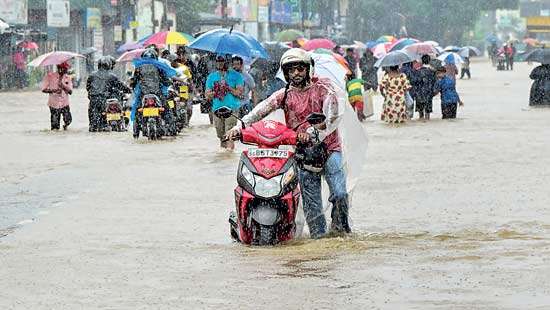
In November ‘Cyclone Ditwah’ hit our country in all its fury. With wind speeds of over 80 kmph, it brought with it 150–500 mm of rainfall for three consecutive days, triggering the worst landslides and flooding in the country in 20 years. Power outages, floods/wash away of major roads and landslides resulted.
URGENT SUMMONS
13 Dec 2025
0
183
The plight of our people and of our country at present is summoning us, the citizens of Sri Lanka, in a special way, to collaborate to promote the common good of our people and of our country in pain and need.
Justice delayed is justice denied
12 Dec 2025
0
364
Chairman of the United National Party (UNP) Wajira Abeywardena has said that Sri Lanka’s conviction rate remains as low as two percent, as reported in the media. While Sri Lanka records only a two-percent conviction rate, Japan’s stands as high as 98 percent, according to him.

Disaster geopolitics in Ditwah’s wake
12 Dec 2025
2
865
Just as Canada’s social justice activist and writer Naomi Klein, in her highly celebrated book The Shock Doctrine: The Rise of Disaster Capitalism, explains the relations between disasters—manmade or natural—and vulgar capitalism driven by inhumane greed, so too can we see an inviting link between disasters and geopolitics. In her 2007 book, she argues that disasters and wars are like honeypots for capitalist bees—or flies.
Lessons to be learnt from Cyclone Ditwah!
12 Dec 2025
0
196
In the aftermath of the catastrophic cyclone which overwhelmed our motherland with devastating consequence, causing loss of life and property across the country, we witnessed the commitment and compassion that was demonstrated by our citizenry to help humanity. This sublime gesture that transcended the diversity of creed and ethnicity of our populace by extending their heartfelt care and concern, is a defining characteristic that we as a natio

Coordinated efforts matter, at least during a natural disaster
11 Dec 2025
0
184
One lesson taught by Cyclone Ditwah is that people need to respect the environment more. With the high demand for real estate, people are convinced to purchase locations with the best view, proximity to the nearest town and other features often ignoring the sensitivity of these locations. Most high risk landslide-prone areas are in close proximity to forest reserves. The demarcation of boundaries and the use of such lands for commercial purposes

Dear Mother Lanka
11 Dec 2025
0
376
I’m writing you this letter with a heartbeat for a pen, ’Cause you’ve been fighting through the storms again and again. Little island of mine, wrapped in green like a queen, Mountains standing guard while the monsoons scream.

Size matters when cyclones hit: Are our expatriate communities doing anything to help?
11 Dec 2025
6
763
The world’s worst cyclone-hit countries are mainly in South and Southeast Asia – Bangladesh, India, Vietnam, the Philippines, Indonesia and Malaysia. Now Sri Lanka and Thailand too, are in that sombre list.
Positioning Sri Lanka in an emerging multipolar world order
11 Dec 2025
2
902
Over the past four years, geopolitical, economic, and technological shifts have progressed at a pace unmatched in the previous three decades. The world we face today is fundamentally different from the one we knew before. War has returned to Europe, shattering the assumption that major interstate conflict on the continent was a thing of the past. The Middle East is once again engulfed in overlapping crises that draw in both regional actors and gl