Opinion
The UN must be people-centred and not country-focused
25 Nov 2012
 0
0
2289
Salma Yusuf in candid conversation with Ambassador Razali Ismail, Former Chairman of UN Security Council and President of UN General Assembly in New York
Impeachment of CJ: Path to Standing Orders?
25 Nov 2012
1
3267
The impeachment of the Chief Justice of Democratic Socialist Republic of Sri Lanka is by every means seems to be a judicial function. In this context it is vital and interesting to see how the Select Committee appointed by the Speaker of the Parliament acquired its jurisdiction.
Editorial - Living out of public pockets
25 Nov 2012
0
2392
The public never had much faith in the government or its economic policy-makers; for the policies brought about by them often lacked sustainability and feasibility. Deliberately or otherwise, they only catered to the privileged few who only knew how to spend the public money most lavishly.
.jpg)
LTTE LEADER THWARTED OSLO’S MOVES FOR A CEASEFIRE IN 2009
23 Nov 2012
0
15653
The recent media exposure about an internal report compiled by the UN regarding its role and conduct in Sri Lanka has focused much attention on the final phase of the war against the Liberation Tigers of Tamil Eelam (LTTE) in 2009. An Interview with Ex-LTTE Chief “KP” - Part 2
JUSTICE FOR ALL THE JUDGE AND THE JUDGED
23 Nov 2012
1
3455
The move to impeach the Chief Justice (CJ) and the prison riot at Welikada in which a number of prisoners died, have aroused considerable public interest over the recent past.
Executive presidency root cause of crises - Editorial
23 Nov 2012
1
3028
From 1994 Sri Lanka’s political leaders have been promising to abolish the executive presidential system which after the 18th Amendment has dragged Sri Lanka into a dictatorial mud hole with a multitude of national and international crises in the political and socio-economic spheres.
.jpg)
Gaza conflict : Arab Spring shows new realities in Middle East
22 Nov 2012
0
2729
When it comes to the violation of international law, one is no better than the other. The reference is to the United States and Israel. They apparently...

Obama’s new policies in his second term
22 Nov 2012
0
3181
Judging by the timing of his Asian trip President Barack Obama seemed confident he can get what he wants with US economic policy...

Turnaround to a simple and humble lifestyle - Editorial
22 Nov 2012
0
2384
With many people preparing for the festive season despite political, economic and social crises in the country, it may be prudent to reflect on the...
.jpg)
TRCSL brings in self-discipline to radio- Palpita
21 Nov 2012
1
3561
For the last 25 years the Media Ministry and the Telecommunications Regulatory Commission of Sri Lanka (TRCSL) have given licences for a number of channels, numbering about 45.

Sri Lanka’s Potentials for a Dynamic Economy
21 Nov 2012
0
3847
Excerpts of a presentation delivered at the Workshop “Post-War Reconciliation Dialogue for a Sustainable Peace”, which took place in Paris. In January 2010, Sri Lanka was upgraded, from the IMF’s list of Poverty Reduction and Growth Trust, to that of Middle Income Emerging Markets.

Manacling the blood-stained hands - Editorial
21 Nov 2012
0
6369
Despite the overwhelming general dislike, the emerald isle is marching back to its bloody days.Even after the end of the war, the land has not been devoid of showering live bullets, dead bodies found in secluded houses and blood-stained hands that have not yet been chained.
The Tale of Impeachment of Two Chief Justices
20 Nov 2012
0
5860
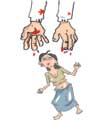
The 1978 Constitution is an embodiment of concrete and effective provisions to promote fair trial and to protect the independence of judiciary. However, the executive Presidential System clothed with legal immunity with suits as envisaged under Article 35 had adversely affected and seriously undermined the independence of judiciary and the judicial dignity and decorum of the judges.
Way forward with economic prosperity
20 Nov 2012
1
1901
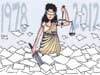
All our ancient rulers knew that without ensuring the people’s food security, it was impossible to protect the nation’s dignity, independence and sovereignty. This very reason made our people to make sure our country was self sufficient in food. We have drawn special attention to food security in view of the current global situation.
.jpg)
Editorial - Petrie report: Lanka faces diplomatic crisis
20 Nov 2012
1
3139
The wide ranging report on Sri Lanka by the UN internal review panel headed by Charles Petrie could cause a major international crisis for the Rajapaksa regime largely because of failure to wisely respond to the issues raised.
.jpg)
Effective Teaching empowering the professional teacher
19 Nov 2012
0
6596
As teachers and as parents, we have felt a growing lack of empowerment as we wish to prepare our children for the future.
(1).jpg)
It is imperative to get rid of 13th Amendment
19 Nov 2012
0
4068
The recent political developments in the country have triggered a debate among the people on the potential adverse consequences of the 13th Amendment to the Constitution of Sri Lanka.
_DM.jpg)
The onslaught goes on
19 Nov 2012
1
1867
Israel, it seems, has a vested agenda. The killing of Hamas military chief, the attack on its headquarters in Gaza and more than 800 sorties inside the besieged enclave is testament to the fact that big trouble is in the offing.

Killer dengue rides again: Try alternative cure - Editorial
19 Nov 2012
0
2785
Our editorial last Saturday made a plea to the Ministry of Health to promote the use of alternate medicine such as the manioc cure for cancer. We hope this plea such as those we made in the past will not be put under some sick bed.
I will continue to Fight on
19 Nov 2012
5
4888
I expected this as the first question to be asked by you. The split in the camp occurred in the sense that two MPs decided that they can’t work with me and with the rest of the people who work with me. They have their own agendas and their own way of doing politics.

re-interpreting the Executive President’s impunity
19 Nov 2012
0
2855
The constitutional wisdom of a people is the last resort that the people have when they are faced with constitutional peril. It is an almost unanimous opinion in Sri Lanka that the country is faced with constitutional peril due to the 1978 Constitution.
Lamborghini and ‘badagini’ - Editorial
19 Nov 2012
1
3282
The popular belief that the name of the town Baddaginnie in West Australia has its origin to Sri Lanka may hold some element of truth; for ‘badagini’ has been the common cry of the island’s citizenry given the economic constraints they are compelled to endure.
INDIAN OFFICIALS HAVE INTERVIEWED ME TWICE EX-LTTE CHIEF KP
16 Nov 2012
0
13706
Selvarasa Pathmanathan alias “KP” who donned the leadership mantle of the Liberation Tigers of Tamil Eelam (LTTE) after the demise of Tiger supremo Veluppillai Prabhakaran is very much in the news these days.
(1).jpg)
The demand for a new political order in China
16 Nov 2012
0
1507
The rubber stamp congress of China’s communist party is over. There have not been any surprises. Now for the results of the leadership battle. The script has been written, the actors are in place and the show goes on.

Editorial - Alternative medicine: Manioc cure for cancer
16 Nov 2012
4
11276
If the private health sector in Sri Lanka has decayed to a large extent from a centre of healing to big business, one of the root causes of this cancer is the absence of a clear-cut national health policy where the rightful place is given to all forms of medicine – allopathy, ayurveda, homoeopathy, acupuncture and others.

Gaza crisis: US must choose between justice and hawkish Jews
15 Nov 2012
8
2402
Just a week after his reelection, President Barack Obama is facing a big foreign policy crisis – the escalation of violence in the Gaza Strip following the...
Match-fixing fixation
15 Nov 2012
1
2561
Thick maybe the mud slung at the Sri Lankan cricketers from time to time, yet no matter what hits the headlines of the national dailies, for the twenty...
.jpg)
India is not a friend of Sri Lanka - Somawansa Amerasinghe
15 Nov 2012
3
2428
Somawansa Amerasinghe spoke to the Daily Mirror on the resurgent debate on the 13th Amendment, the prison riot, and the impeachment motion...
.jpg)
Aborting the right to life
14 Nov 2012
5
3327
Neither this fabulous universe nor all existing life-forms were created by us human beings. There is a mysterious process going on and going on in the universe about whose origin we hardly know anything.
Consumption and Urban Bias in the Budget
14 Nov 2012
0
3613
The National Budget is the financial strategy (expenditure and income) of a government towards achieving specific economic and social development goals during the forthcoming financial year and beyond.
_DM-8(15).jpg)