 Kamanthi Wickramasinghe
Reply To:
Name - Reply Comment
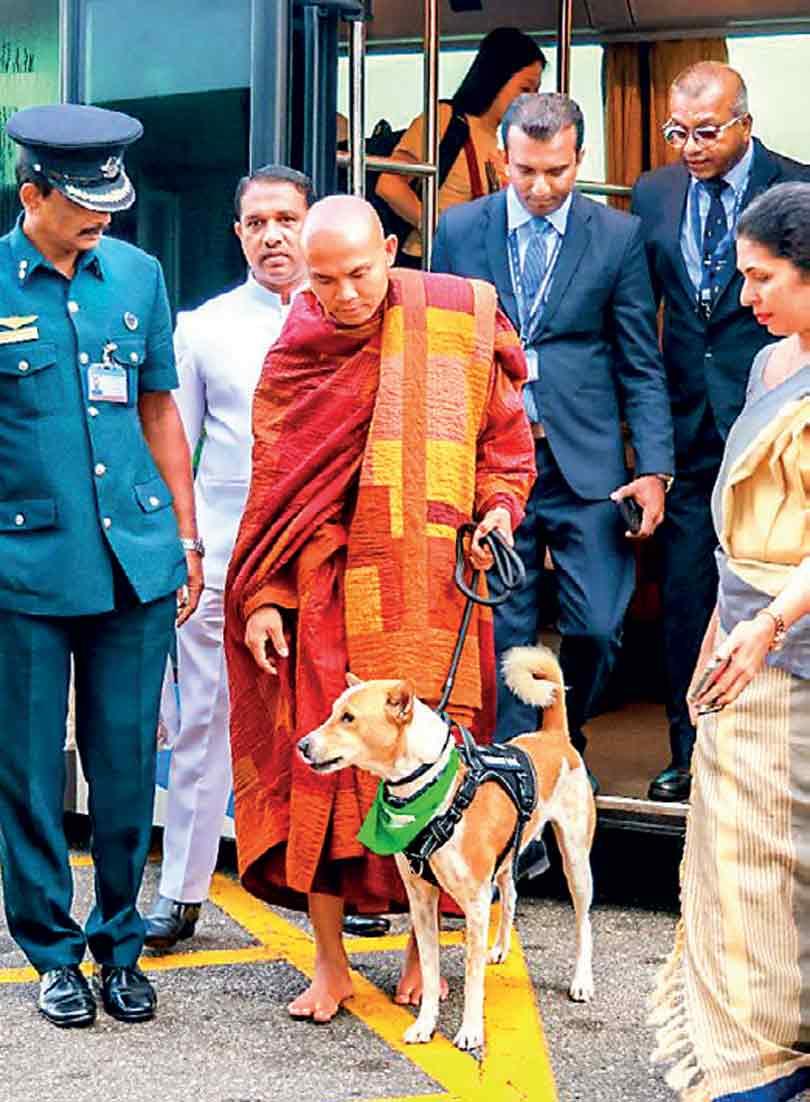
Aloka walking alongside Ven. Pannakara during the Walk for Peace in Sri Lanka
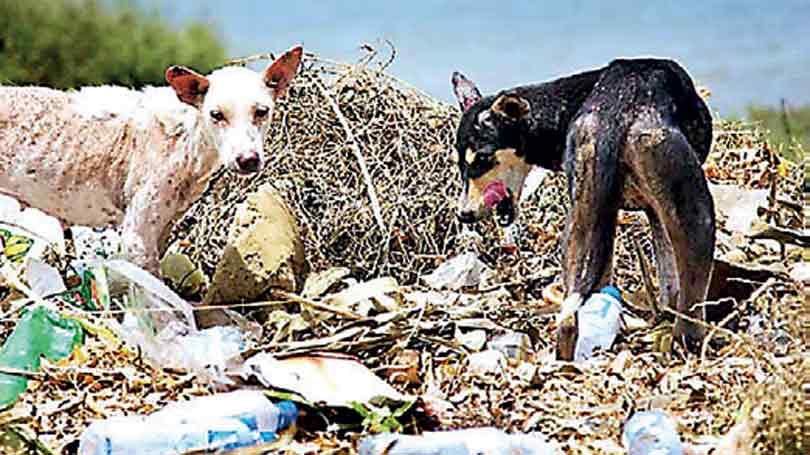
Without food and shelter, stray dogs lead an uncomfortable life
Many Sri Lankans were able to catch a glimpse of the Walk for Peace led by Ven. Pannakkara which concluded in Colombo. Apart from obtaining blessings from the monks, Sri Lankans were excited to catch a glimpse of Aloka, the peace dog, who became a social media sensation overnight. The main objective of this walk is to promote compassion and non-violence while encouraging mindfulness. With Aloka’s arrival, the discourse about treating our own stray dogs or community dogs with compassion has once again come to the limelight. In this backdrop, animal welfare groups have reiterated the urgent passage and implementation of the long stalled Animal Welfare Bill.
Perception on stray dogs
“As far as animal welfare is concerned, if a domesticated animal is living on the streets, then it is not living in a safe environment,” said Dr. Uditha Wijesinghe, Secretary, Sri Lanka Veterinary Association (SLVA). If an animal cannot be given shelter, food and cannot be cared for during an illness, then it is likely to lead an uncomfortable life. We don’t need Aloka to change perceptions of people. There are pet owners who love their pet dogs immensely. But whether they love stray dogs the same way they love their pet dog remains a doubt. But I’m happy that there is a community of people who take care of stray dogs. They advocate for the rights and welfare of these rather neglected animals. We need to think about controlling the population of stray dogs. If we have pets at home, but do not want them to reproduce, then they need to be spayed, neutered and vaccinated. There are many animal welfare groups as well as state-sponsored projects conducting these programmes, but we don’t see the results yet,” he added.

 Community animal feeders should be given access to feed, vaccinate, and sterilise community dogs without harassment. A dedicated weekly time slot should be included in the timetables of all schools—government, private, and international—to educate children on compassion towards animals
- Anusha David, Co-founder and Trustee of Rescue Animals Sri Lanka
Urgent call to pass and implement the Animal Welfare Bill
In her comments, Anusha David, Co-founder and Trustee of Rescue Animals Sri Lanka said that animal Welfare is a cornerstone of any developed country and community. “Continuous CNVR programmes (Catch, Neuter, Vaccinate, and Release to their original territory), as is the practice in India and many parts of Asia, should be implemented. Community animal feeders should be given access to feed, vaccinate, and sterilise community dogs without harassment. A dedicated weekly time slot should be included in the timetables of all schools—government, private, and international—to educate children on compassion towards animals. Public awareness must be strengthened to emphasise the fact that sterilising and neutering both owned and community dogs is essential, and the principle that humans and animals must coexist if our planet is to sustain itself into the future. Most importantly, there is an urgent need for the passing and implementation of the Animal Welfare Bill,” she said.
David further said that as much as Aloka’s presence represents peace, it also signals responsibility. She pointed out that it is high time that Sri Lanka’s community animals are recognised for being just that – a part of the community. According to her, 46% of the dogs roaming the streets within the Colombo Municipal Council area are actually owned by households.
“The majority of these dogs are unsterilised, thus giving rise to increased dog populations,” she added. “It is high time that sterilisation is made mandatory by law in Sri Lanka. Dumping dogs by the roadside should be made a punishable offence. Sri Lanka’s breeding industry is totally unregulated. In countries like the UK and Germany, local authorities are responsible for issuing licences and inspecting facilities. In fact many purebreds struggle to adapt to Sri Lanka’s tropical climate. Uninformed owners, who are quickly overwhelmed by the high cost of dietary and veterinary care, abandon their pets, adding yet more animals to the already existing street population. The government has laid out the red carpet for Aloka. We insist that the government starts taking responsibility and showing compassion for own Sri Lankan community dogs,” she underscored.
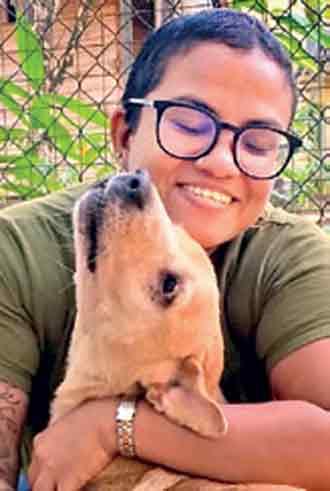 Where is our long-promised animal welfare legislation, still stalled after decades? Where are the bans on ear and tail docking? Where is the consistent response to the daily realities — animals beaten, poisoned, caged, run over, and exploited without consequence”
- Shilpa Samaratunge, Founder of Tails of Freedom
Avoiding selective compassion
“Aloka deserves care, protection and dignity and that should never be in question,” said Shilpa Samaratunge, Founder of Tails of Freedom. “But this moment also reveals something deeper — not just about one animal, but about what we are capable of when we choose to act. If this level of coordination, visibility, and urgency is possible, why has it not extended to the thousands of animals suffering every single day across this country? Where is our long-promised animal welfare legislation, still stalled after decades? Where are the bans on ear and tail docking? Where is the consistent response to the daily realities — animals beaten, poisoned, caged, run over, and exploited without consequence”, she questioned.
Speaking about the challenges faced by rescue organisations and independent carers, Samaratunge said that they fund treatment out of pocket, navigate rising costs, and fight through endless obstacles just to give animals a chance at survival. “This burden is being carried quietly. And too often, they do so without institutional support, and without strong, independent voices advocating alongside them. So yes — Aloka should be protected. Absolutely. But compassion cannot be selective. It cannot appear only when it is visible, convenient, or politically safe,” she added.