Reply To:
Name - Reply Comment
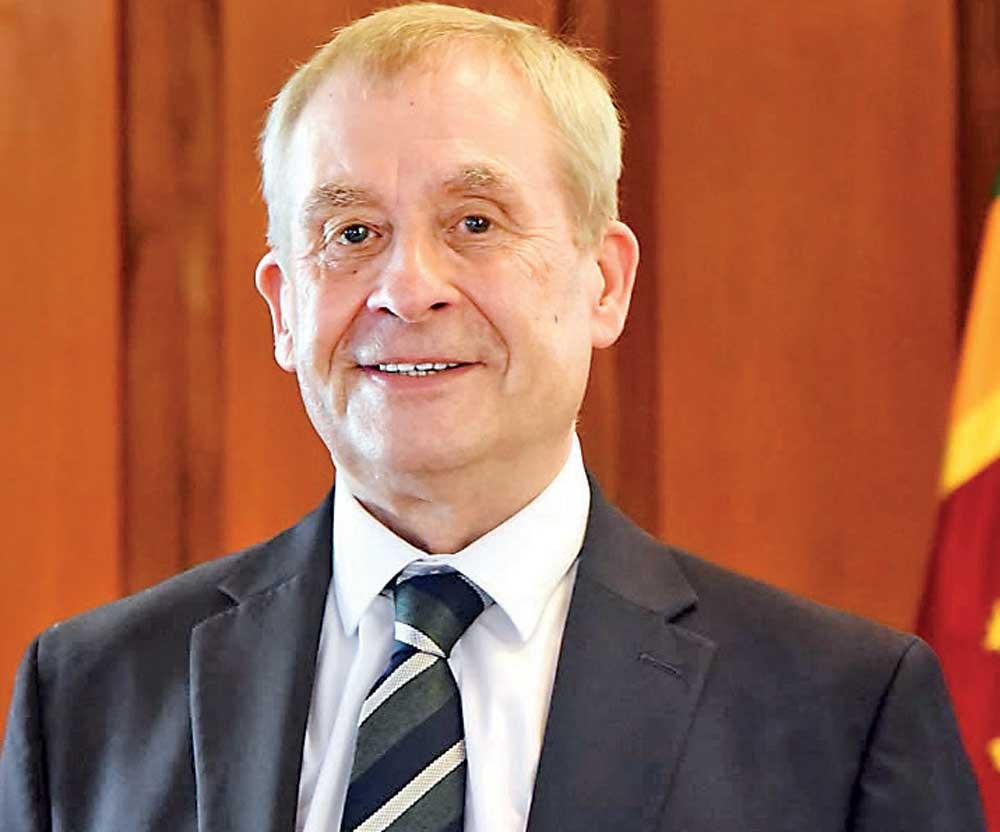
“The UK’s Developing Countries Trading Scheme (DCTS) creates fresh opportunities following reforms that came into force from January 2026. The improvements to rules of origin will see some of the biggest gains in the apparel sector.”
By Lord Hannett, UK Trade
Envoy to Sri Lanka
Lord Hannett of Everton, the United Kingdom’s Trade Envoy to Sri Lanka, was in Sri Lanka from 17th to 19th lastweek promoting bilateral commercial relationship.
The clearest message from my recent visit to Colombo is the relationship between the UK and Sri Lanka is a flourishing modern partnership built on trade, investment, skills, and enterprise. It is a relationship that is delivering shared growth for both our countries. This was visible across board rooms, factories, supply chains, universities, and service centres. It brings together British and Sri Lankan businesses and entrepreneurs in ways that create jobs, build capability, and open new opportunities on both sides. As Sri Lanka works to turn stabilisation into lasting prosperity, and as the UK seeks forward-looking partnerships, this trade relationship has growing relevance.
A partnership rooted in the real economy
The UK-linked businesses I met during my visit reflect the range of collaboration already under way that takes different forms: trusted consumer brands, long-standing manufacturing investment, supply-chain partnerships, and new areas of innovation, all contributing to jobs, livelihoods and economic activity. This demonstrates that the UK-Sri Lanka partnership is broad and rooted in the real economy.
Some of those contributions are highly visible. British consumer and premium brands continue to hold strong positions in Sri Lanka’s market.
Land Rover, represented by Access Motors, is a British brand with commanding appeal in a market that is cautiously reopening after years of import restrictions.
The Body Shop, which recently marked ten years in Sri Lanka shows something similar, reflecting the attraction towards recognisable UK brands and recovery of the country’s premium retail sector.
Straddling both retail and manufacturing sectors, Unilever’s long-standing investment in Sri Lanka operates world-class production facilities that supply the domestic market. It provides significant economic impact through its employment both directly and indirectly.
Some of the UK’s contribution is less visible.
Ryse Energy is seeking to support Sri Lanka’s renewable energy ambitions – an area of growing strategic importance as the country seeks a more resilient and diversified energy mix.
Anchoring the international banking sector in Sri Lanka are two key UK institutions, HSBC and Standard Chartered, who continue to play a major role in Sri Lanka’s trade and finance landscape, and remain committed to supporting that vital international business connectivity.
Opportunities for Sri Lanka’s export success
The UK’s role is especially significant in apparel. As the second largest destination country for one of Sri Lanka’s most important export industries:
UK buyers like Marks & Spencer, NEXT, and Tesco help sustain a sourcing ecosystem built on quality, compliance and long-term supplier relationships.
Long standing investors like Coats plays an equally important role both supplying Sri Lanka’s apparel sector and exporting globally.
That impact is multiplied across the supply chain and logistics sectors that support the industry as I saw from my meeting with Hayleys. These partnerships strengthen one of the country’s most significant industries and the livelihoods that depend on it.
The UK’s Developing Countries Trading Scheme (DCTS) creates fresh opportunities following reforms that came into force from January 2026. The improvements to rules of origin will see some of the biggest gains in the apparel sector. Better use of the DCTS can strengthen competitiveness and help Sri Lankan firms grow their exports to the UK market.
Policy change however, must be matched by commercial readiness. Lasting growth depends on whether Sri Lankan businesses can meet standards.
Understand the global markets, and scale with confidence. That is where practical partnership matters most.
This was the focus of two UK-supported initiatives: the UK Trade Partnerships Programme and SheTrades. These programmes targeted support to widen participation in trade, particularly among smaller firms and women-led businesses. They have helped Sri Lankan SME’s improve market readiness and buyer engagement including through trade missions, buyer showcases, and export development support. They make a wider point that long-term export growth depends on broadening the base of firms able to compete internationally.
Education, skills and the future economy
Trade is not only about goods and services. It is also about people and opportunity. The UK already works closely in Sri Lanka on the provision of skills training, transnational education, and professional qualifications. This is not simply an educational relationship – it is part of a wider economic partnership, helping to build the workforce that Sri Lanka requires.
With Sri Lanka being the UK’s second largest market for transnational education, the launch of the first UK branch campus in Sri Lanka, through the collaboration between University of West London and ANC Education, is a significant milestone in that education partnership.
But what comes next after graduation? For too long, in many parts of the developing world, the primary objective through education is seeking migration. However, migration is a big political issue in the UK and other European countries. This is in part due to irregular migration. But it’s also due to abuse of legitimate visa routes. In UK statistics, Sri Lankan student asylum claims are amongst the worst. While the statistics are complicated, it is roughly one out of ten Sri Lankan students claim asylum. Vast majority of those are found to be unjustified. This is a serious concern that UK and other European countries are grappling with, and we need to work together to address this issue.
There is no doubt that global mobility creates opportunities. It allows people to gain experience, exposure, and new ideas. But it should not be seen as the only path to success. With the centre of global growth shifting towards Asia, countries like Sri Lanka have every opportunity to be part of that story.
The younger generation of Sri Lankans need guidance and encouragement to contribute to the country’s economic prosperity. My visits to NIBM’s Neo Ventures and Hatch reinforced that there is a strong ecosystem in Sri Lanka focusing on nurturing this capability. I was impressed by the innovators and founders of the next generation of Sri Lankan businesses who are defining new sectors, unlocking new markets, and shaping the future of this economy.
Sustaining the trade relationship
The UK-Sri Lanka trade relationship already spans a wide range of sectors. It is built around shared interests that support growth in both economies. For growth to be sustained, the wider business environment matters.
UK investors and exporters alike value transparency, consistency, and speed. Sri Lanka needs to create a more predictable regulatory environment, with clearer processes and faster decision-making to make it easier for businesses to invest, expand and trade with confidence. A continued focus on ease of doing business would support entrepreneurship, help attract investment, and support international and Sri Lankan firms to move more quickly from opportunity to delivery.
There is clear scope to deepen the trade partnership further. Sri Lankan exporters have fresh opportunities in the UK market through the UK’s DCTS, UK investments and trade continue to demonstrate practical collaboration that contributes to Sri Lanka’s economy, and education partnerships are helping to build the future talent on which long-term prosperity depends. The UK and Sri Lanka have much to gain from working together and should remain ambitious about the next chapter we can shape together.