Reply To:
Name - Reply Comment
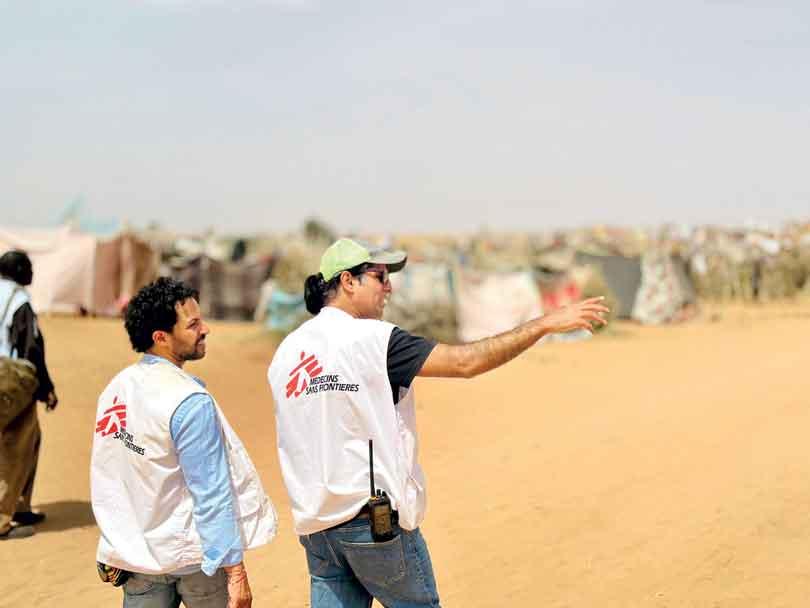
Hussain working on the field with his team (Pix courtesy of MSF)
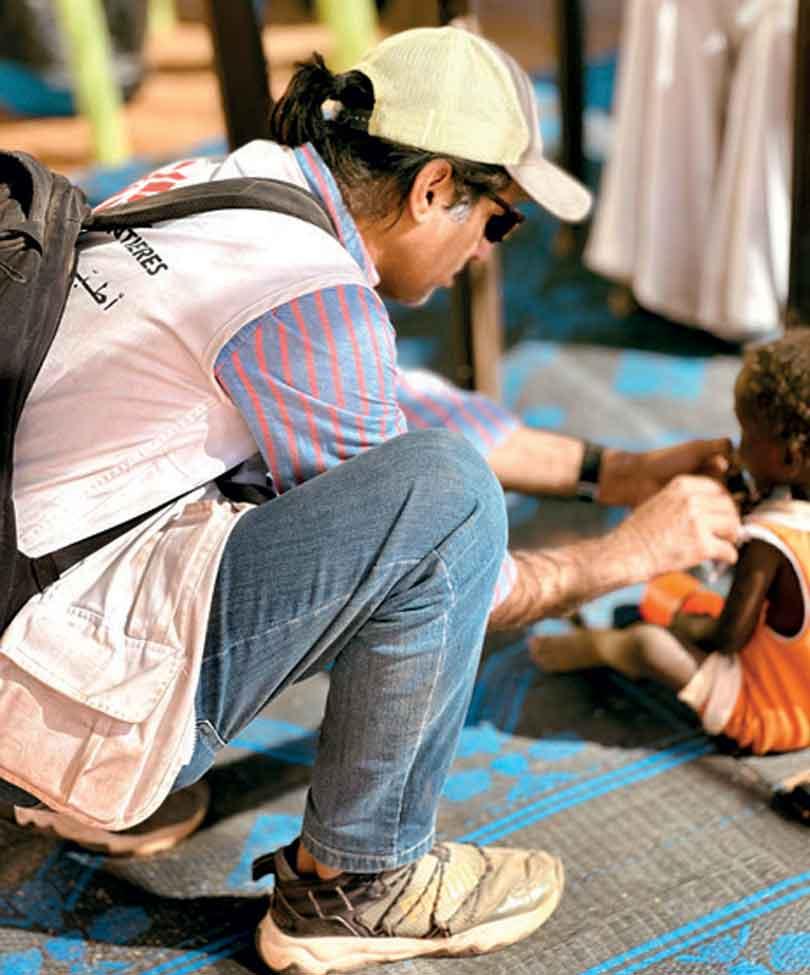
Medical support provided for children under 5
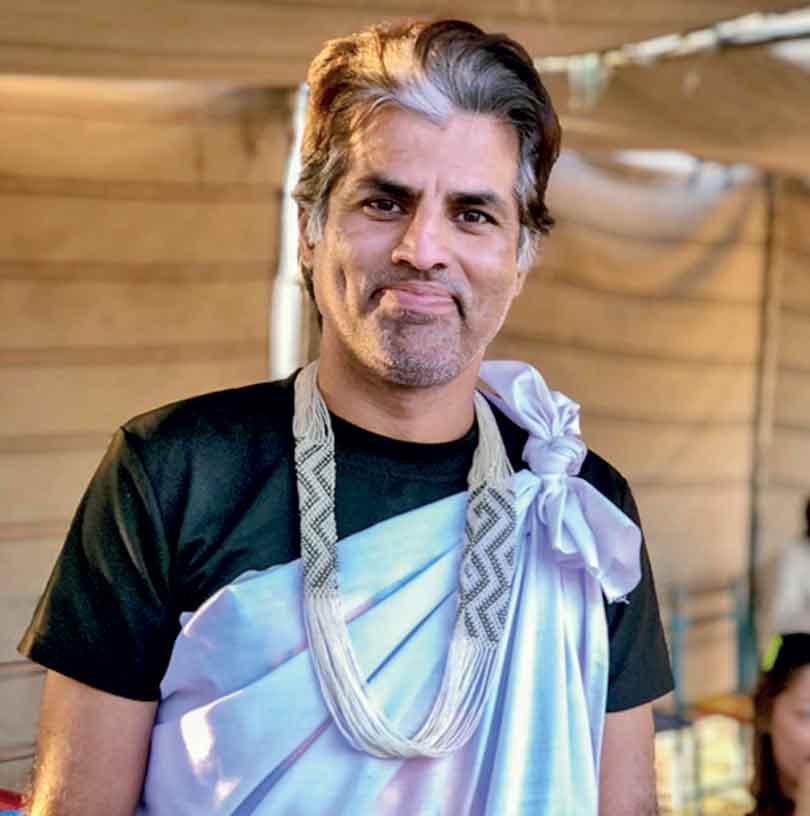
Hussain’s roots are in Pakistan
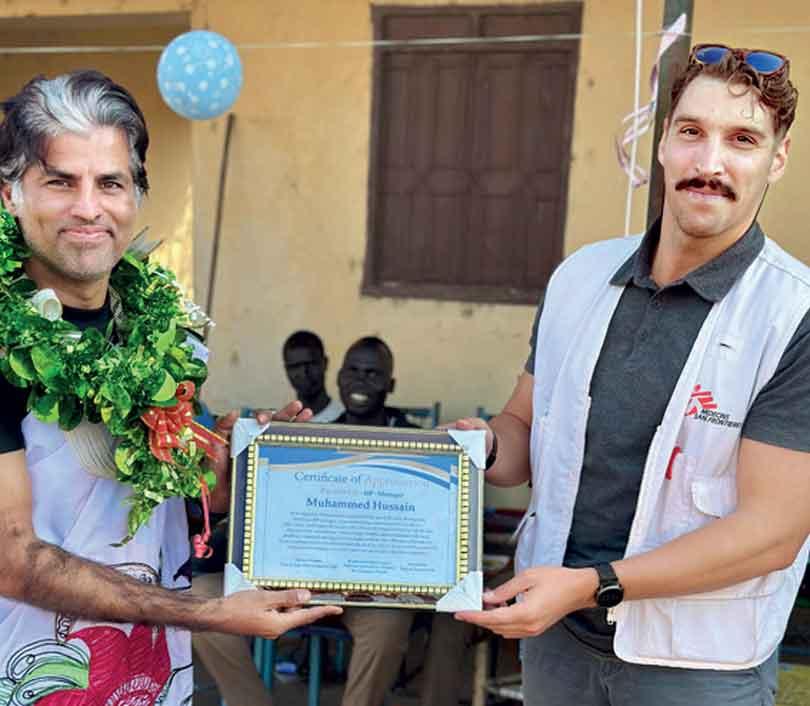
Hussain (left) being appreciated for his work
- Hussain has led several missions in conflict zones in different parts of the world
For Muhammad Hussain Mattee, a public health and community engagement expert at Doctors Without Borders / Médecins Sans Frontières (MSF), serving humanity had never been an afterthought. Having begun his career as a translator at MSF, Hussain later pursued his dream career, leading several missions in conflict zones in different parts of the world. Since 2018, he had completed 11 international missions across Sudan, South Sudan, Syria, Ukraine, Ethiopia, Uzbekistan, Tajikistan and Pakistan.
Hussain’s initial exposure to international non-governmental organisations (iNGOs) was during a flood that occurred in Pakistan. “Around 2 million people were internally displaced and it was around this time that I started working with MSF as a translator,” he told the Daily Mirror.
He was impressed by the way MSF was serving communities leaving aside caste, race and religion. “That’s when I realised my goals of serving humanity aligns with goals of MSF. But once they left Pakistan after the floods, I worked with several other iNGOs. I even worked in the government sector, but I continued to apply for international positions. My application was rejected twice, but I succeeded the third time,” he said.
Hussain’s first mission was to Syria in 2018 during the height of ISIS attacks. Since then he has completed 11 missions within a span of nine years. His recent mission was in South Sudan and then again in Sudan amidst the ongoing conflict. Sudan is currently locked in a brutal civil war between the Sudanese Armed Forces (SAF) and the paramilitary Rapid Support Forces (RSF). The conflict began in April 2023 and as of July 2026 the country is split with SAF holding central and Eastern regions while the RSF controls Darfur and several other areas.
Hussain recently led MSF’s community engagement work in North Darfur, Sudan, as a health promotion community engagement manager, managing a 60-member team during the Al-Fashir emergency response. He has worked on cholera, measles and malaria outbreaks, mass casualty response, epidemiological surveillance, safeguarding maternal health and community engagement in one of the world’s most challenging conflict settings.
“From time to time they are bombing each other and there are continuous attacks,” said Hussain. He said that they have created a de facto government called the Tasis government. “Nobody has acknowledged them, but they claim that it’s their territory. We worked inside Darfur which is an enclave controlled by the Sudanese Liberation Army. They remained neutral since April 2023 in the Sudan conflict and have good relationship with the Sudanese army and RSF. This enclave is considered a safe place,” he added.
Prior to starting their project in Tawila, MSF had been working in RSF-controlled areas such as Zamzam and Al-Fashir. According to Hussain, Al-Fashir is a city with many camps inside, hosting around 300,000 people.
“It was under siege for 18 months. Outside this area there is a trench, so that nobody could leave or enter and there is just one entrance. This has created a massive humanitarian disaster. Those living inside this area are considered supporters of the Sudanese army. People have faced various atrocities while trying to escape and it had been different for men and women. People have been escaping to Tawila because it’s considered a safe place. The distance between Al-Fashir and Tawila is about 65 kilometres and for us it takes about six hours to travel by vehicle. But that’s not the case for people. They were travelling with their families and the elderly for months and have faced various vulnerabilities,” Hussain further said.
Tawila had initially been a small town which has now grown into a safe space for about one million people. “MSF has a big mission in Tawila, providing services for patients at the secondary hospital which has a 220 bed capacity. They conduct 400 surgeries per month, including around 200 trauma surgeries and is equipped with a laboratory to perform all tests. For the people living there, safety and security are main concerns in addition to access to healthcare,” he further said.
Lack of sanitation, overcrowding, unavailability of water and damage to infrastructure has created multiple crises in Tawila. “Many iNGOs are unable to provide services due to funding cuts.
According to UNHCR around 11 million people have been forcibly displaced. 6.6 million have been internally displaced. 4.6 million people are seeking refuge outside Sudan, South Sudan, central republic of Africa, Ethiopia and almost 24.6 million people are food insecure. There’s a huge famine in Darfur. The weather is extremely challenging. So it’s a package of crises,” he said.
Hussain further said that diseases such as malaria and dengue are endemic. “We have four months of rainy season. During this time there’s 80% malaria cases in hospitals. It’s a challenge to manage around one million people. But we have a test and treat facility in hospitals. Other organizations are providing them with mosquito nets and other equipment. Last year we did a small pilot project to prevent prophylaxis for children under 5. We provided them with some tablets and this year we have a small project by MSF from mid-July till October,” he added.
While working on the frontlines, Hussain and his team have been exposed to many traumatic events. “We have compassion fatigue, but the international staff is very supportive,” Hussain said. “We live like a family. There’s a psychologist always accessible over the phone. If work is overwhelming, you are free to leave and nobody would question you. MSF has a strong system in place that protects us,” he added.
Sudanese people have been living amidst brutal conflicts for years. To avoid exposure to such atrocities, they keep migrating from one place to another. Hussain said that the community is in fact resilient. “There are mostly women and children. Most men have died or are engaged in slavery in gold mine areas controlled by RSF. Suffering has become normal for them but you still see them smiling,” he added.
Returning to his own community
Hussain belongs to a humble family from Pakistan. It was his father who had inspired him to serve humanity. Apart from his work in the frontlines providing humanitarian support, back at home Hussain provides free education for hundreds of children. He is proud to be a part of the MSF platform and is grateful for the support extended by the Sind Government and the Sind Education Foundation. He has established not one but three schools which have been named after his late father who passed away in 2010. “It was my father who told me to serve humanity and MSF taught me how to serve humanity,” he said.
Having completed his task as a Health Promotion Manager, Hussain is most likely to take on the role of project coordinator during his next mission. But for now he is returning home to take a small break.