 Kamanthi Wickramasinghe
 Reply To:
Name - Reply Comment
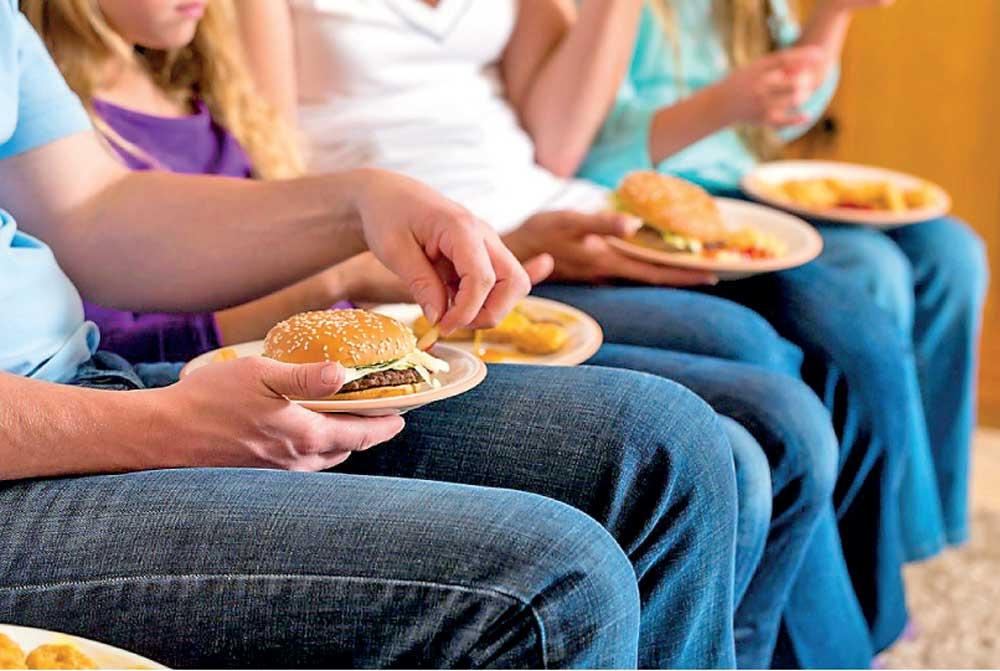
The Healthy School Canteen project aims to protect future generations from non-communicable diseases. The picture shows kids getting ready for a meal containing very little nutrition, but is loaded with unhealthy fats and oil
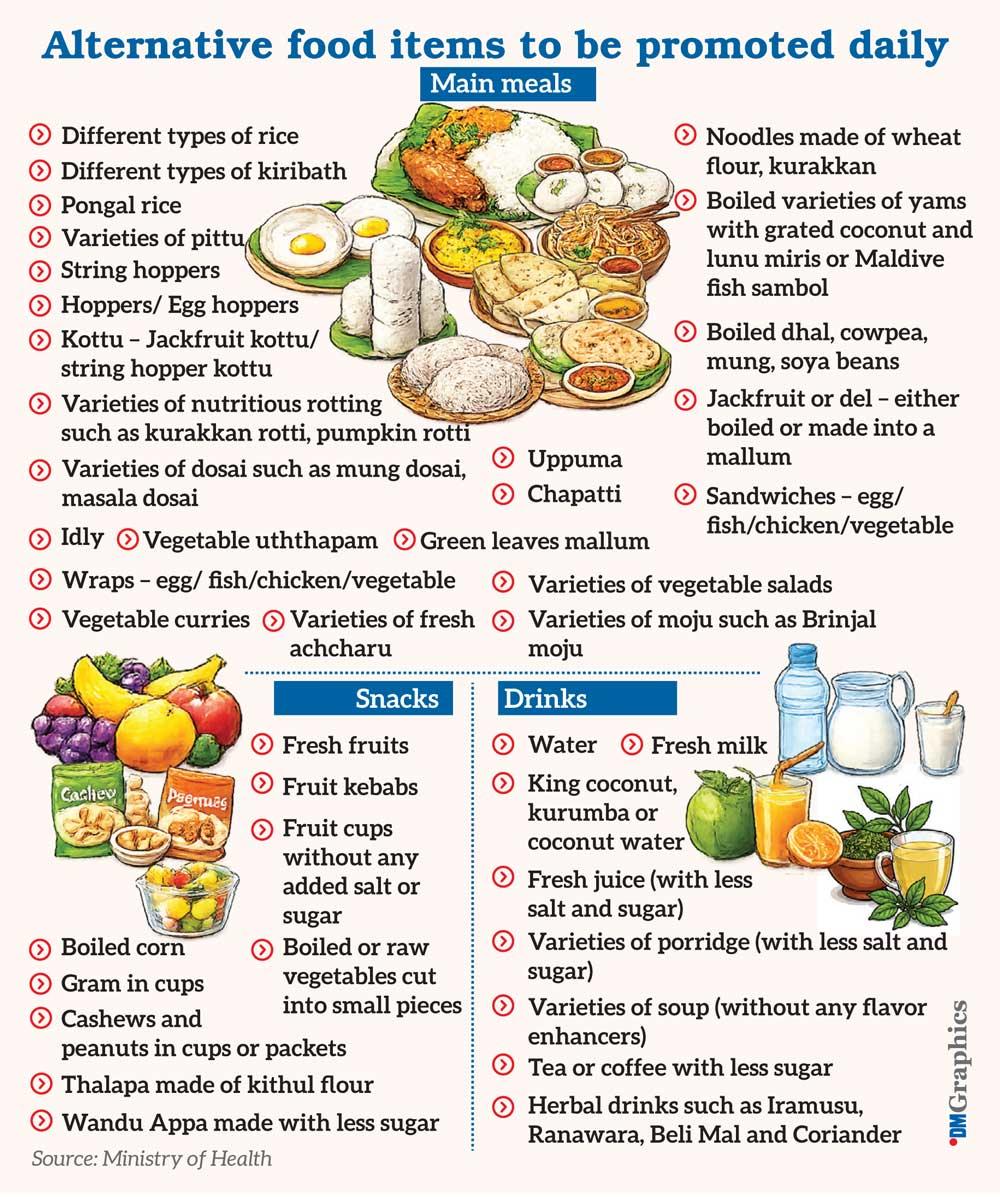
In a bid to combat childhood obesity and nutrition issues, the Ministry of Health introduced the ‘Healthy School Canteen Guidelines’ on Monday (June 22) coinciding with National Nutrition Month 2026. The new guidelines mandate sweeping bans across five key categories including deep-fried foods, processed meats, sugar-laden products, calorie-dense foods with low nutritional value and carbonated drinks. The guidelines in turn promote healthy, locally sourced natural snacks to allow children to develop healthy food habits and to protect them from the early onset of non-communicable diseases (NCDs).
Alarming statistics
The National Nutrition Month survey conducted by the Family Health Bureau in June 2025 revealed that wasting (too thin for the height) remained a concern among school children with prevalence varying across districts. The national average was 18% while districts such as Badulla and Ampara recorded comparatively higher rates. The summary report indicated that stunting (having a height-for-age more than two standard deviations below the World Health Organization (WHO) Child Growth Standards median) reflected long-term nutritional deprivation. The national prevalence of stunting was 6.5%. The highest rate was recorded in Ampara District at 13.4% while some districts such as Colombo reported low levels. Overweight (weight-for-height greater than two standard deviations) among school children was identified as a growing concern with the highest prevalence reported from the Colombo Municipal Council area where nearly one in ten children were overweight. Obesity (Body Mass Index (BMI)-for-age greater than two standard deviations) too is an emerging concern among school children. Even though the national prevalence was 3.5% the Colombo Municipal Council area reported the highest rate at 6.5%, nearly double the national average.
A step in the right direction
Nearly 70% of deaths in Sri Lanka occur due to NCDs. They occur due to multiple causes and common risk factors are diet, lack of physical activity, alcohol and tobacco consumption and poor mental health. Diet is one of the major risk factors of NCDs. One could get diabetes, high blood pressure, cholesterol, ischemic heart diseases and many other diseases.
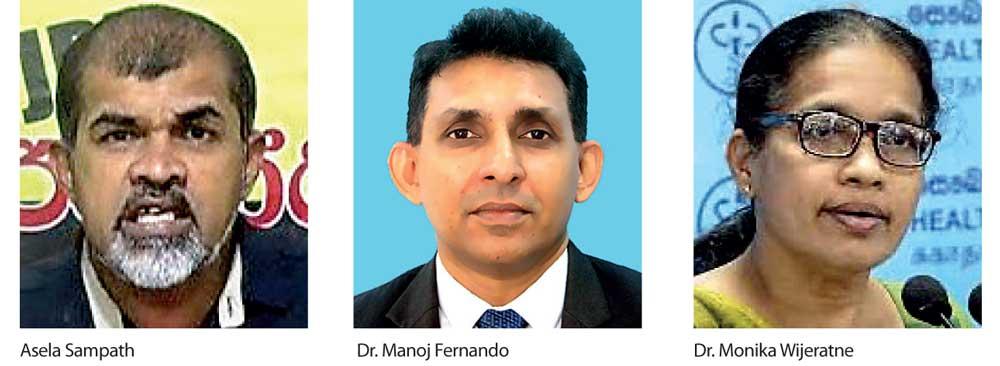
“Most of these risk factors appear for the first time in our lives when we are schooling,” said Dr. Manoj Fernando, Dean, Faculty of Applied Sciences at the Rajarata University. “Before the age of 18, there’s less psychosocial development. Because of these reasons we get ‘hooked’ into various habits while in school. If a child gets hooked into these habits there’s a likelihood of them continuing these habits for a very long time. NCDs and risk factors of NCDs appear during this period and it is a serious matter to consider,” he said.
He said that in doing so, it is important to improve the health of children and empower them to minimise the uptake of risk factors. “One way is to create a healthy school environment and changing the school canteen is very important. Most students prefer to eat something from the ‘tuck shop’ even if they bring something from home. If you don’t have many healthy food options available at the school canteen students will opt for food available in the canteen. This is why it’s important to include healthy food in the canteen. Implementing these regulations is a positive step in my opinion. It creates an environment within the school where children will not have access to unhealthy food at least during school hours. That will minimise their dependency on unhealthy food,” he added.
Practical considerations
In terms of policy implementation there are practical aspects to consider. Dr. Fernando said that one of the problems observed in the past was with regards to implementing policies overnight.
“This is where you fail and when you fail you will not get an opportunity to set things straight for a very long period. So what needs to be done is to consult all stakeholders and see how to proceed without a failure. There may be a lot of canteens selling unhealthy food items. They need to be made aware of these healthy options and provide some support to introduce these healthy food items. At the same time they should be given a window period which will allow them to convert into a healthy canteen. Otherwise, if they are asked to do it overnight, they will complain about not having any food to sell and the canteens will close down. Then the parents and teachers will come and say that it’s not practical and will once again go back to square one. Gradual introduction of these policies in two or three steps would be one option to allow them to adopt the policy, say in about six months,” he opined.
He said that it would also be interesting to look at various food combinations and palatable food preparations that would encourage children to keep consuming these healthy food items. “Authorities should also be equipped with a plan to address future challenges without working towards failures,” he added.
Call to reduce
canteen charges
In his remarks, Asela Sampath, Founder, All Island Canteen Owners’ Association said that he has observed issues pertaining to unhealthy food items sold in school canteens since 2006. “This is why I initiated the All Island Canteen Owners’ Association. I’m thankful to this government for implementing these guidelines. But there is a problem. Different schools charge different rates from canteen owners. Some are exorbitant amounts and therefore in order to cover the costs, canteen owners are compelled to sell whatever they can. There are various recipes introduced under the current guidelines but it would take some time for children to get used to them. This is because there’s no point in having kurakkan (finger millet porridge in the school canteen if the boutique opposite the school continues to sell short eats and other snacks. Parents are compelled to purchase short eats and send their children to school. On the other hand, schools should reduce the amount of money charged from canteen owners at least as a pilot project to support canteen owners to introduce healthy food options,” he suggested.
Vision for a healthier generation
“What we observe is that the cost of preparing healthy food items such as pumpkin soup for instance is nominal when compared to the amount of money spent to purchase short eats and other unhealthy food items,” said Dr. Monika Wijeratne, Director – Nutrition at Health Ministry. She said that canteen owners have been instructed to source local produce unique to different areas of the country. “This is why we have introduced food items such as jackfruit kottu. Rather than buying a pizza it’s easier to prepare a rotti in a healthy manner. But parents are compelled to buy short eats because of their busy lifestyles and also because there’s no healthy option in eateries. Through these guidelines we want to introduce quality food items to the canteen. If students get used to these food habits they will continue it into their adulthood,” she added. Dr. Wijeratne further said that children get addicted to the taste of sugar and salt. “Then they keep looking for these tastes in every food they consume. We are educating the public about adopting healthy lifestyles and people also have a responsibility in being aware of what they consume. Parents need to be mindful about what they are giving to their children and we are only trying to support them in this cause. We are also thankful to the Education Ministry for collaborating with us in this endeavour because it is only through a circular issued by the Education Ministry that school principals and officials could implement these guidelines. So from now onwards when calling a tender for a canteen, canteen owners should abide by these guidelines,” she added.