Reply To:
Name - Reply Comment
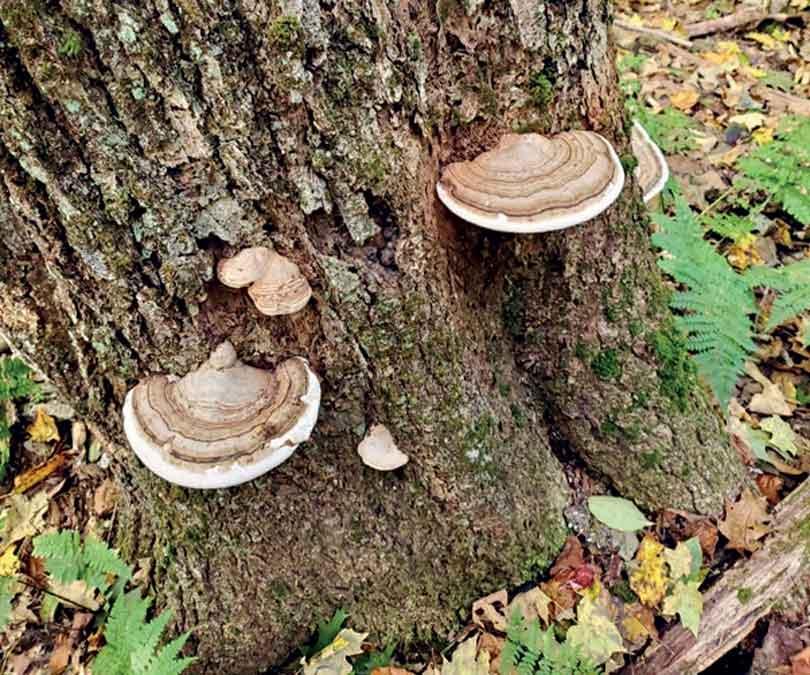
A tree infected by Ganoderma, a destructive fungal disease
 Sri Lanka’s plantation sector has long been the backbone of the rural economy, generating employment, foreign exchange, environmental services, and livelihoods for hundreds of thousands of families. Tea, rubber, coconut, cinnamon, oil palm, coffee, cocoa, spices, and numerous perennial crops continue to contribute significantly to national development. However, a silent biological threat is emerging globally and has the potential to create severe economic consequences if not proactively managed. This threat is Ganoderma, a destructive fungal disease that attacks the root and stem systems of perennial crops.
Ganoderma is often referred to as the “cancer of perennial crops” because of its ability to slowly invade root tissues, destroy vascular systems, weaken plant health, and eventually cause the death of mature trees and palms. The disease is particularly notorious in oil palm plantations throughout Southeast Asia, where billions of dollars have been lost due to reduced productivity, premature replanting, and plantation mortality. Sri Lanka must learn from these international experiences before the disease reaches epidemic proportions.
The crops most susceptible to Ganoderma include oil palm, coconut, rubber, tea, arecanut, cocoa, coffee, and several forestry species. Although the severity of infection varies among crops, the fungus has demonstrated its ability to survive in soil and infected plant residues for extended periods. In many instances, infection remains unnoticed for years until visible symptoms appear, by which time considerable internal damage has already occurred.
The disease is caused primarily by soil-borne fungi belonging to the Ganoderma group. Infection commonly begins through roots that come into contact with infected plant material, decaying stumps, roots of previously infected plants, or contaminated soil. The fungal spores produced by mature fruiting bodies can also contribute to disease spread under favorable conditions. Poor drainage, compacted soils, excessive moisture, low organic matter levels, and biologically degraded soils can increase plant susceptibility to infection.
Early detection is therefore critical. In oil palm and coconut, symptoms include yellowing of older fronds, canopy thinning, reduced fruit production, stunted growth, root decay, and eventually the appearance of characteristic bracket-like fungal fruiting bodies at the base of the stem.
Rubber trees may exhibit canopy decline, reduced latex production, branch dieback, root deterioration, and eventual instability. In tea plantations, affected bushes may display progressive decline, poor vigor, reduced flushing, root rot, stem decay, and patchy field mortality. Similar symptoms may occur in other perennial crops where root health becomes compromised.
Traditional disease management methods have focused on sanitation, removal of infected plants, destruction of infected residues, biological control agents, and improved drainage. While these measures remain important, modern regenerative agriculture is increasingly highlighting the importance of soil health as a fundamental line of defense against soil-borne diseases.
One of the most promising developments in this regard is the concept of increasing soil organic carbon. Many agricultural soils in Sri Lanka contain less than 2% organic carbon, while healthy productive soils frequently contain significantly higher levels. Emerging evidence suggests that raising soil carbon levels toward 5% can substantially improve the biological resilience of plantation soils.
Soil carbon acts as the foundation of the underground ecosystem. Higher carbon levels support beneficial bacteria, fungi, earthworms, actinomycetes, and numerous other microorganisms that contribute to nutrient cycling, root development, disease suppression, and soil structure improvement. A biologically active soil can create natural competition against pathogenic organisms such as Ganoderma. Furthermore, healthy soils improve root growth, water infiltration, aeration, nutrient retention, and drought resilience, all of which strengthen plant defenses.
The proposed Soil Carbon Protocol for Sri Lanka should therefore include a systematic approach consisting of soil testing, carbon baseline establishment, carbon target setting, annual monitoring, and carbon enhancement interventions. Key practices should include the application of compost, biochar, mulching, cover crops, microbial inoculants, reduced soil disturbance, biomass recycling, and integrated nutrient management. Soil organic carbon should be measured annually and incorporated into plantation Key Performance Indicators (KPIs) alongside yield, productivity, profitability, and environmental performance.
Particularly noteworthy is the potential contribution of biomass-to-energy factories. These facilities convert agricultural residues, forestry waste, pruning material, coconut shells, sawdust, and other biomass into renewable energy while producing significant quantities of biochar as a by-product. Depending on plant size and feedstock availability, a commercial biomass energy facility can produce several tonnes to several tens of tonnes of biochar per day. Large-scale facilities may generate over 20 to 50 metric tonnes daily. If properly processed and biologically charged with beneficial microorganisms and nutrients, this carbon-rich material can become a strategic resource for national soil restoration programmes.
The treatment procedure for Ganoderma-prone areas should therefore adopt a multi-layered approach. Firstly, regular field inspections and disease surveillance should be conducted. Secondly, infected plants should be identified and removed promptly to reduce inoculum sources. Thirdly, root zones should be rehabilitated using compost, charged biochar, microbial consortia, and organic amendments. Fourthly, drainage systems should be improved to prevent prolonged waterlogging. Fifthly, biological control agents such as Trichoderma species should be introduced where appropriate. Finally, plantation managers should continuously monitor soil carbon, microbial activity, root health, and disease incidence as part of a long-term management strategy.
The economic implications of failing to address Ganoderma could be substantial. Yield losses, increased replanting costs, shortened crop life cycles, reduced land productivity, and declining investor confidence could collectively affect the profitability of the plantation sector. Conversely, a proactive national programme focusing on soil health restoration, carbon enrichment, disease surveillance, and regenerative agriculture could significantly enhance productivity while strengthening climate resilience.
The way forward is clear. Sri Lanka requires a National Soil Carbon Initiative integrated across tea, rubber, coconut, oil palm, spices, forestry, and other perennial crop sectors. Plantation companies, research institutes, universities, policymakers, and private sector stakeholders must work together to establish soil carbon benchmarks, disease monitoring systems, and regenerative land management protocols. Biomass-to-energy facilities should be encouraged to become suppliers of certified biochar for agricultural use. Incentive schemes should reward farmers and plantation companies that successfully increase soil carbon while improving productivity and environmental performance.
Ganoderma should not be viewed merely as a disease problem. It should be seen as a warning signal highlighting the need to rebuild the biological foundations of our agricultural soils. By restoring soil carbon, enhancing biodiversity below ground, and embracing regenerative plantation management, Sri Lanka has an opportunity not only to reduce disease risk but also to create a more productive, profitable, and sustainable plantation economy for future generations.
(Lalin I De Silva, Value Chain Management Journalist, Vivonta Green Tech Consultants, Proprietary Planters Alliance, former Senior Planter, Agricultural Advisor / Consultant, www.vivonta.lk, www.planters.lk)