AI SUMMARY GENERATED ONLY FROM THIS ARTICLE'S TEXT.
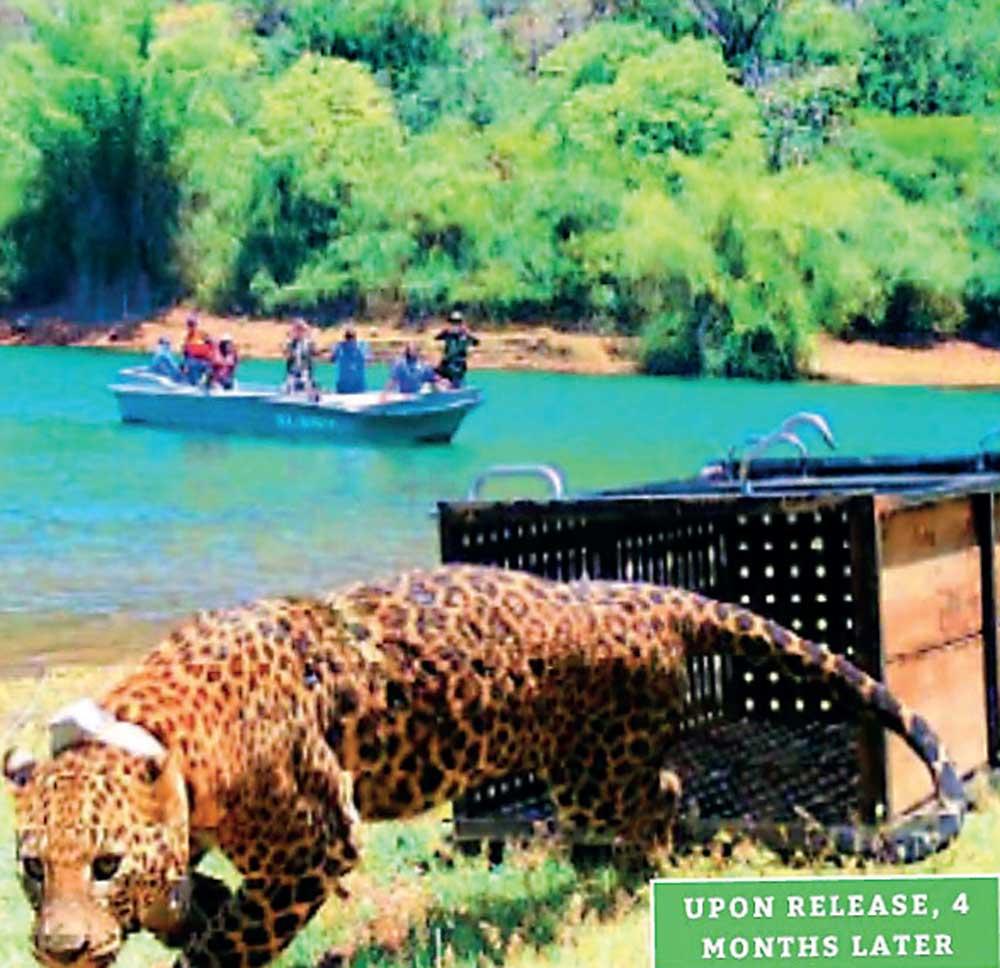
The leopard pictured after rescue and initial treatment The leopard seen upon release four months later
Due to the severity of the snare-induced injury, the leopard was transported to the Randenigala Wildlife Health Management Unit
In April, following recovery, the leopard was fitted with a GPS-telemetry collar for the purpose of monitoring its survival
Upon further investigations at RWHMU, it was clear that surgical intervention was needed to re-construct the intensive damage done by the snare, and to prevent further complications. The leopard was safely transported to the Faculty of Veterinary Medicine & Animal Sciences (FVMAS) at the University of Peradeniya for the surgery, and then transported back to RWHMU post-op for what would be a four-month road to recovery
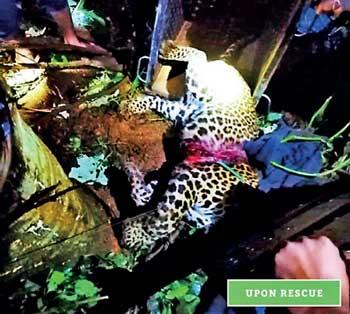
The picture shows the leopard upon rescue
By Jaqualine Yee, Anjali Watson & Andrew Kittle from the Wilderness & Wildlife Conservation Trust
This is the success story of a young male Sri Lankan leopard (Panthera pardus kotiya), the islands apex terrestrial predator, a threatened and endemic subspecies, who was rescued and treated after being caught in a wire snare, who defied the odds and successfully returned to its home range not just by walking, but swimming.
Rescue and initial intervention
On Christmas Eve of December 2022, a male leopard was caught in a wire snare around the chest, and was found clinging to survival by tea estate workers at Mantreetenna, Ragala which is a human-dominated, unprotected expanse of the Central Highlands of Sri Lanka. Upon being alerted, the Department of Wildlife Conservation (DWC) initiated a rescue protocol and within 30 minutes arrived on scene to anaesthetize and begin the rescue procedure, which involved carefully freeing the animal from the snare. Due to the severity of the snare-induced injury, the leopard was transported to the Randenigala Wildlife Health Management Unit (RWHMU) for further investigation.
Treatment and recovery
Upon further investigations at RWHMU, it was clear that surgical intervention was needed to re-construct the intensive damage done by the snare, and to prevent further complications. The leopard was safely transported to the Faculty of Veterinary Medicine & Animal Sciences (FVMAS) at the University of Peradeniya for the surgery, and then transported back to RWHMU post-op for what would be a four-month road to recovery.
The leopard received comprehensive veterinary care and rehabilitation. These measures included wound management, behavioural monitoring, and ensuring the leopard was sufficiently healed and physically fit before movement.
Protocols were strict and strategic at RWHMU with only 2 staff members being tasked with treatment and feeding, so as not to habituate the leopard to human presence and to preserve the animal’s wild instincts.
Release and immediate behaviour
In April of 2023, following full recovery, the leopard was fitted with a GPS-telemetry collar for the purpose of monitoring its survival and to gain an understanding of the leopard’s space use decisions post- release in order to more effectively inform future management protocols. This marks Sri Lanka’s first use of a GPS collar on a translocated leopard, underscoring an unprecedented level of tracking and oversight.
Officials from DWC and the Wilderness & Wildlife Conservation Trust (WWCT), aided by the Sri Lanka Navy, released the leopard roughly 20 km away, across water, within a lower-elevation protected area—a strategic choice to reduce the threat of re-snaring at the original site. But this leopard had other plans.
Remarkably, within three weeks, the leopard began traversing open water—making three separate swims across distances between 90 m and 650 m—to return toward its familiar range. Within that short time, it had reached an agricultural landscape approximately 10 km from where it was originally trapped. He had come full circle.
What This Reveals
Snare Rescue Can Be Life-Saving: The incident highlights how prompt rescue and medical treatment can save endangered leopards from potentially fatal injuries.
Robust Treatment Regimens Work: Four months of dedicated veterinary care proved effective enough for the leopard to survive and regain mobility.
Wild animals remember home: Despite the move to a safer area, the leopard’s rapid return to its original locale reflects a compelling desire to stay near its known territory—raising caution about translocation as a conservation strategy.
Science is evolving: The deployment of GPS radio-collaring and surgical treatment in this case paves the way for more informed wildlife rehabilitation protocols in Sri Lanka.
Re-location isn’t a simple fix: Still, experts emphasize that longer-term monitoring is essential to evaluate whether such releases are truly successful or merely temporary—especially when animals actively attempt to return home
Why this story matters
Conservation lessons: It highlights how well-coordinated rescue and rehabilitation efforts can yield positive outcomes—and how GPS tracking can uncover surprising behavioural resilience.
Policy implications: The natural urge to return home challenges the effectiveness of translocation as a solution, reinforcing the importance of protecting natural habitats and swiftly responding to snaring incidents.
Public engagement: Stories like this remind us that wildlife aren’t just statistics. They’re survivors. And their resilience can inspire stronger protection efforts, stricter anti-snare enforcement, and more robust rescue networks.
This narrative highlights the critical phases of rescue, treatment, and release, and underscores the resilience of wildlife when human intervention is timely and well-coordinated.
What began as a near-tragedy ended in a daring escape, a groundbreaking recovery, and an unexpected swim home.
The authors of the publication ‘From snared to swimming: Some observations on the rescue, treatment, release and monitoring of an injured Sri Lankan leopard (Panthera pardus kotiya). Ecological Solutions & Evidence’ are as follows ; Kittle AM and Watson AC (Wilderness and Wildlife Conservation Trust, Sri Lanka), Prasad T, Pinidiya MA , Kumarasiri AMKN, Kumara MAPR, Weerasinha WMNK (Department of Wildlife Conservation, Sri Lanka), Vidura GM, de Silva LNA, Nizanantha K (Department of Farm Animal Production and Health, Faculty of Veterinary Medicine and Animal Science, University of Peradeniya, Sri Lanka), de Silva DDN, Hewapathirana HDS (Department of Veterinary Clinical Sciences, Faculty of Veterinary Medicine and Animal Science, University of Peradeniya, Sri Lanka)
Comments - 0
Comments - From snared to swimming: A breakthrough tale
222
Add comment
Comments will be edited (grammar, spelling and slang) and authorized at the discretion of Daily Mirror online. The website also has the right not to publish selected comments.



 Kamanthi Wickramasinghe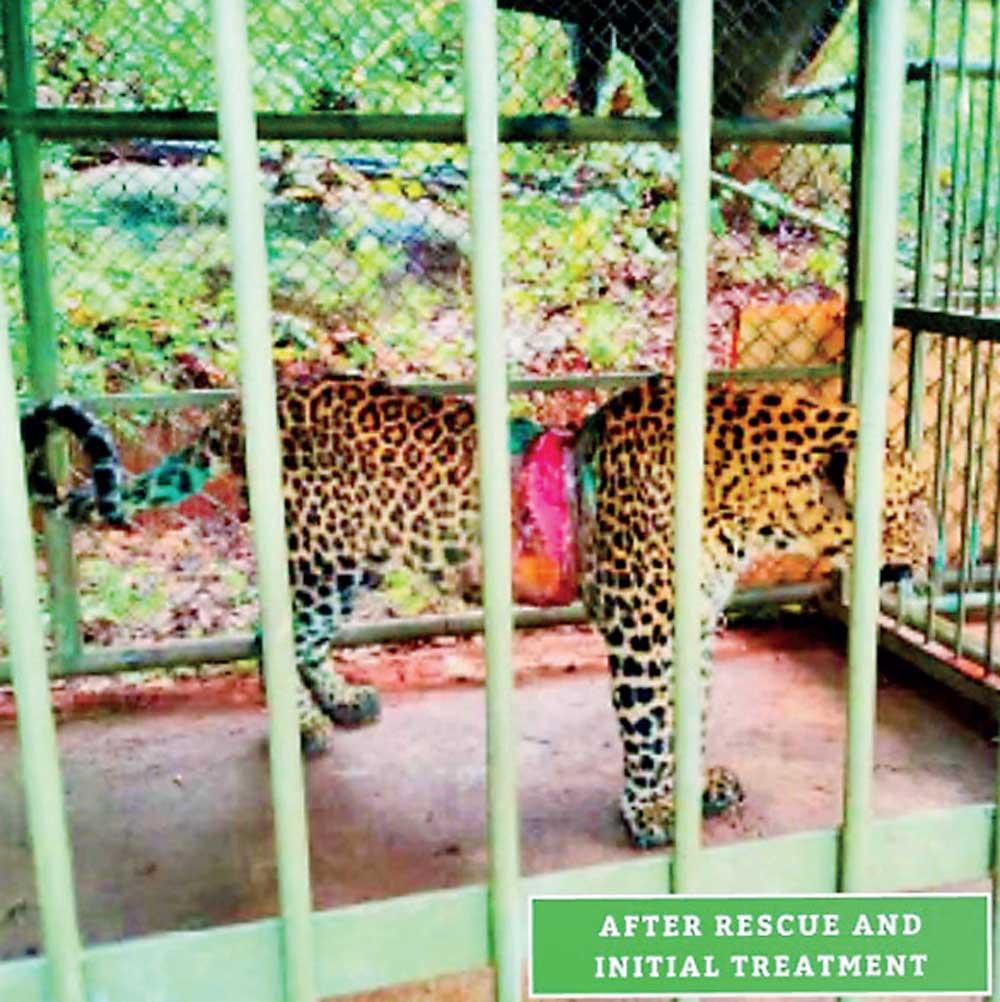
 The leopard seen upon release four months later