Reply To:
Name - Reply Comment
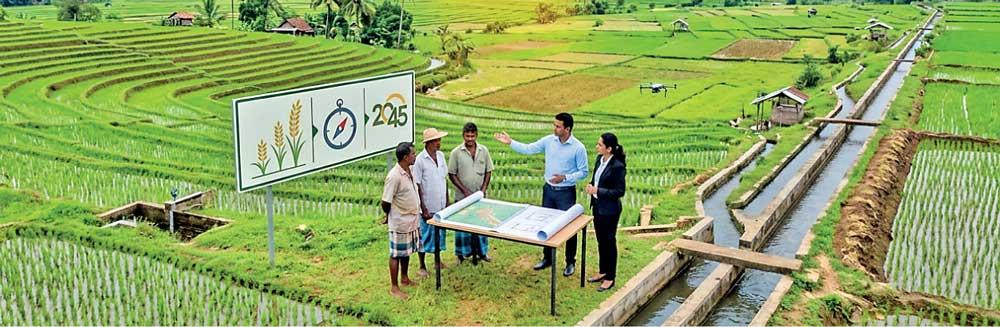
 Following its 2022 economic crisis, Sri Lanka is currently navigating a fragile path toward recovery. Amid stabilizing indicators, a deeper question remains: is the focus purely on managing short-term stability or on building long-term resilience? Indonesia’s ambitious Vision 2045 offers a compelling case study. For Sri Lanka, lessons in strategic self-sufficiency, particularly within food security and sustainable agricultural policy, are crucial for future national stability and genuine economic transformation.
Sri Lanka’s economic recovery is gradually gaining momentum following the unprecedented crisis of 2022. Foreign reserves have improved, inflation has stabilised, and the country continues to implement reforms under the International Monetary Fund (IMF) programme. Yet beneath these encouraging indicators lies a fundamental question: Is Sri Lanka building long-term economic resilience, or merely managing short-term recovery?
This question became particularly relevant during a recent Ambassador Forum organised by the Pathfinder Foundation, where Indonesian Ambassador Dewi Gustina Tobing outlined Indonesia’s ambitious Vision 2045. The vision aims to transform Indonesia into a developed nation by the centenary of its independence. What stood out was not merely the ambition of the plan but the consistency of its implementation and the strategic focus on self-sufficiency in critical sectors, particularly food production.
One example highlighted during the discussion was Indonesia’s remarkable progress in rice production. A country that once relied heavily on rice imports has significantly increased domestic production through sustained investment in agricultural infrastructure, irrigation systems, technology adoption, farmer support mechanisms, and long-term policy consistency. Today, Indonesia has substantially reduced its dependency on imports and, in some years, has even generated surpluses for export.
For Sri Lanka, the Indonesian experience offers valuable lessons
Sri Lanka remains heavily dependent on imports despite possessing favourable agricultural conditions. According to recent trade statistics, the country spends approximately USD 22 billion annually on imports. While imports are a natural component of any open economy, concerns arise when a significant portion consists of products that can potentially be produced domestically.
The case of big onions illustrates this challenge. Sri Lanka reportedly spends approximately Rs. 25 billion annually importing big onions. Similar patterns exist in relation to potatoes, maize, dairy products, sugar, and several other agricultural commodities. This dependence exposes the country to fluctuations in global prices, currency depreciation, supply chain disruptions, and geopolitical uncertainties.
Food security is no longer merely an agricultural issue. It is increasingly recognised as a national security issue. Recent global crises have demonstrated how vulnerable countries can become when essential food supplies are disrupted. The COVID-19 pandemic, the Russia-Ukraine conflict, shipping disruptions in the Red Sea, and climate-related shocks have all affected global food markets. Countries that rely excessively on imports face greater risks during such periods of uncertainty.
For Sri Lanka, strengthening food security should therefore become an integral component of national economic planning.
The challenge is not simply to reduce imports. A complete withdrawal from global trade would be neither practical nor desirable. Instead, the objective should be strategic self-sufficiency in selected sectors where Sri Lanka possesses comparative advantages.
Agriculture remains one such sector
Sri Lanka has fertile land, diverse climatic zones, abundant water resources in many regions, and a long agricultural tradition. Yet productivity remains below potential. Fragmented land ownership, inadequate storage facilities, inconsistent policies, limited mechanisation, insufficient research and development, and weak market linkages continue to constrain growth.
One of the most damaging factors has been policy inconsistency. Farmers often make planting decisions based on government signals, only to encounter abrupt policy reversals, price fluctuations, or import decisions that undermine domestic production. Sustainable agricultural development requires predictability, not short-term interventions.
Indonesia’s success demonstrates the importance of maintaining strategic consistency across successive governments. Vision 2045 is not designed as a five-year political programme but as a national roadmap extending over several decades. Its implementation continues regardless of changes in political leadership. Sri Lanka would benefit from adopting a similar approach.
The country needs a comprehensive National Food Security Strategy extending beyond electoral cycles. Such a strategy should establish measurable targets for domestic production, import substitution, agricultural productivity, irrigation expansion, climate resilience, and technological innovation.
Modern agriculture must also be viewed as a technology-driven sector rather than a traditional livelihood activity. Precision farming, smart irrigation systems, satellite monitoring, artificial intelligence-based crop management, improved seed varieties, and digital market platforms are transforming agricultural production globally. Countries investing in these technologies are achieving higher yields with fewer resources.
Sri Lanka possesses the educational capacity and technical expertise necessary to adopt many of these innovations. What is often lacking is coordination between government agencies, research institutions, universities, and the private sector. Food security also requires stronger investment in agricultural infrastructure. Significant post-harvest losses continue to affect local farmers due to inadequate storage, transportation, and processing facilities. Reducing these losses can often generate results equivalent to increasing production itself.
Equally important is the need to attract younger generations into agriculture. Many young Sri Lankans view agriculture as an unattractive profession due to low profitability and limited opportunities. Transforming agriculture into a modern, technology-enabled industry could reverse this trend while contributing to rural development and employment generation.
The broader lesson from Indonesia extends beyond agriculture.
Vision 2045 reflects a national commitment to long-term thinking. Economic transformation does not occur through isolated projects or short-term policy measures. It requires a coherent national vision supported by institutions, investment, and sustained political commitment.
Sri Lanka’s economic crisis revealed the dangers of policy inconsistency, excessive borrowing, weak productivity growth, and insufficient export diversification. While IMF-supported reforms are helping stabilise the economy, sustainable prosperity cannot be achieved through financial restructuring alone.
Economic resilience ultimately depends on productivity, competitiveness, and self-reliance in critical sectors.
Food security represents one of those sectors
The country must therefore move beyond viewing agricultural development as a secondary policy concern. Instead, it should be recognised as a strategic national priority linked directly to economic stability, social welfare, and national security. Indonesia’s experience demonstrates that meaningful transformation is possible when governments maintain strategic focus over the long term. The achievement of rice self-sufficiency was not the result of a single policy decision but decades of consistent investment and institutional commitment.
Sri Lanka faces different circumstances, but the principle remains the same
As Sri Lanka continues its recovery journey, policymakers would do well to reflect on Indonesia’s example. Food security, economic resilience, and national development are interconnected objectives. Achieving them requires more than fiscal discipline. It requires a vision that looks beyond the next election and towards the next generation. That is perhaps the most important lesson Sri Lanka can learn from Indonesia’s Vision 2045.
Colonel Nalin Herath is a security and geopolitical analyst, researcher, and former military officer with interests in economic security, Strategic affairs, Digital governance, and International Eelations.
The author, Col. Nalin Herath, RSP, is a security expert, former Sri Lanka Army officer and former Director General of the Institute of National Security Studies. He writes on national security, geopolitics and strategic affairs.