Reply To:
Name - Reply Comment

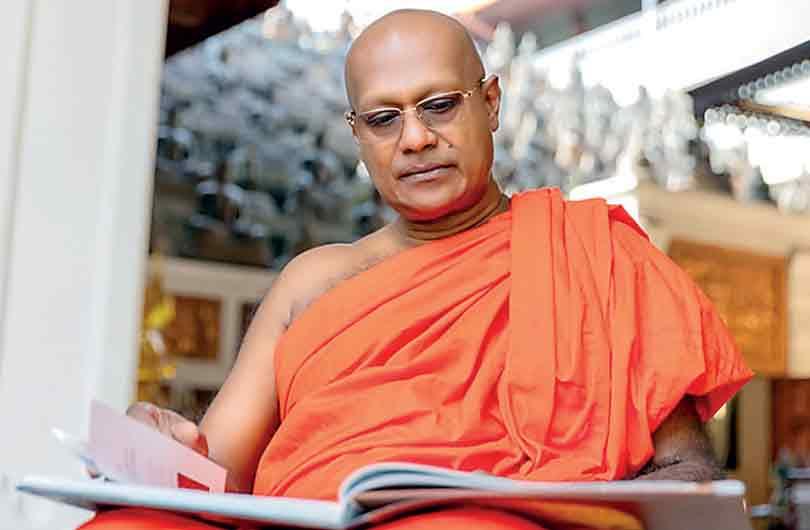 In an era increasingly defined by the race for advanced weaponry and escalating social unrest, Ven. Dr. Kirinde Assaji Nayaka Thero reminds us that true peace is not merely the absence of war, but a profound state of mental harmony. Rooted in the four sublime virtues—loving-kindness, compassion, sympathetic joy, and equanimity—Buddhist philosophy suggests that external conflicts are but reflections of inner turmoil.
“Conflict arises not on battlefields but within the human mind, driven by greed, hatred and delusion; without overcoming these, external peace remains unattainable.”
“In a world threatened by resource disputes and power struggles, the Buddha’s reminder of the supreme value of human life remains our most urgent lesson.”
“Hatred is never appeased by hatred in this world. By non-hatred alone is hatred appeased. This is a law eternal.”
“Comparing others with oneself, one should neither kill nor cause others to kill, recognizing that all beings tremble at violence and all fear death.”
“The ‘Walk for Peace’ was more than a physical journey; it was a spiritual effort to cultivate compassion within the heart and spread it to a world in need.”
Throughout human history, one of the greatest and most complex challenges has been the establishment of lasting peace and the maintenance of harmonious coexistence. While peace is often understood simply as the absence of war or armed conflict, a deeper, spiritual perspective reveals it as a profound state of social and mental harmony. It is an ideal that must be cultivated within individuals as well as across societies.
Buddhism offers one of the most practical and timeless philosophies of peace. The teachings of the Buddha are rooted in non-violence and the four sublime virtues—loving-kindness, compassion, sympathetic joy, and equanimity. Central to this philosophy is the idea that true peace in the world begins with inner peace within the individual. Conflict, the Buddha taught, arises not on battlefields but within the human mind, driven by greed, hatred and delusion. Without overcoming these negative forces, lasting peace in the external world remains unattainable.
In today’s world, marked by geopolitical tensions, economic competition and social unrest—this inward approach to peace is more relevant than ever. Despite technological advancement, humanity continues to grapple with violence and division. The Buddha’s teaching points instead to an internal struggle: a battle against anger, jealousy and ignorance. Rather than weapons of destruction, Buddhism promotes wisdom, compassion, patience and discipline as the tools to overcome conflict.
The path to peace begins with understanding its causes. Just as muddy water becomes clear when left undisturbed, the human mind achieves clarity and calm when negative emotions are subdued. This principle is reflected in the Buddha’s intervention during a historic dispute between the Sakya and Koliya clans over water, where he reminded them of the greater value of human life, thereby preventing bloodshed.
In a world increasingly threatened by conflict over limited resources and political power, such lessons remain highly relevant. The Buddha also emphasized the principle of moral causation—actions have consequences.
Yādisaṃ vapate bījaṃ tādisaṃ harate phalaṃ
Kalyāṇakārī kalyāṇaṃ pāpakārī ca pāpakaṃ
Pavutthaṃ tāta te bījaṃ phalaṃ paccanubhossasīti
“As one sows the seed, so does one reap the fruit.
The doer of good receives good results, and the doer of evil receives evil results.
Dear one, whatever seed you have planted, you will experience the corresponding fruit of it.”
At the heart of Buddhist ethics is respect for life. All beings fear harm and seek happiness, and therefore, violence against others cannot lead to true well-being. This message is particularly significant in an era where the race for power and advanced weaponry continues to overshadow compassion and humanity.
The fundamental moral discipline in Buddhism is respect for life and opposition to harming living beings. The Buddha taught that all beings desire happiness and fear suffering, and that harming others will not lead to happiness.
Sabbe tasanti dandassa
sabbe bhayanti maccuno
attanam upamam katva
na haneyya na ghataye.
“All tremble at violence; all fear death. Comparing others with oneself, one should neither kill nor cause others to kill.”
Despite technological advancement, the world appears to be moving backwards in terms of compassion and peace. Power-driven politics and the race for advanced weaponry cannot provide lasting solutions. Global leaders, diplomats, and policymakers must urgently recognize the importance of the tolerant, balanced, and non-violent approach taught in Buddhism. Protecting the right to life of all beings and acting with compassion beyond divisions of race, religion or politics, is the only true foundation for world peace.
Sri Lanka, as a nation nourished by the essence of Buddhism, has long upheld this principle. The Sri Lankan tradition, rooted in boundless loving-kindness and compassion, strives to uphold human values even amidst the harsh realities of global politics. From the respect shown by King Dutugemunu towards King Elara, to Sri Lanka’s stance at the 1951 San Francisco Peace Conference invoking the words “Hatred is never appeased by hatred,” to recent humanitarian acts in rescuing sailors in distress—these all reflect a single philosophy: valuing human life above all divisions.
The presentation of a “Joint Declaration for Peace” by the Mahanayake Theros at Gangaramaya Temple recently reaffirmed Sri Lanka’s commitment to global peace. Despite global power struggles, Sri Lanka continues to stand as a symbol of compassion and peace, reminding the world that human kindness is more powerful than weapons.
Institutions such as the Gangaramaya Temple have played a vital role in fostering social harmony. Through charitable, educational and cultural programmes, the temple has encouraged unity across religious and ethnic lines, while also promoting interfaith dialogue and cooperation.
The annual Navam Maha Perahera, organised by the temple, stands as a powerful symbol of national unity, bringing together people from diverse backgrounds in a shared celebration. Similarly, vocational training and educational initiatives have helped empower young people from all communities, strengthening social cohesion.
A recent “Walk for Peace,” led by Venerable Pannakara Thero and supported by the monastic community, further underscored this commitment. More than a physical journey, it represented a spiritual effort to cultivate peace within the human heart and spread a message of compassion to the wider world. One of the most touching aspects of the event was the participation of a dog named “Aloka,” which accompanied the monks throughout the journey. This simple yet powerful image reflected the Buddhist teaching that all living beings value life and deserve compassion, highlighting the universal nature of peace.
Ultimately, the Buddha’s message remains clear: peace cannot be achieved through hatred or violence. True peace arises from self-discipline, moral conduct and the cultivation of a pure mind. As the teaching states, avoiding evil, doing good, and purifying one’s mind is the path laid down by the Buddha. Let us plant the seeds of peace within our hearts and nurture them with loving-kindness. (“Sabba pāpassa akaraṇaṃ – kusalassa upasampadā – sacitta pariyodapanaṃ – etaṃ Buddhāna sāsanaṃ”)
At a time when global tensions continue to rise, this timeless message serves as a powerful reminder that lasting peace begins within each individual—and that compassion remains humanity’s greatest strength.
“Devo vassatu kālena – sassa sampatti hetu ca
Pīto bhavatu loko ca – rājā bhavatu dhammiko”
(“May the rains fall at the right time, bringing about abundant harvests.
May the world be joyful and prosperous.
May the ruler be righteous and just.”)
Most Ven. Dr. Kirinde Assaji Thero
Chief Sanghanayaka of the Colombo Nawa Korala of the Malwatta Chapter of Siam Nikaya
Chief Incumbent of Gangaramaya Temple