Reply To:
Name - Reply Comment
|
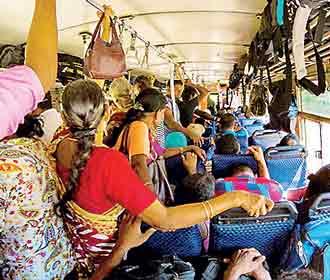
Bus drivers are preoccupied with listening to the ear blasting cacophonous music emanating from jumbo sized loud speakers fixed at more than one place inside the bus |
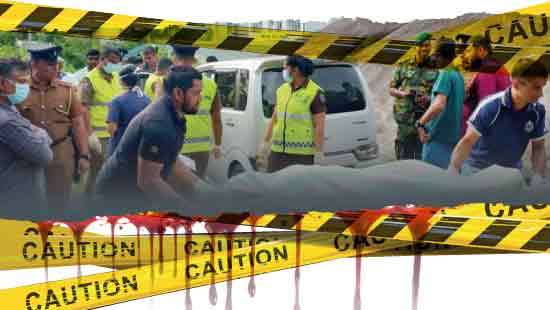
It is common knowledge that buses in Sri Lanka are in the forefront when it comes to killing innocent people including children on roads, and even inside houses because they very often crash into them. Why and how is that?
One of the main reasons is that almost all bus drivers drive their buses recklessly, almost always by going high speed. These conditions are aggravated by the fact that the drivers are preoccupied with listening to the ear blasting cacophonous music emanating from jumbo sized loud speakers fixed at more than one place inside the bus. To add insult to injury, these drivers are at the same time engaged in telephone conversations with other bus drivers.
Can a person drive a vehicle without concentrating one hundred per cent on driving? One needs not be a psychologist of the caliber of Thorndike or Pavlov to realise that concentrating on more than one thing at a time results in not concentrating properly on anything. Hence, when it comes to driving a vehicle, concentrating only on driving is of utmost importance. If not, the chances of causing an accident are inevitable. This is exactly what most busdrivers do while driving.
All the above facts point to the important question, ‘Are bus drivers in Sri Lanka above the law?’ Sri Lanka has an established legal framework to address noise pollution and distractions while driving, primarily through the Motor Traffic Act, the National Environmental Act, and specific Supreme Court directives. In addition to the above laws, the Constitution of Sri Lanka ensures by Article 12 (1) that all persons are equal before the law and are entitled to equal protection of the law.
The use of amplifiers or loudspeakers on moving vehicles is prohibited, except for authorised vehicles, such as police and military vehicles. Police are authorised to enforce these laws and take action against noise polluters, including confiscating sound polluting equipment -amplifiers or loudspeakers. Lamentably and shamelessly, they do not seem to be implementing these laws. Even under Section 261 of the Penal Code, the use of loud speakers or amplifiers that cause annoyance to the public is considered a public nuisance, hence a criminal offence: The Section categorically says that, “A public nuisance is not excused on the ground that it causes some convenience or advantage.”
On 9 November 2007 the Supreme Court of Sri Lanka gave its decision in a case where the right of one party to use loudspeakers was weighed against the annoyance, disturbance and harm caused to other parties who are compelled against their will to listen to the amplified sounds which emanate from these loudspeakers. One issue considered by the Supreme Court was whether it was permissible to force members of the general public to become captive listeners in violation of their right to silence. The court held that nobody can claim the fundamental right to create noise by amplifying the sound of his speech with the help of loudspeakers because, just as much as one has the right of speech, others have the right to listen or decline to listen. Nobody has the right to make his voice trespass into the ears or minds of others (Good Governance and the Rule of Law, First Ed, April 2011). It is quite apparent that these buses do not respect even the decision (order) made by the highest court of the country.
A Concerned Commuter