 Kamanthi Wickramasinghe
 Reply To:
Name - Reply Comment
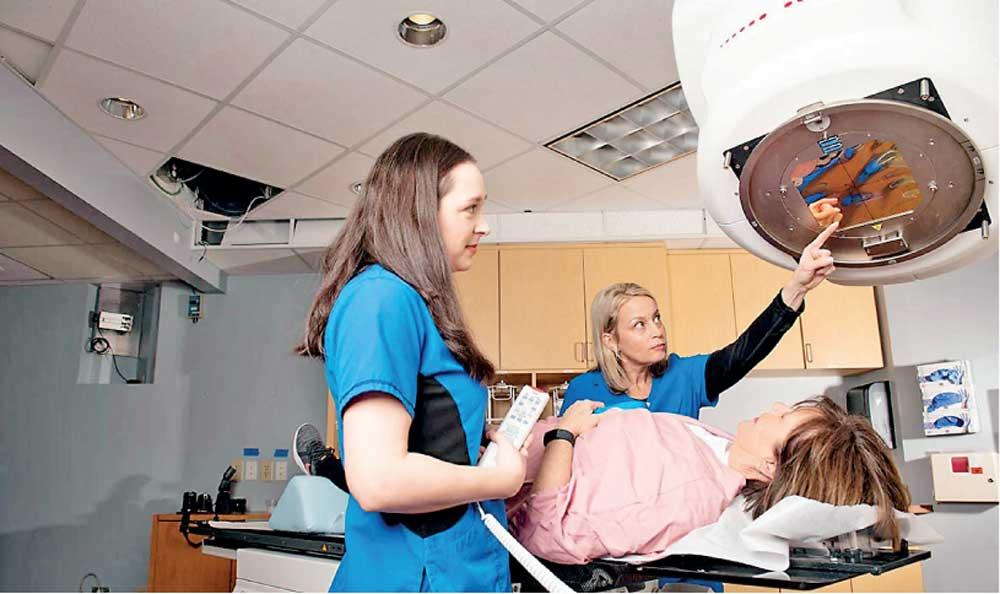
With regard to Cervical Cancer a simple test can change a whole life
In Sri Lanka more than 8 million females over 15 years of age are at risk of being diagnosed with cervical cancer. Cervical cancer is known to be the fourth commonest cancer among women in the world. But with early detection and screening, cervical cancer is preventable. With a bold vision to eradicate cervical cancer by 2030, Dilmah Tea, through its Merrill J. Fernando Charitable Foundation, entered into agreement with Ministry of Health and the Rotary Club of Colombo in 2024.
Speaking at a recent press briefing to announce the progress of this collaboration, Dilmah Tea Chairman and CEO and Managing Trustee of MJF Foundation Dilhan Fernando said that it is a privilege to enter into an MoU with the Ministry of Health and Rotary on a collaborative venture to serve women in Sri Lanka. The initial investment for this venture was Rs. 75 million. “This year our commitment is Rs. 50 million enabling 20,160 additional screenings. Sri Lanka’s healthcare system has an enviable track record and it is important to give the message out and end the stigma around cervical cancer,” he underscored.
660,000 new cases
Consultant Community Physician at the Family Health Bureau Dr. Nadija Herath said that globally there are 660,000 new cases being detected and 350,000 deaths annually due to cervical cancer. “The Human Papilloma Virus (HPV) is the main causative agent transmitted through sexual activity. However, this is a preventable cancer which occurs among females of working age,” she explained.
Dr. Herath further said that Well Woman programme was initiated in 1996 and that cervical cancer screening was introduced in 1998. “Although we screen women of reproductive age from 15-49 years, we focus on two age groups; 35 and 45 years. This is the two most accurate age groups where we should be screening females for cervical cancer. Women can get their screenings done at Well Woman clinics carried out at the nearest Medical Officer of Health (MoH) areas,” she added.
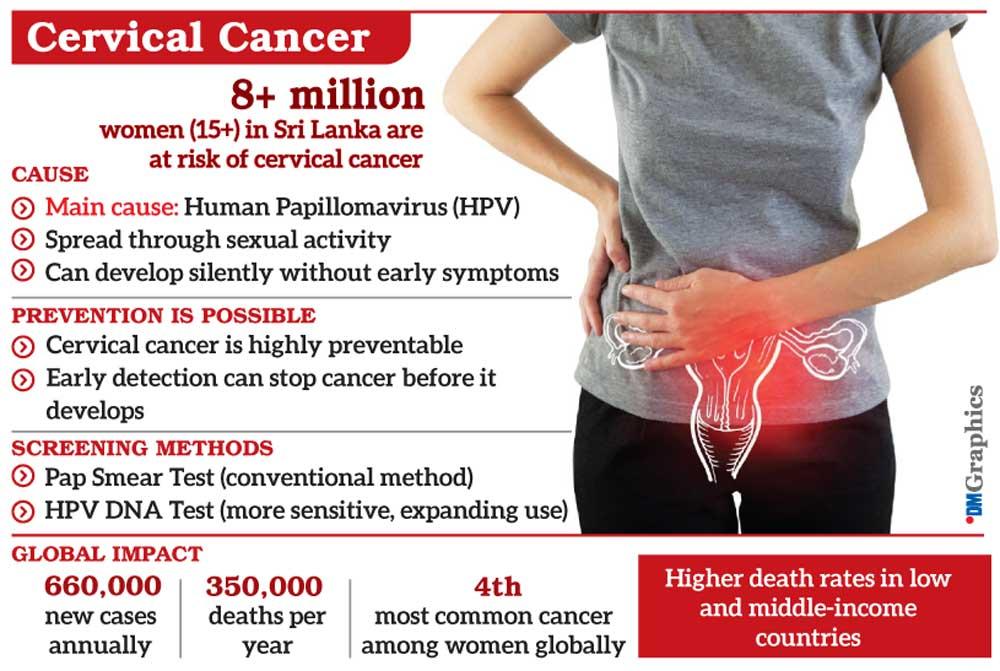
The two common methods of screening include the conventional Pap smear test and the HPV DNA testing. Dr. Herath said that there’s much more focus on expanding the HPV DNA test which is more sensitive than the conventional method. She further spoke about the World Health Organisation’s 90-70-90 target to eliminate cervical cancer by 2030. This includes 90% vaccination on girls by age 15, 70% screening with a high performance test on women by ages 35 and 45 and 90 % treatment on women identified with cervical cancer.
“If a woman is persistently infected with the virus it could develop into the pre-cancerous stage which could be identified through a screening. Once it is identified early it can be reversed and the woman can lead a normal life. If not it would advance into the cancer stage,” she further said.
In terms of the way forward, Dr. Herath said that more deaths occur in lower and middle income countries such as ours. She underscored the expansion of outreach clinics in factories with female employees and underserved communities to increase accessibility to these services.

“This year our commitment is Rs. 50 million enabling 20,160 additional screenings. Sri Lanka’s healthcare system has an enviable track record and it is important to give the message out and end the stigma around cervical cancer”
- Dilmah Tea Chairman and CEO and Managing Trustee of MJF Foundation Dilhan Fernando

“Although we screen women of reproductive age from 15-49 years, we focus on two age groups; 35 and 45 years. This is the two most accurate age groups where we should be screening females for cervical cancer. Women can get their screenings done at Well Woman clinics carried out at the nearest Medical Officer of Health areas”
- Dr. Nadija Herath, Consultant Community Physician at the Family Health Bureau

“Sri Lanka is fortunate to have an established network of Well Woman clinics. These clinics provide screening services that can detect early stages before cancer develops. Many women are still unaware that these services are available and they don’t understand the importance”
- Anoja Karunaratne, Sri Lanka Cancer Society President

“Rotary established a standalone early detection Centre offering free screenings for breast, cervical and oral cancer around 10 years ago. Through these efforts more than 120,000 women had access to screenings. This understanding led us to confront cervical cancer”
- K. R Ravindran, President of the Rotary Club of Colombo and Rotary International Past President
In her comments, Sri Lanka Cancer Society President Anoja Karunaratne explained the services carried out by SLCS in provide care facilities for terminally ill cancer patients and patients at the Apeksha Hospital, Maharagama. In their commitment to this collaboration, Karunaratne said that they could raise awareness among patients, addressing misconceptions and encouraging acceptance of vaccination programmes.
“Sri Lanka is fortunate to have an established network of Well Woman clinics. These clinics provide screening services that can detect early stages before cancer develops. Many women are still unaware that these services are available and they don’t understand the importance. That is why the Cancer Society is ready to take this message and support this collaboration. We want to take this message beyond hospitals and clinics to schools, workplaces, religious institutions and community centers. It is also important to address barriers – fear, stigma, lack of knowledge and simple logistical difficulties that prevent women from coming to these clinics,” Karunaratne added.
Speaking at the event, President of the Rotary Club of Colombo and Rotary International Past President K. R Ravindran said early detection transforms fear into possibility. “Rotary established a standalone early detection Centre offering free screenings for breast, cervical and oral cancer around 10 years ago. Through these efforts more than 120,000 women had access to screenings. This understanding led us to confront cervical cancer. Cervical cancer does not arrive with a bell ringing. It whispers, hides and by the time it is heard, it is too late. But a simple test can change a whole life,” he said while stressing on the importance of partnerships and collaboration and commending Dilmah Tea for their continuous commitment to make this endeavor possible.