Reply To:
Name - Reply Comment
Her life and work is too well documented for me to attempt to repeat it at this stage and in her case the British Government awarded her the MBE for her work in education in
Sri LankaI liken the lives of these four ladies…( true Nationals of Sri Lanka ) … that fall into the beautiful patterns of a Sri Lankan kaleidoscope. They loved our island steadily, unselfishly and intensely and they regarded themselves as being totally SRI LANKAN
By Goolbai Gunasekara
True Patriotism runs a quotation, “ is your conviction that this country is superior to all others because you were born in it.” I find this a true description of my homeland. Whenever I talk about Sri Lanka to foreigners, I can get quite lyrical about its beauty. Not that this is difficult to do. Sri Lanka IS BEAUTIFUL. The people are kind and friendly, tourism is doing fine so what is there to complain about. (Let’s ignore politics).
I voted for the present Government and not only do I intend to give it a chance but also a nice long time in which to achieve success. Was anything worthwhile built in a day? So why all this criticism not even a year since elections were held!
Over 45 years ago, I wrote an article for the now defunct SUN newspaper, on the advantages of English being the medium of instruction. A gentleman styling himself ‘A Lecturer from….. ‘ took great exception to my views and wrote THREE articles in defense of the Sinhala Medium. The matter gained considerable notoriety because the gentleman got very personal, barreling ahead with his own opinions and ending his diatribe saying that I was not even a born Sri Lankan.
At that point Mr.Nihal Canekeratne ( a member of the Council of the University of Colombo) decided to intervene and halted any further acrimony from the ‘Lecturer.’ “Of course you are Sri Lankan,” he told me graciously, “You were born, married and lived here most of your life. What else would you be?”
What the deluded lecturer probably wanted to say was that my DNA was not Sri Lankan. My North Indian father regularly boasted to us , his two bored daughters, that his Greek profile was the result of every Indian invader who swept through the Khyber Pass. When he and his Greek profile turned to the USA for marriage my mother’s English, Scottish and German DNA added to the complicated mix. I assumed I must have been a geneticists nightmare but after studying up on Sri Lankans' DNA I realize that annalysts must be having a mightily exciting time decoding the DNA of our own island’s citizenry which is far more complex than my own.
As a matter of interest what can one say about the DNA of Sri Lankans, situated as the island was on every trade route of the ancient world? Marco Polo visited Ceylon (says Rusticello da Pis) and called the Sri Lankans great rogues who were doing a thriving business selling bogus relics.
And here is another fact pertaining to the island’s complicated DNA. Apparently somewhere in the 18th and 19th centuries the British imported a battalion to the south of Sri Lanka. They comprised slaves as well as soldiers and musicians. This strange combination of men settled down happily in Sri Lanka and never left. They are sometimes referred to as Kaffirs and certainly their DNA mingled with that of the local population. One gentleman told me that the frizzy hair that some Sri Lankans possess, can indicate a this strain. This whole incident is not widely documented alas. Sufficient to say that the Battalion contributed to the cultural mix (and DNA) of the island.
Then there is the complex and historically interesting DNA explanation about the fair Kandyans. All in all the study of DNA is riveting if one has the time and inclination to do so.
Getting back to myself, I most certainly was ‘Sri Lankan born’ , right in the heart of Colombo, at Dr. Mary Rutnam’s Nursing Home situated on, what is now, Independence Avenue.
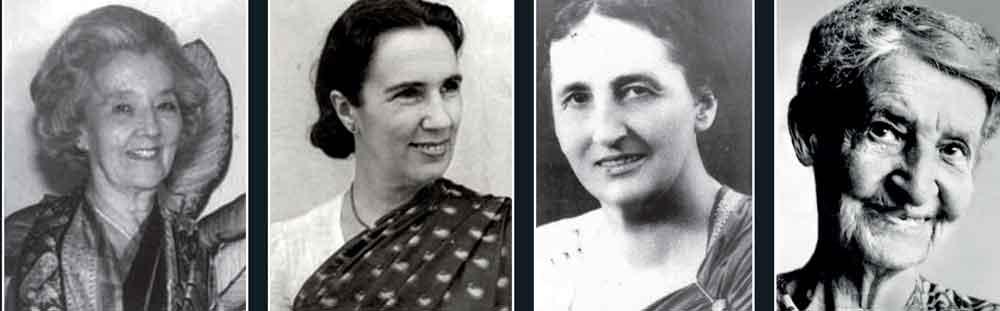
The very name of Dr. Mary Rutnam leads me to note that the evolution of society sometimes leapfrogs prejudice and there are many’ Non-Sri Lankan born’ people whose contribution to this country make them better Sri Lankans than many. In the eyes of those who were fortunate to have known the four women I am going to mention, they are legends.
Canadian born Dr. Mary Rutnam (and Tamil by marriage) was one of them. Her fame lives on today although she has passed away long since. Founder of the LANKA MAHILA SAMITI movement, her work has served as a catalyst for the rural women of this island raising their self respect enormously during the 72 years she served this country. “She was always seen as a Sri Lankan’ say the many articles written about this legendary personage.
Dr Mary Rutnam’s name resonates in our island and in the hearts of the thousands. She was internationally recognized for her work and was awarded the Magsaysay award in 1958…one of the first five Asian women to win it. Sri Lanka must surely be honoured to call her Sri Lankan.
Another name that springs to mind is that of Doreen Wickremesinge the British wife of Dr S.A. Wickremesinge. She became so totally Sri Lankan that she was even elected as member of Parliament in 1952 defeating the UNP candidate C. Wijeinghe and winning the Akuressa seat for the Communist party. The point I stress here is that a ‘Non Born’ Sri Lankan was so politically involved that she actually became a Parliamentarian of our country. She also spoke excellent Sinhala!
She was an educationist of note, heading several schools in the south. She was immensely popular in the Matara district. Recognising her outstanding career the Government of Sri Lanka awarded her the Deshamanya in1998.
Hilda Kularatne, is another famous educationst who has been so often written about that I have really nothing new to say. Her interest and belief in Theosophy brought her to this island where her subsequent marriage to P.D.S. Kularatane united two great educationists. In her early work she managed to raise the literacy level of Buddhist outstation girls from 1 out of 20 to the same level as Colombo’s elite.
Her life and work is too well documented for me to attempt to repeat it at this stage and in her case the British Government awarded her the MBE for her work in education in Sri Lanka.
And my final name would be that of my own mother, Deshabandu Clara Motwani, who gave up her American citizenship to accept the Distinguished Citizenship of Sri Lanka awarded to her by a grateful Sri Lankan Government. (Dual citizenship was not in place at that time.) Her work as Principal of four Buddhist Schools, has also been documented many times and repetition is not needed here.
The four women I have written about were good friends. They shared many common qualities. Despite their achievements, arrogance or pomposity was not in their natures. Courtesy was a characteristic they all shared. When honours came their way they were usually surprised.
“Appreciation is a wonderful thing. It makes what is wonderful in others make us better ourselves,” and the ladies I have mentioned were recognised as being fully Sri Lankan in their desire to further the native culture and religion of the people and to vigorously immerse themselves in the lives of the Sri Lankan Buddhists and Theosophists. Despite their brilliant qualifications they were essentially humble. They seem to have had an almost uncanny awareness of the needs of the moment and their names are greatly revered in this island.
I liken the lives of these four ladies…( true Nationals of Sri Lanka ) … that fall into the beautiful patterns of a Sri Lankan Kaleidoscope. They loved our island steadily, unselfishly and intensely AND they regarded themselves as being totally SRI LANKAN.