Reply To:
Name - Reply Comment
The Science of Feng Shui was also referred to as the “The Art of Geo Mancy” ( Geo = earth, mancy =-managing the energies). It was originally used outdoors to locate Emperors' tombs, then later palaces. Over a period of time it was extended even into designing of rooms and décor to ensure that only good energy spots were used and areas or sectors which were bad, were avoided. In other words the layout of a room and even positioning of the beds were done based on various factors like facing direction of the building, quality of soil, effect of environment and also avoiding locations having high energy fields. This earth science took into account locations of mountains, streams and other natural earthly features as the environment had a strong influence on the prosperity of the occupants in a building. The topography of a site was often likened to a dragon hence the humps of the dragon's back were often mountains behind a site that served as protection for the dwelling located strategically according to Feng Shui geomancy.
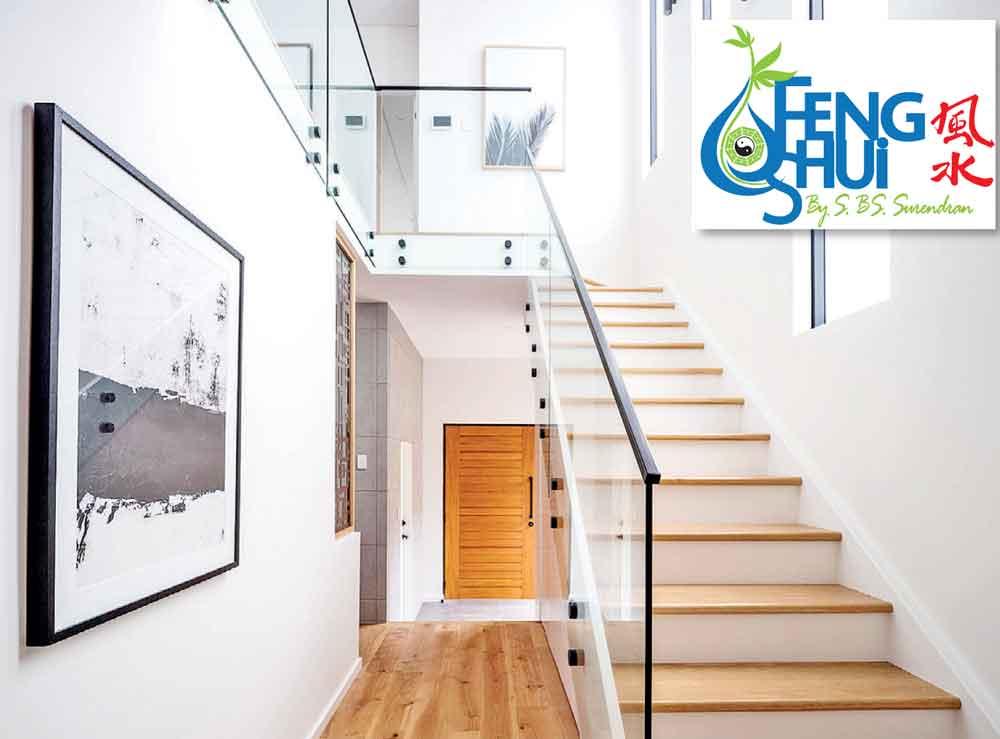
 The internal layout in a building is quite important in ensuring the right Feng Shui to a living space or office. There are many things in a building which have major impact on the occupants like positioning of beds, location of toilets and the stove in the kitchen apart from the positioning of the main door. However as building technology evolved we had buildings which had higher levels and the use of stairs was inevitable hence a new dimension to the science of Feng Shui also evolved along with it. In the ancient times stairs were mostly made of wood but in the modern times we also have RCC or steel stairs apart from wooden stairs.
The property of the materials and the positioning of the stairs play a vital role in ensuring unhindered flow of energy, harmony and aesthetic design. The shape, size, location play a vital role in determining the type of energy movement in a home or office space.
Staircases are conduits of chi in the home. They are where chi moves from one level of the home to the next level. When your staircase has good Feng Shui, it distributes good fortune to the rest of the home. However, when it is bad from a Feng Shui perspective, it spreads harmful energy causing illness, robbery and misfortune.
The topography of a site was often likened to a dragon hence the humps of the dragon's back were often mountains behind a site that served as protection for the dwelling located strategically according to Feng Shui geomancy
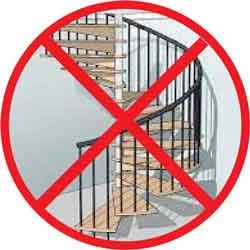
Some of the general tips as per Feng Shui tenets for designing stairs are:-