Reply To:
Name - Reply Comment
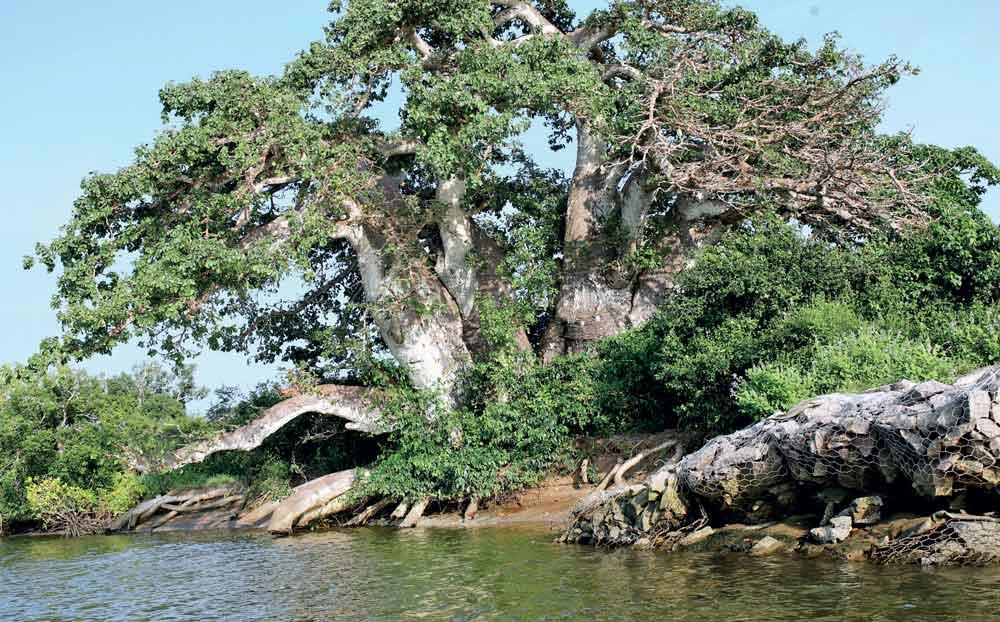
Baobab Tree by the waters of Kala Oya
 Gange Wadiya has recently emerged as a significant tourist attraction. Located in the northern part of the Puttalam District along the Mannar Road, just past the Eluwankulama Bridge (commonly known as ‘Sapaththu Palama’), Gange Wadiya is a small hamlet situated at the delta of the well-known Kala Oya.
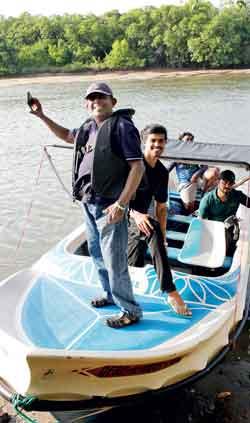
Visitors to Gange Wadiya, located across the southern boundary of Wilpattu National Park where the Kala Oya flows into Dutch Bay, are often captivated by the magnificent mangroves lining the bay and the abundance of Kumbuk trees throughout the inland areas. Bordered by Wilpattu National Park, the Puttalam Lagoon, the Villu ecosystem, and the Virakkodichole protected area, this Environmentally Sensitive Area (ESA) boasts a rich diversity of ecosystems—including mangroves, sea-grass beds, sand dunes, and salt marshes. It provides critical habitats for endemic flora and fauna, earning it the reputation as the ecological heart of Wanathavilluwa. Gange Wadiya is a diverse ecosystem rich in aquatic flora and fauna. It is also well known as a traditional fishing village, home to a wide variety of popular fish species.
Travellers to the Kalpitiya Peninsula as well as the Puttalam area often consider a tour to Gange Wadiya a must—either via a boat safari or by road through Eluwankulama. The most popular way to explore Gange Wadiya is by river safari from the Kalpitiya Lagoon or Dutch Bay, passing through the delta of the Kala Oya. This journey, popularly known as the ‘Kala Oya River Cruise’, has been dubbed by travel experts as the ‘Amazon Cruise of Sri Lanka’.
This offers adventure travellers two exciting options—exploring Wilpattu National Park via a jeep safari from the Eluwankulama entrance, or enjoying a river safari combined with adventure activities in the lagoon. Gange Wadiya is an ideal location for a stunning kayaking experience, whether paddling along the borders of Wilpattu National Park or navigating the serene waters of the Kala Oya.
A river safari at Gange Wadiya offers a three- to four-hour excursion starting from the village and winding toward the popular camping site at Eluwankulama—Kumbukgaha Walla—set along the scenic waters of the Kala Oya and home to the ever-popular Baobab tree.
Overnight camping at Gange Wadiya is one of the best ways to experience the sights and sounds of the jungle. Wild elephants are often seen roaming at night along the route to the village, adding a touch of wilderness to the journey. According to Wildlife Department regulations, an experienced guide is mandatory for night camping in the area.
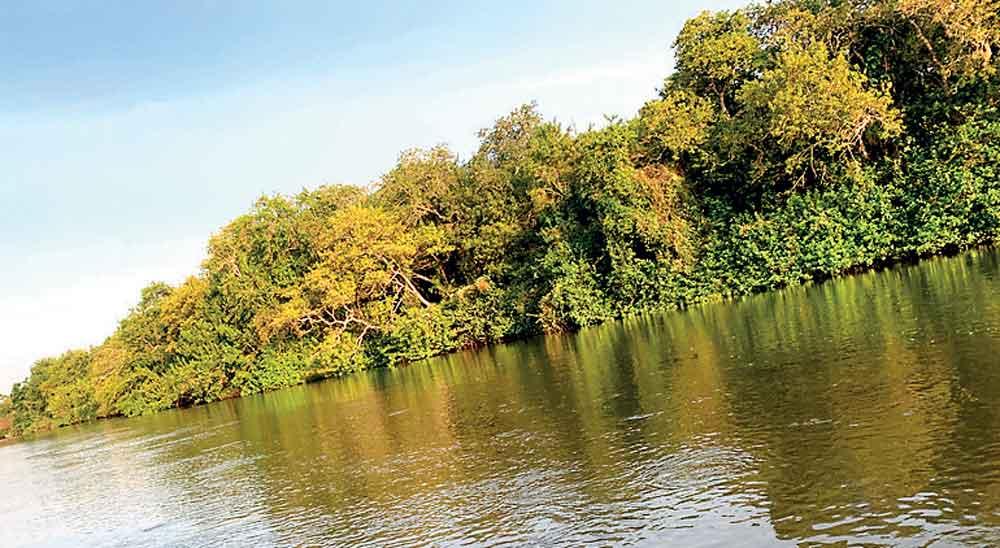
Kala Oya safari
A visit to the Baobab Tree is a must for adventure travellers, not only for its rarity but also because it had long been shrouded in local folklore. Located on the western boundary of Wilpattu National Park, this ancient tree remained relatively unknown until recently. The Baobab tour typically involves a 30- to 40-minute boat cruise, offering the easiest and most scenic way to reach it. While other Baobab trees are known in Mannar and at ‘Wella Devalaya’ in Unawatuna, this particular tree by the waters of the Kala Oya was only identified in recent years, adding to its intrigue.
The Baobab tree—also referred to locally as ‘Ali Gaha’ —is native to Africa, with a few species also found in Madagascar and Australia. Its presence in Sri Lanka is little known, both locally and internationally, making its discovery by the Kala Oya even more intriguing.
Travellers to the Kalpitiya Peninsula as well as the Puttalam area often consider a tour to Gange Wadiya a must—either via a boat safari or by road through Eluwankulama
According to researchers, in Africa, the Baobab is an incredibly versatile tree, valued for its many uses. The bark is used to make cloth and rope, while the leaves serve as condiments and in traditional medicine. One of the Baobab’s most extraordinary features is its ability to store large quantities of water within its trunk—often hundreds of litres—allowing it to survive long periods of drought. The tree is deciduous and some specimens are believed to be over a thousand years old. It also produces large, aromatic flowers up to seven inches wide, and its fruit, often favoured by monkey varieties, has earned it the nickname ‘monkey bread’.
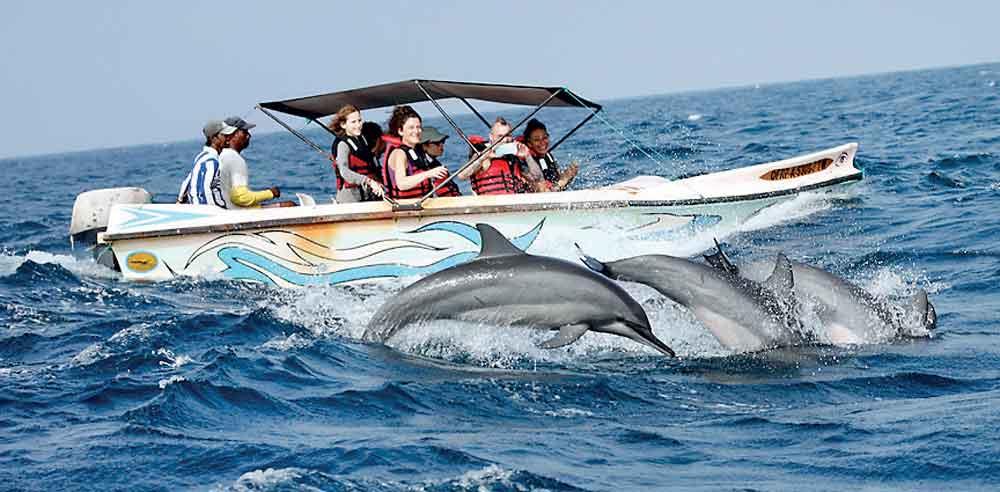
Although most Baobab trees in Sri Lanka are scattered in and around Mannar, one of the largest specimens—with a circumference of over 15 metres and the focus of my tour—is located across the Gange Wadiya basin, along a tributary of the Pomparippu Aru.
The Kala Oya has been identified as the primary water source nourishing this region, with its waters flowing into the Uttu Madu Aru. The eastern tributary of ‘Uttu Madu Aru’ connects to ‘Paan Ela’, while the western tributary feeds into the ‘Pomparippu Aru’. It is along the banks of Kala Oya, where Sri Lanka’s largest known Baobab tree was discovered.
Pix by - Anusha de Silva