Reply To:
Name - Reply Comment

Holding On to Big Dreams
In Sri Lanka, most of us grow up with big dreams. When we’re little, people ask us what we want to be, and we proudly say things like “doctor,” “engineer,” “pilot,” or “teacher.” Some of us dream of becoming famous like a cricketer, actress, or singer. From small towns to busy cities, these dreams are what keep us going. Our parents and teachers always say, “Study hard and you’ll have a better life.” So, we believe them. We imagine ourselves doing great things one day. But as we grow up, we start to see that it’s not that simple. Life isn’t always kind to dreamers especially in today’s Sri Lanka.
Many young people in Sri Lanka have big hopes for the future. We dream of successful careers, happy lives, and doing something meaningful. Ambition is not something we lack, we want to achieve more and make our families proud. But as we get older, financial issues, pressure from school, and limited opportunities often get in the way. Sometimes, it feels like no matter how hard we try, the system is not built to support our dreams.
The Education System and Its Limitations
In our education system, the main focus is on passing exams and getting high marks. From a young age, students are told that exam results decide their future. Because of this, most of our time is spent memorizing facts and doing past papers. In Sri Lanka, some exams have become very competitive because of the lack of resources. For example, the Grade Five Scholarship Exam is one of the toughest. Students who get high marks in this exam can enter better schools and sometimes get financial support. Because of this, parents often push their children to study very hard from a young age. But this pressure can affect a child’s mental health and cause a lot of stress even in early school years.
There is very little space for creativity, new ideas, or practical skills like communication, teamwork, or problem-solving. Subjects like art, music, drama, and even sports are often pushed aside. Many students have talents in these areas, but they don’t get a chance to develop them. As a result, we are trained to do well in exams, but not always prepared for the real world. When schools only care about marks, students don’t get the chance to do what they really love. For example, someone might be really good at drawing, singing, or fixing things, but they don’t get to spend time on those talents. Everyone is too busy trying to pass exams. Because of this, many students don’t even know what they’re good at. Their true talents get ignored. If the system gave us more time and support to follow our passions, more young people could find their own path and succeed in different ways.
Economic Challenges Faced by Students
Many Sri Lankan families earn just enough to cover their daily needs but don’t have much extra money. For these families, paying for school fees, tuition classes, books, and transport can be a big challenge. Even though parents work hard, sometimes it’s difficult to support all their children’s education and dreams. Many students feel the pressure to choose careers that guarantee a steady income quickly, rather than following what they truly love. This makes it hard for young people to focus only on their studies or explore their talents without worrying about money.
Many students in Sri Lanka have to pay for expensive tuition to pass exams. Schools often lack good resources like labs or books. Because of this, students feel pressure to pick stable jobs like doctors or engineers instead of following their passions. Families want financial security, so dreams sometimes get put aside.
Because of the country’s economic problems, many families struggle to pay for education and daily needs. When money is tight, young people have to think about practical things like finding a job quickly, rather than dreaming about what they really want to do. This makes it harder to focus on goals that take time or don’t guarantee money right away. So, even if we have big dreams, reality often forces us to choose safer paths.
Sometimes, we see examples on social media of students who must take on part-time jobs or discontinue tuition classes in order to focus on their studies, often due to financial difficulties faced by their families.
A young student from a small town shared how she dreams of becoming a doctor but had to stop her extra tuition classes because her family couldn’t afford the fees anymore. She worries about how to continue her studies and support her family.
Many young people in Sri Lanka have big hopes for the future. We dream of successful careers, happy lives, and doing something meaningful. Ambition is not something we lack, we want to achieve more and make our families proud. But as we get older, financial issues, pressure from school, and limited opportunities often get in the way. Sometimes, it feels like no matter how hard we try, the system is not built to support our dreams
Social Expectations and Gender Roles
In Sri Lankan society, social expectations and traditional gender roles often influence the choices young people make about their futures. Girls, in particular, may face pressure to prioritize family responsibilities or choose “safe” careers, limiting their freedom to pursue their true passions. These expectations can create additional challenges for young women trying to balance their dreams with societal demands.
Girls are often expected to take care of household duties and prioritize family life over personal ambitions. There is also pressure to choose stable, “respectable” careers such as teaching, nursing, or office jobs rather than pursuing creative or unconventional paths. Additionally, many young women face expectations to marry and settle down early, which can limit their opportunities for higher education or career growth. These pressures make it challenging for girls to fully follow their dreams and explore their potential.
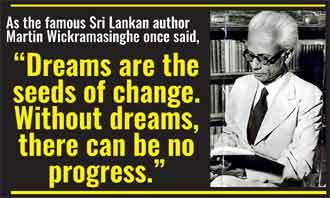 Voices from Around Us: What People Think About Dreams and Reality
To get a clearer picture, I asked some students about their thoughts on chasing dreams in Sri Lanka today. Students spoke about the pressure of exams and limited opportunities. A friend of mine shared a powerful thought saying following your dreams is like playing a mind game. First comes the discovery of passion, then planning a personal roadmap, and finally walking the path with strength, courage, and determination. Believing in yourself and trusting your inner voice is the key to success. Even as a student in Sri Lanka, there are many chances here to take the first steps toward your goals. With the right mindset, anything is possible.
Looking Ahead: Why Dreams Are Still Worth Chasing
Even though the road is difficult and full of obstacles, dreams are always worth chasing. With persistence, patience, and hard work, we can overcome many challenges. I believe that real change will come when young people are empowered to follow their passions and when society offers support rather than pressure. Together, we can build a future where every student has the chance to turn their dreams into reality.
Staying Motivated Despite the Barriers
Even when life is difficult, it’s important to hold on to your dreams. Believing in yourself gives you the strength to keep moving forward, even when things seem impossible. Support from friends, family, and others who share your goals can make a big difference. Looking up to people who have overcome challenges can inspire you to stay focused. Remember, progress doesn’t have to be fast, small steps are still steps forward. So, keep trying, stay hopeful, and never give up on what you truly want.
A point of view by A-Level student Senina Weerasinghe