Reply To:
Name - Reply Comment
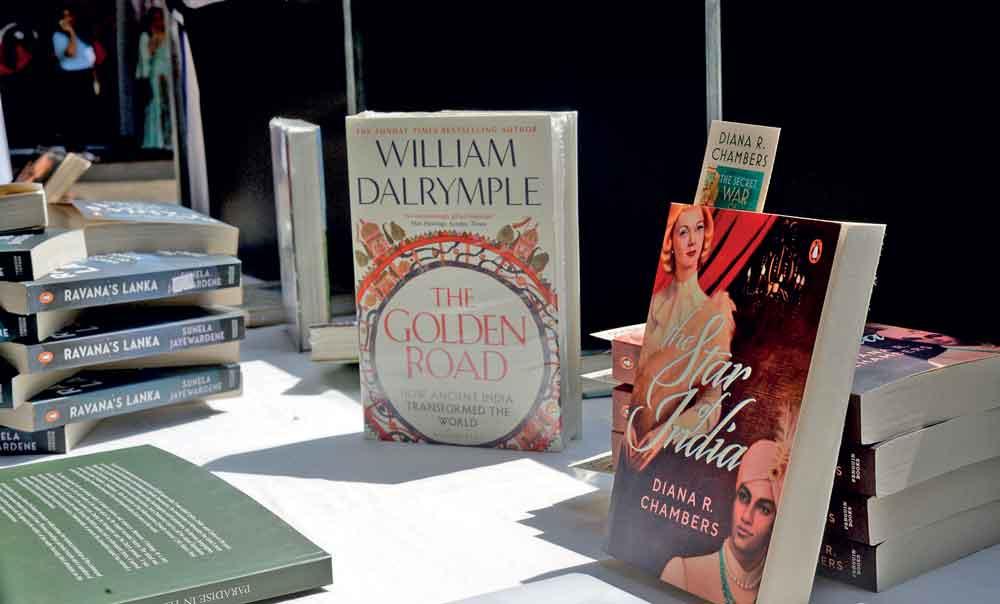
The Ceylon Literary and Arts Festival has transcended barriers and was a Festival which people from all walks of life were able to attend. Author dinners hosted at Taj and Cinnamon Grand enabled literary fans to interact closely with their favourite authors which was a once in a lifetime experience to many.
 The Ceylon Literary and Arts Festival which took place from January 17 to January 19 at the Colombo Public Library was exceptional in character. The panelists invited to the conference included both local and foreign authors, actors and performers. During this event, the attendees of the event were able to enhance their knowledge on literature as well as art. Words and art were celebrated through book readings, discussions, and vibrant performances which were part of the engaging sessions that took place. People of all backgrounds got the opportunity to meet their favourite writers, build conversations with them and get an insight on art and literature.
|
|
|
|
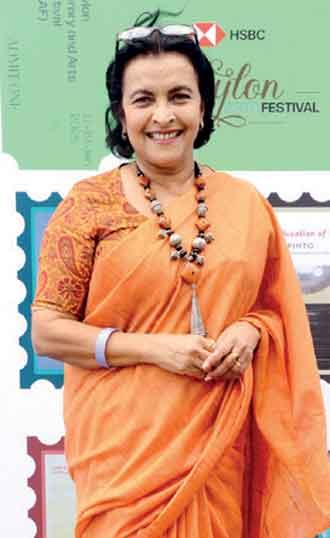
Special commendation to co-founders Ajai Vir Singh and Fazeena Rajabdeen and curator Mira Kapur for putting the festival together along with HSBC for being the Principal Sponsor at the event. Without their support, such an event which allowed Sri Lanka to showcase its literary and artistic talents would not have been possible.
The Ceylon Literary and Arts Festival has transcended barriers and was a Festival which people from all walks of life were able to attend. Author dinners hosted at Taj and Cinnamon Grand enabled literary fans to interact closely with their favourite authors which was a once in a lifetime experience to many. Kudos to the organisers for providing literary lovers with three days of literary bliss.
Grins in the Gloom
Among the many thought-provoking sessions, I was captivated by Graeme Simsion and Anne Buist’s discussion of their latest book, The Glass House, set in a psychiatric ward. The novel emphasises mental health awareness in an engaging manner, drawing readers in through candid conversation, dark humour, and even subtle romance. Buist, a practicing psychiatrist, mentioned that the book underwent an astounding 29 rewrites due to the complex psychological dimensions of each character—particularly Chloe, a young woman struggling with an eating disorder. Refreshingly, both Buist and Simsion admitted that mental health professionals often fail to help patients with eating disorders, as they tend to revert to their familiar, established behaviours. They also stated that “there are no wholly evil people” in this novel, only individuals yearning to be free from the perpetual stigma surrounding mental health. The novel itself has undeniable potential to be adapted into a television series, thanks to its multiple subplots that reveal sinister secrets and complex character motivations.
A Wednesday
Every Decade
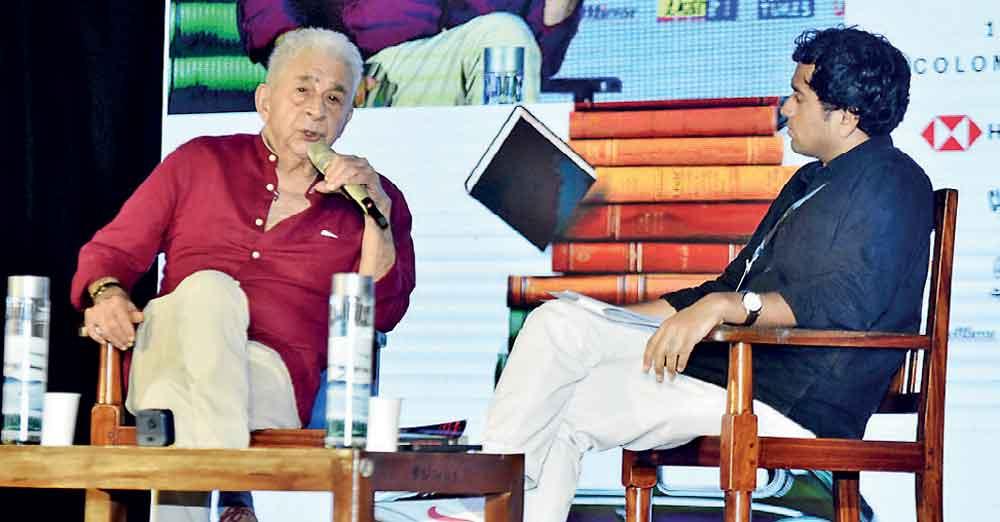
As a bittersweet finale to the Ceylon Literary and Arts Festival, Rehan Mudannayake, in conversation with the legendary Naseeruddin Shah, delved into Shah’s early inspiration for his journey in acting, which has led to his iconic and versatile roles in mainstream Bollywood films. Shah passionately reinforced the relevance to “have only that on the stage which is essential”. He emphasized that grandiose sets—such as towering castles and delicate chandeliers—often distract from the performance, creating an abrupt disconnect between the actor and the audience. Highly outspoken and unafraid to challenge societal norms, Shah expressed his disappointment with the current state of the industry. He addressed how many novice actors, and even seasoned professionals, often rush through their scenes with questionable haste, more excited by the prospect of gossip and the traditional tea break than the craft itself. He longed for the time when the set could serve as an “indispensable training ground for actors,” a place where artistry and dedication take precedence over superficial distractions.
Not All Heroes
Wear Capes
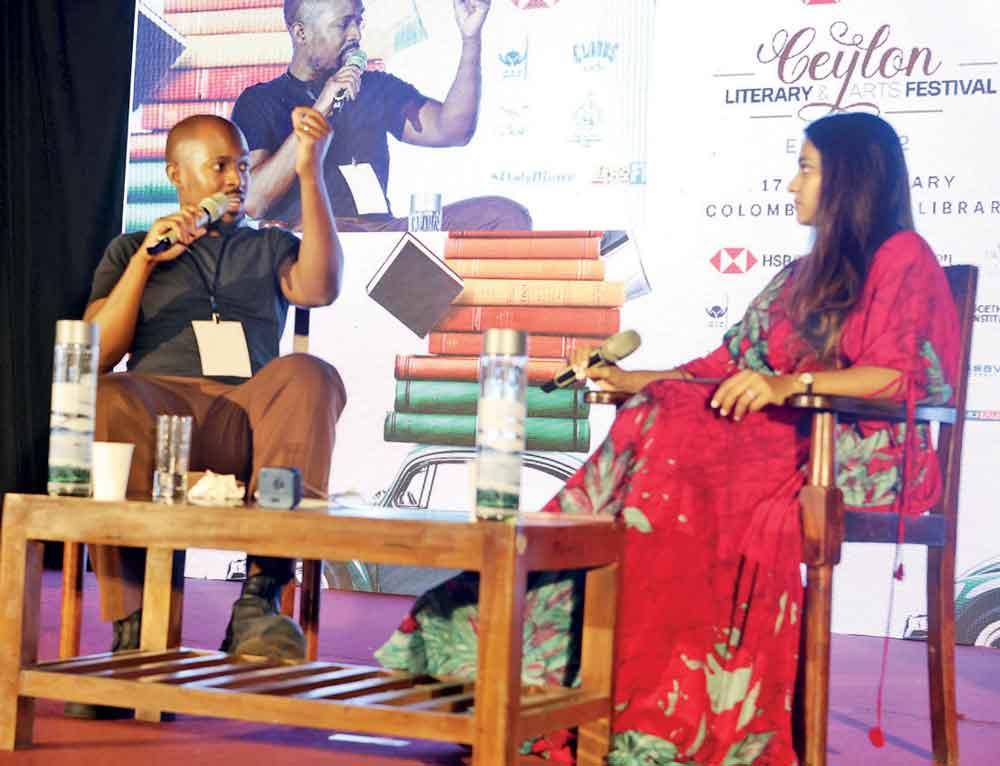
In a conversation with Andrew Sean Greer, author of the iconic 2018 Pulitzer Prize-winning novel Less, the session delved into the profound exploration of a queer man’s journey through an identity crisis. Infusing the discussion with light humour. Greer shared anecdotes about his experiences travelling as an anxious American, drawing clear parallels between himself and his protagonist, Arthur Less, both queer men on quests for deeper happiness through global adventures. Greer offered a candid critique of American travellers, describing them as often arrogant tourists who presume their approach to life is universal. However, he pointed out that many face culture shocks when encountering societies where their norms are anything but conventional. This theme is vividly captured in Less, where Greer describes his protagonist’s journey as one of “breaking through the arrogance” during his travels around the world.
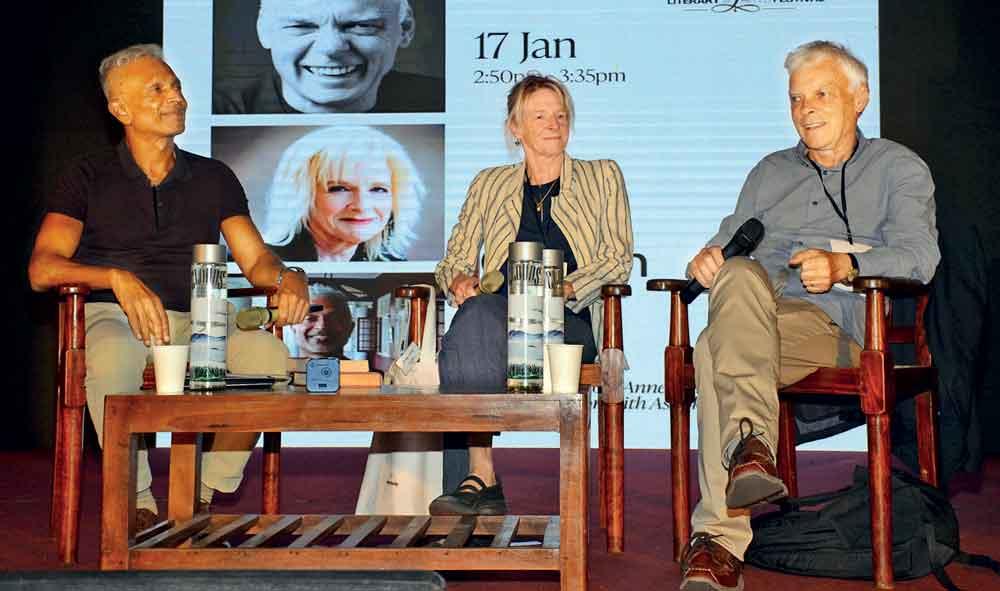
What sets Less apart from many other queer novels is its refreshing, formulaic ending: a joyful resolution where a gay character finds happiness, a stark departure from the tragic conclusions that often dominate queer literature. Greer’s work normalises the life of a queer man, paralleling the universal self-identity crises that many heterosexual individuals face. When asked whether the proposed American ban on TikTok might hinder the visibility of queer literature, Greer responded with a lighthearted laugh, reassuring the audience that such a ban would be temporary. He expressed confidence in the enduring reach of queer literature, noting that its legacy would thrive across diverse social media platforms.
The Mirror and the Mask: Cinema and Theatre’s Hidden Truths
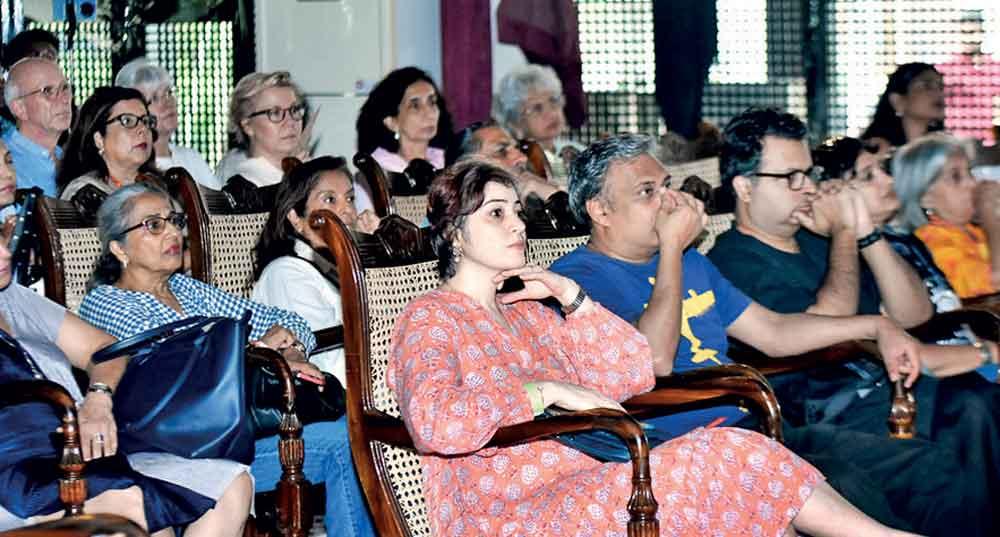
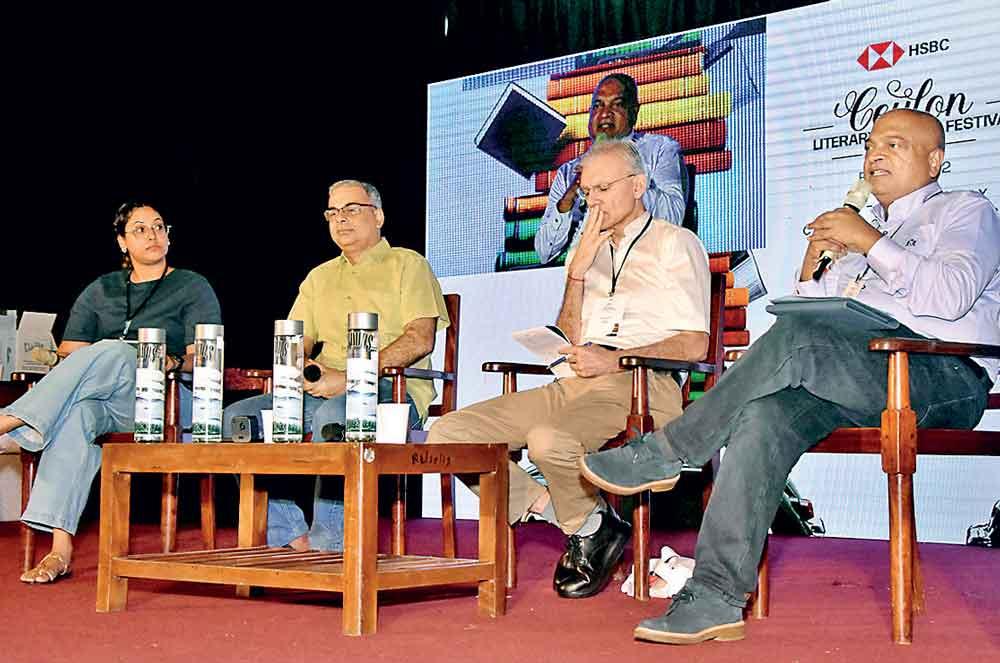
Unveiling the hidden truths of cinema, an interactive session featuring Dinara Punchihewa, Naseeruddin Shah, Ratna Pathak Shah, Rehan Mudannayake, Ruwanthi de Chickera, and Nimmi Harasgama offered a thought-provoking exploration of diverse perspectives across Sinhala and Bollywood cinema. With a packed audience eagerly absorbing the discourse, the evening highlighted a range of topics, particularly the impact of social media on acting opportunities and the evolving role of artificial intelligence (AI) in filmmaking.
The discussion on social media revealed how its amplified use during the 2020 pandemic created both opportunities and challenges for actors. Online auditions allowed some breakthrough stars to emerge, yet others struggled as video submissions often failed to capture the full scope of their talent.
The discussion on social media revealed how its amplified use during the 2020 pandemic created both opportunities and challenges for actors. Online auditions allowed some breakthrough stars to emerge, yet others struggled as video submissions often failed to capture the full scope of their talent. The conversation also touched on the biases actors face based on their economic backgrounds, emphasising disparities within the industry.
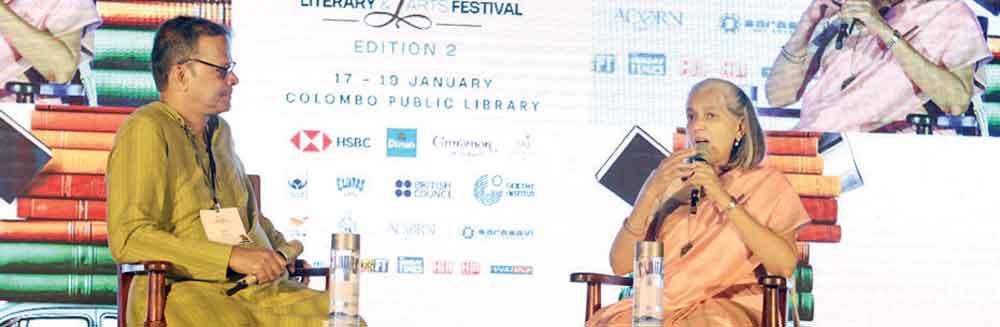
When asked about cinema’s hidden truths, Ratna Pathak Shah shared an intriguing perspective, asserting that cinema often acts as a catalyst for societal change. Films addressing social issues can shift public consciousness and spark systematic transformation, underscoring the profound influence of the medium.
The conversation also turned to AI’s inevitable incorporation into cinema. While some panelists expressed concerns about its potential to harm the industry, others highlighted AI’s capacity to enhance storytelling and improve the overall quality of filmmaking, framing it as a powerful yet delicate tool for the future.
Another critical issue raised during the session was the lack of safe spaces for women in both Sinhala and Bollywood cinema. Intimacy scenes, in particular, were noted as challenging for female actors, who often faced discomfort and vulnerability due to inadequate safeguards on set. While hesitant to recount past incidents, the panel collectively emphasised the need for industry-wide change and proposed recommendations for fostering safer and more inclusive environments. The session ultimately proved to be a progressive and inspiring discussion, shedding light on cinema’s potential to evolve and improve.
The Interplay of Politics and Trade: Insights into Sri Lanka’s Policies
Featuring a panel of distinguished intellectuals, including Razeen Sally, Murtaza Jafferjee, and Nisthar Cassim, the session provided an insightful analysis of trade policies and a retrospective examination of Sri Lanka’s economy. Razeen Sally offered a compelling perspective, arguing that the adoption of protectionist policies in the 1990s was a misstep. He noted that these policies acted as a catalyst for the prolonged civil conflict, plunging Sri Lanka into some of its most challenging periods.
Murtaza Jafferjee and Nisthar Cassim also reflected on key policy decisions during the Rajapaksa regime, highlighting how these contributed to the economic crisis of 2002. Their reflections underscored the long-term consequences of poor governance and economic mismanagement.
On a lighter note, when Razeen Sally was asked which historical economist he would trade places with for a day, he gave the timeless answer of Adam Smith. Sally paid tribute to the groundbreaking theorist whose ideas laid the foundation for modern economics and continue to shape our understanding of the field today.
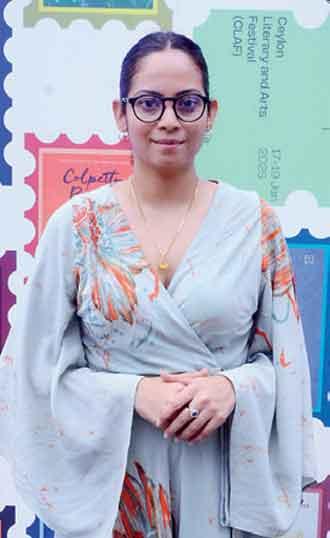
This year's festival was truly remarkable, culminating in a standing ovation during the final session—a fitting end to an extraordinary event. The energy throughout the festival was palpable, thanks to our carefully curated lineup of exceptional speakers, the introduction of a bilingual panel, and the exciting new dimensions brought by our fringe festivals. Our venue, the historic Colombo Library, also celebrates its centennial year and we facilited upgrades to the facility. These enhancements will continue to benefit the library and its community
for years to come.
The festival overall resonates deeply with Sri Lanka’s heritage, offering an experience that is both intimate and expansive. Through this unique cultural dialogue, we connect with the island’s natural beauty, literary legacy, and rich storytelling traditions—elements that set us apart from other
international festivals.
Fazeena Rajabdeen
Co-Founder & Director, HSBC Ceylon Literary and Arts Festival
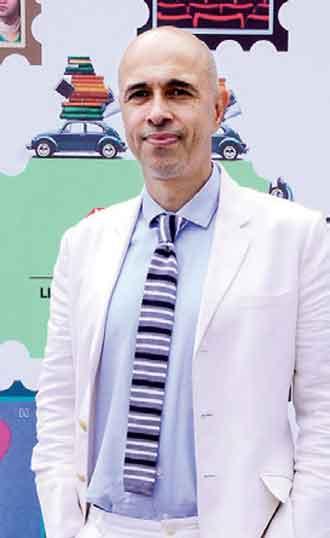
Edition 2 was a success by God’s grace. We had given ourselves goals to expand and we touched them. With this something beautiful and meaningful is beginning to take shape, that will create an impactful profile for Sri Lanka through the eyes of literature, arts and culture. The focus is to enhance Sri Lanka’s Softpower and that has been the aim of this platform since its inception. Now we look to Edition 3 in 2026.
Ajai Vir Singh
Co-Founder Ceylon Literary
And arts Festival
From its baby steps last year, the festival is growing to become a 'must' calendar event in literature and arts in Colombo. It was tighter with good timing for each session, well organised, great mix of creative people and that lovely touch of a cultural vignette to start off each day. It can only get better from here. Looking forward to Edition 3.
Savi Rodrigo
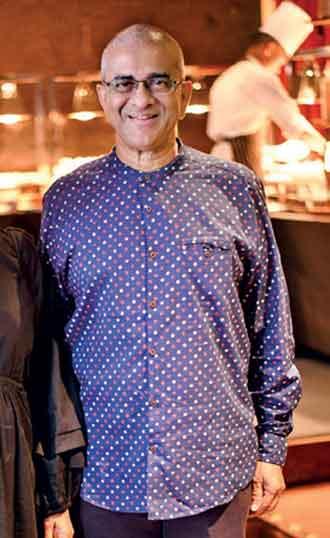
For its 2nd Edition, the CLF upped its own game by presenting a varied and fascinating programme, with a superb lineup of international and regional authors. The topics discussed were both relevant and engaging; the moderators well prepared. In all, a thought-provoking festival which succeeded in being thoroughly entertaining.
I enjoyed every session I attended and I look forward to attending many more such editions.
Sam Perera
Publisher (Perera Hussein)
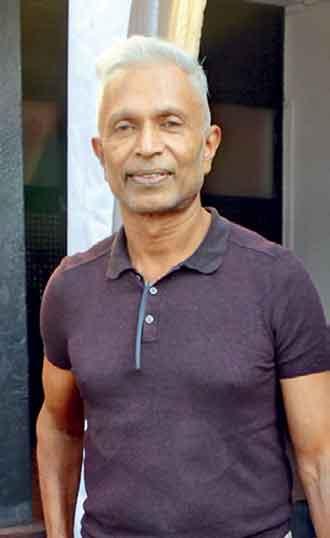
Under Mita Kapur's expert curatorship the festival has gone from what was a small boutique festival in my day to something much bigger: and I look forward to much, much more in
years to come!
Ashok Ferrey
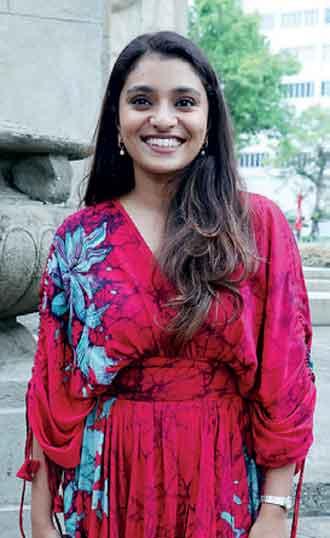
Ceylon Literary Festival 2025 has been a lovely curated event in the world of art, heritage and literature. I’ve had the pleasure of meeting and interacting with different people, and also to listen to some fascinating discussions from writers and creatives across the literary spectrum.
It was wonderful having artists from different facets of life come together on one platform!
Dinara Punchihewa
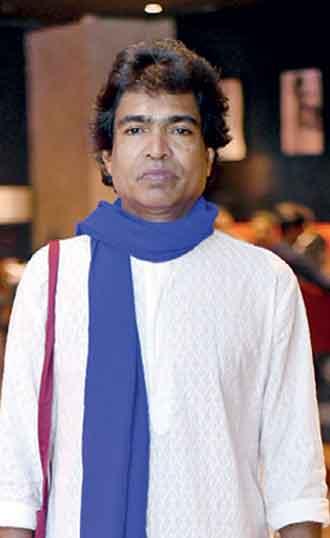
"The festival has evolved into something even more beautiful, vibrant and colourful. The sessions were informative, entertaining and were beautifully managed by a beautiful team of volunteers. 3 days of infinite cultural revolution initiated by texts,
writers and readers.
Lal Medawattegedera
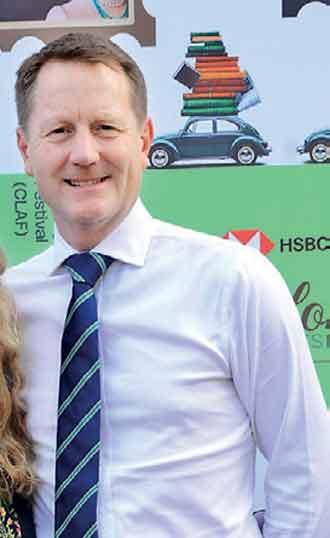
Our ambition is to bring the ‘Best of the world to Sri Lanka’ and take the best of Sri Lanka to the world by encouraging a dialogue and exchange of ideas with world renowned authors and artists. We hope this will bring a global spotlight to the literature and arts space in Sri Lanka. As the leading international bank in Sri Lanka, we are encouraged that our customers are able to experience an International Literary and arts festival right here on their doorstep in Colombo”
Mark Surgenor
Chief Executive Officer,
HSBC Sri Lanka
Pix by Waruna Wanniarachchi,
Nimalsiri Edirisinghe and Pradeep Dilrukshana