Reply To:
Name - Reply Comment
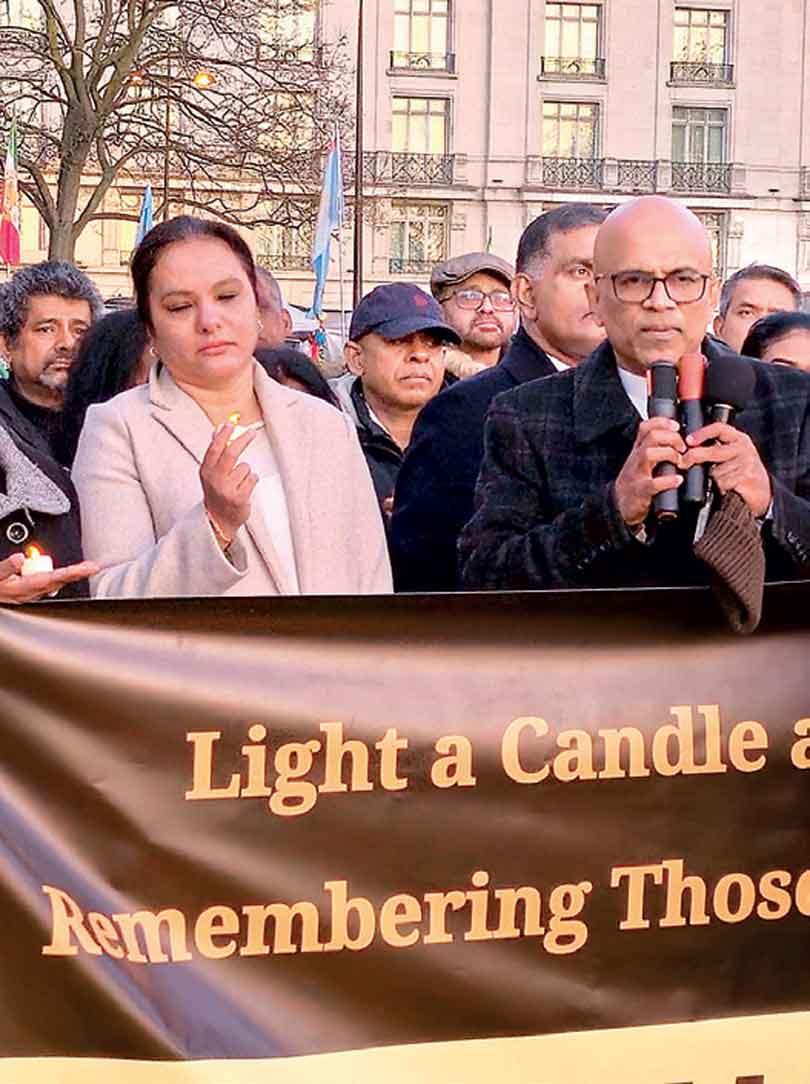
High Commissioner to the UK Nimal Senadheera and Deputy High Commissioner Manourie Mallikarachchi
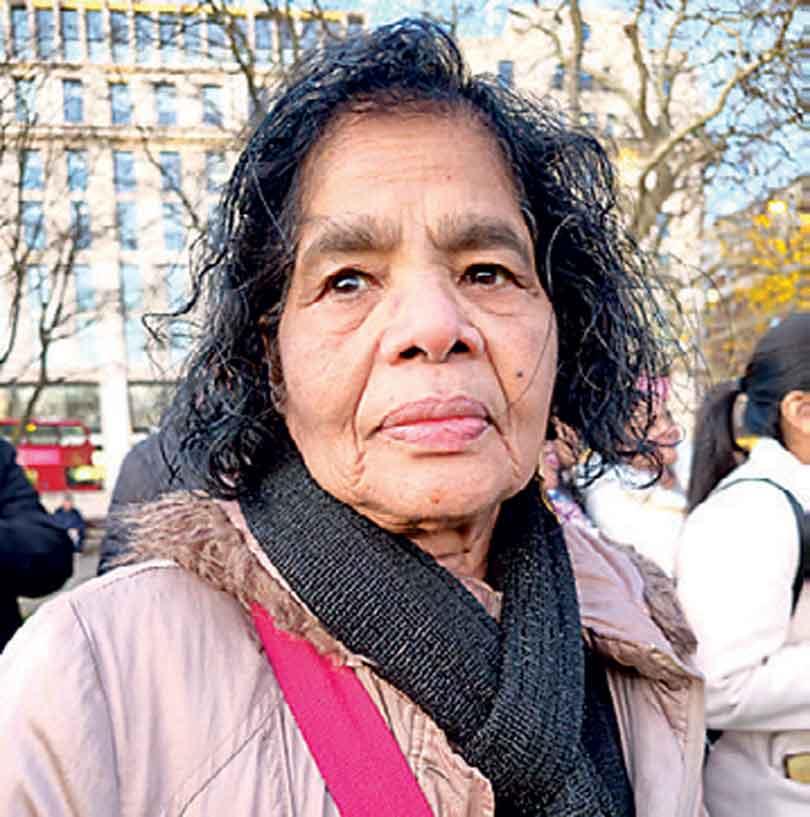
Rajes
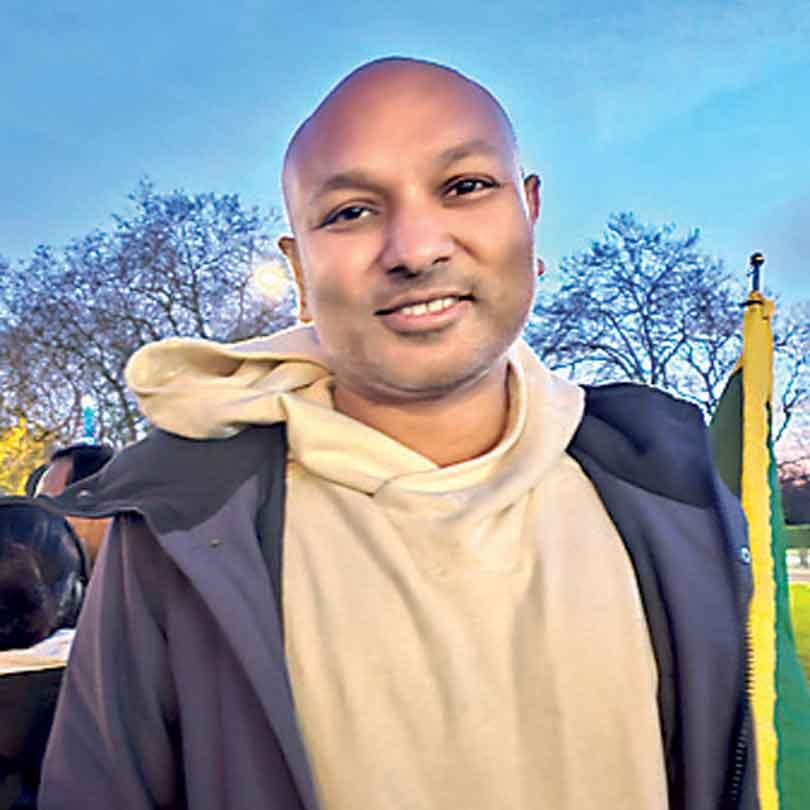
Senaka
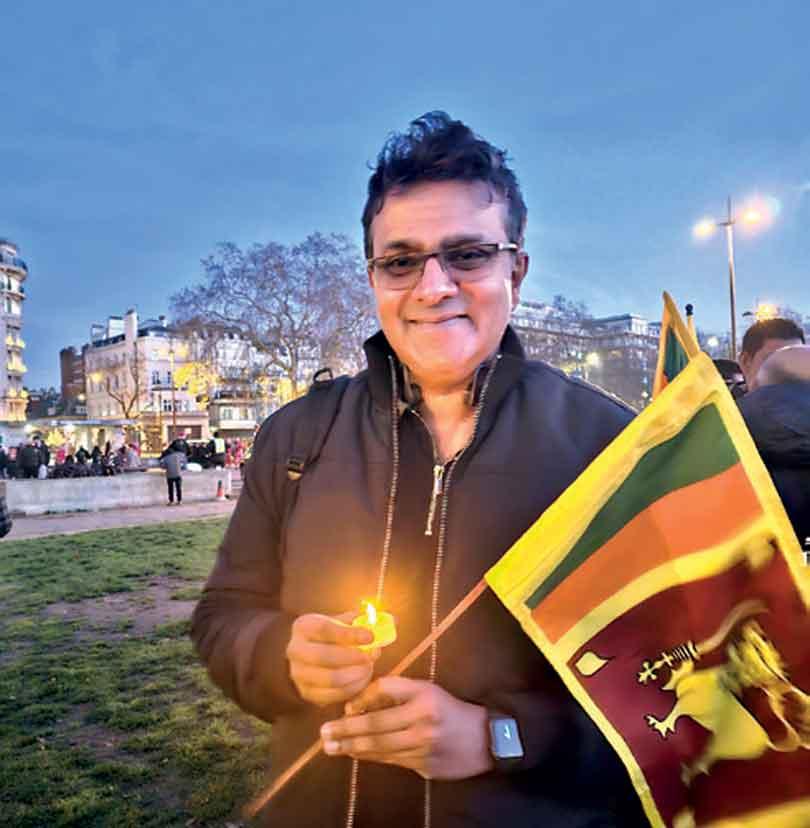
Eranga
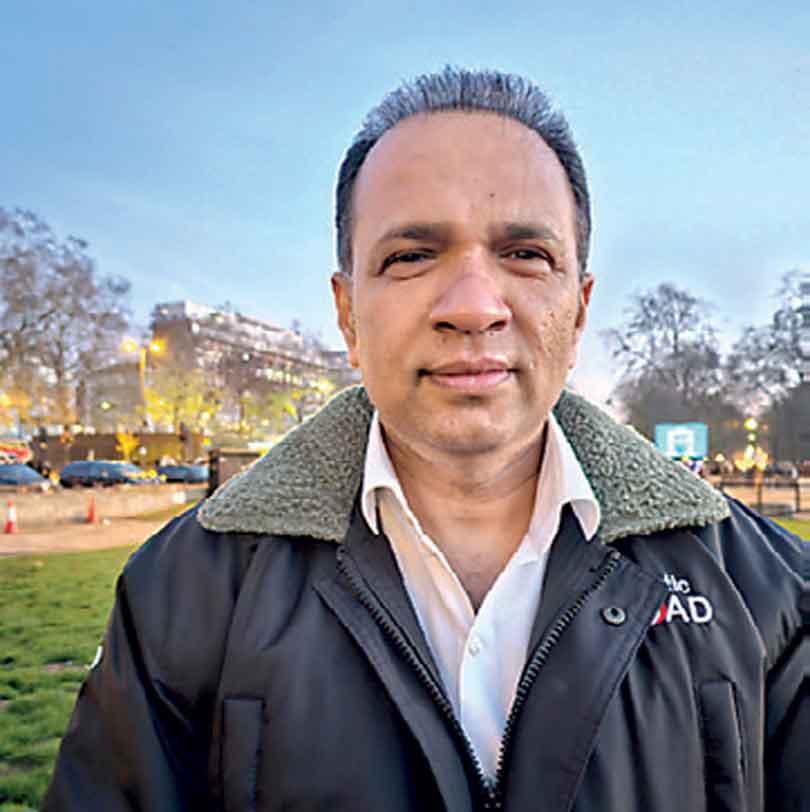
Madhawa
Thusitha
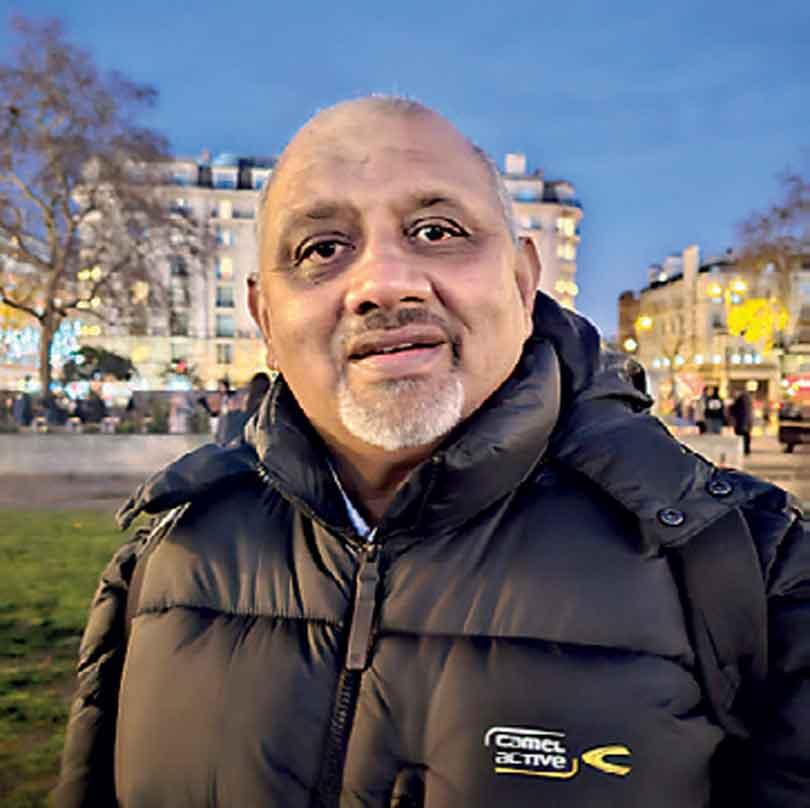
Dharshana
 Considered by many as the worst natural disaster Sri Lanka has faced in recent times, Cyclone Ditwah unleashed unprecedented destruction across the island, leaving thousands displaced, vital infrastructure crippled, and families mourning irreplaceable loss. Entire villages were submerged, livelihoods were washed away, and communities that once bustled with life were reduced to silence and debris. As Sri Lanka began the long and arduous journey toward recovery, the emotional toll of the catastrophe reverberated far beyond its shores, deeply affecting Sri Lankans living abroad.
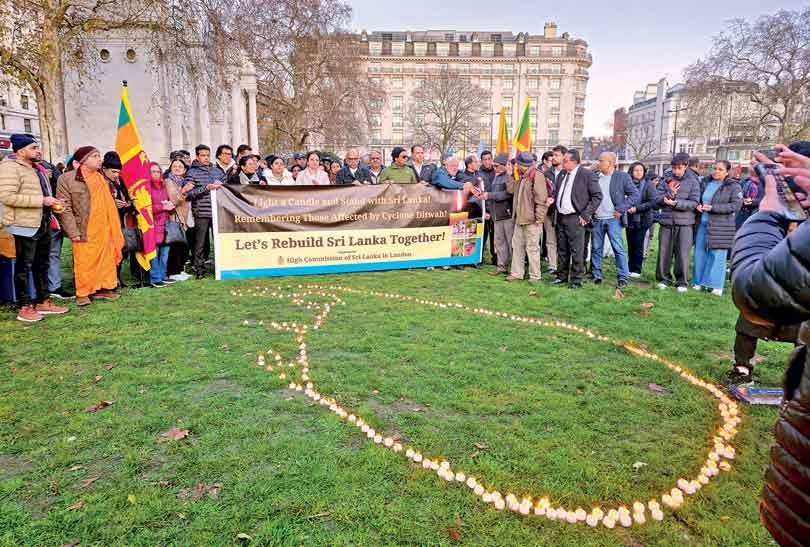
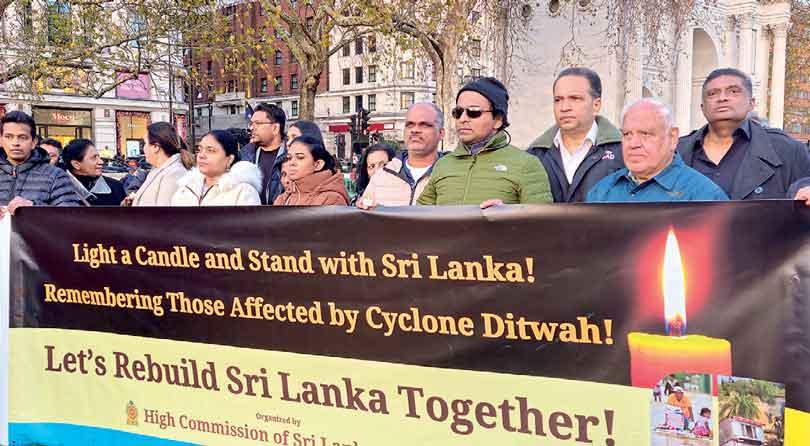
In London last Saturday, that collective grief found expression in a candlelight vigil organised under the auspices of the Sri Lankan High Commission in the United Kingdom. Held at Marble Arch, London, the gathering brought together members of the UK Sri Lankan diaspora who stood shoulder to shoulder in remembrance of the victims and in solidarity with those whose lives had been irrevocably altered by the cyclone.
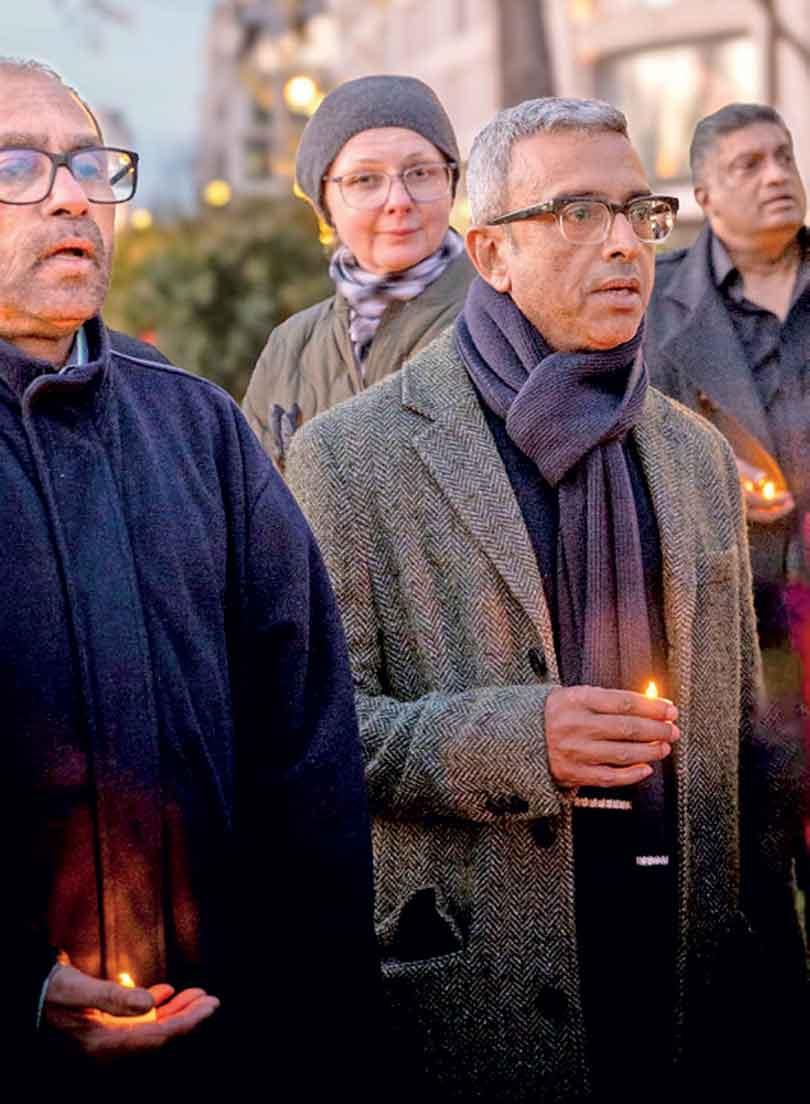
Despite an initial logistical setback — a last-minute change of venue from Trafalgar Square to Marble Arch — a sizeable crowd turned up, undeterred by the biting winter cold. Wrapped in coats and scarves, attendees braved the freezing conditions, underscoring the depth of feeling that compelled them to be present. The mood was sombre and reflective, punctuated by moments of quiet resolve and shared purpose.
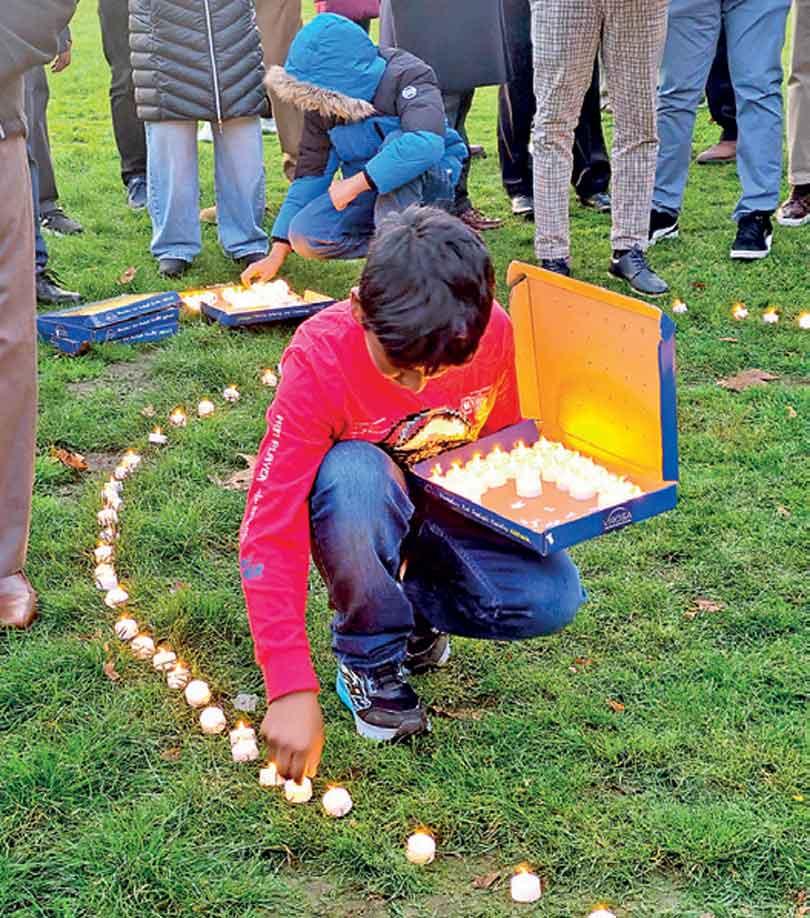
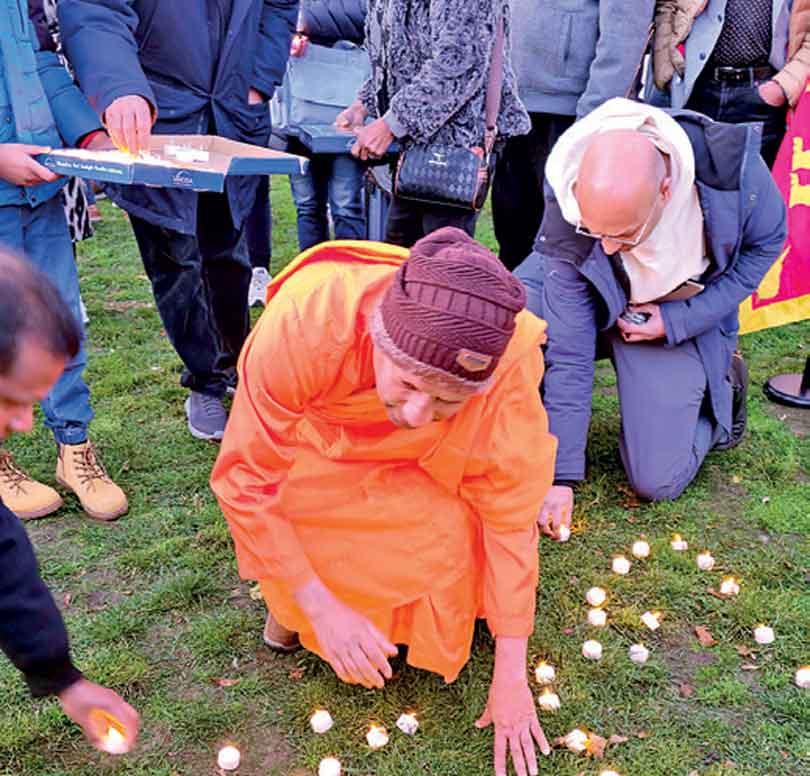
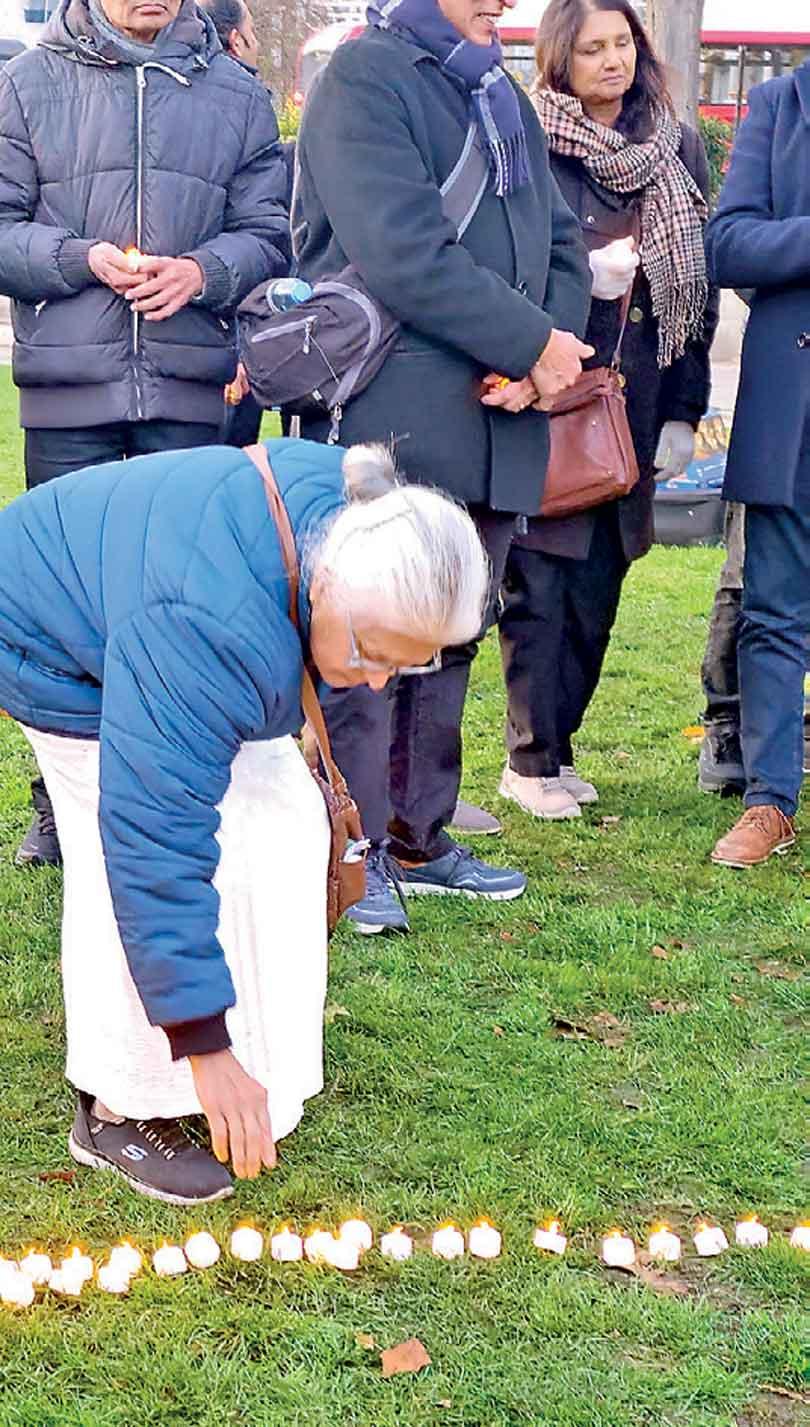
Many well-known figures and long-standing stalwarts of the Sri Lankan community in the UK were in attendance, alongside professionals, students, activists, artists, and families. Volunteers had arrived prepared with battery-operated candles, which they meticulously arranged on the ground in the shape of Sri Lanka. The glowing outline, softly illuminated against the London night, served as a powerful visual metaphor — a nation wounded, yet still alight with hope. Curious onlookers paused to observe, drawn by the quiet dignity of the gathering and the poignant symbolism of the display.
Among those present was Olivier Award-winning actor Hiran Abeysekera, whose attendance was a silent but powerful gesture of solidarity. His presence reflected the diversity of the diaspora that had gathered — people from different walks of life, united by a shared heritage and a collective sense of responsibility toward their homeland.
“I came all the way from central London just to remember the brothers and sisters who were victims of Cyclone Ditwah,” said Idris, originally from Colombo. “I’m pleased with the steps being taken to help and support the victims. I’m especially thankful to the Sri Lankan government for setting up a very transparent donation mechanism, where we can send money directly to the Treasury, instead of previous regimes where funding was sent directly to politicians. Even the UN representative has appreciated the relief efforts.”
For many in attendance, the vigil was both a personal and national act of remembrance. Rajes Bala, a writer originally from Akkaraipattu, spoke with quiet conviction. “I came today because I am a Sri Lankan, and I have to show my condolences to my brothers and sisters back in Sri Lanka,” she said. “The ongoing relief efforts are brilliant, and the determination and commitment of the government are breathtaking.”
Addressing the gathering, Sri Lanka’s High Commissioner to the United Kingdom, Nimal Senadheera, thanked those who had assembled to honour the lives lost and to remember the vast numbers affected by the disaster. “In this moment of profound tragedy, we deeply appreciate your presence, compassion, and unity, which give us strength,” he said. “It is incredibly hard to bear when we know the suffering our people in Sri Lanka are enduring.”
He went on to acknowledge international support, expressing gratitude to the UK government for its generous £1 million grant toward disaster relief. “We also thank the Sri Lankan community in Britain and Ireland, as well as our British friends, for the solidarity shown,” he said. “As we look back and remember those we have lost, we must also look forward. The path to recovery is long and requires sustained commitment. We humbly appeal to you to stand with us and assist the rebuilding efforts in whatever way possible, helping restore the lives of those affected.”
The vigil also served as a platform to communicate how assistance could be channelled effectively. Madhawa Dissanayake, CEO of BOC UK Limited, explained the mechanisms in place to facilitate secure donations. “Our role is to support the Sri Lankan community in the UK by keeping them informed about how funds can be sent securely to designated government accounts maintained by BOC UK,” he said. “As a subsidiary of the Bank of Ceylon, we coordinate closely with the Sri Lankan High Commission and BOC Sri Lanka to support the rebuilding and rehabilitation process.”
Beyond remembrance and fundraising, the gathering sparked broader conversations about unity, nation-building, and collective responsibility. Long-time UK-based activist Chaminda Tilakuma reflected on the deeper significance of the moment. “Despite this being a calamity, I see it as an opportunity to unite the haves and the have-nots and bring people onto one platform,” he said. “We must work with the government. Challenges will arise, but that is part of any rehabilitation process. What we have seen recently — youth from the North travelling to Anuradhapura to help — that, to me, is nation-building.”
That call for unity was echoed by fellow activist Thusitha Gunawardhana, who stressed the urgent role the diaspora must play. “Now more than ever, the country needs the help of the diaspora to rebuild Sri Lanka,” he said. “Ethnic and religious divisions must be set aside. We need to unite collectively to help our people back home. There are families who have lost everything, and we must rise to the challenge and do our bit to help them get back on their feet.”
As the evening unfolded, the crowd listened to a deeply moving rendition of Nagitimu Sri Lanka, followed, at the conclusion of the vigil, by the singing of the Sri Lankan national anthem. Standing together many were visibly emotional as voices merged into one — a powerful reminder of shared identity and collective resilience.
Following the national anthem, Chaminda Tilakuma pointed out that the words of the national anthem were especially apt at this moment in the country’s history. He urged Sri Lankans to heed its message not merely as a patriotic refrain, but as a call to action — to rise together, to protect the nation, and to shoulder responsibility in times of crisis.
Others reflected on the lessons to be learned from the disaster. “This is a long-term project,” said architecht Senaka Weeraman, another attendee. “The country needs to take climate change seriously and put proper plans in place to manage floodwaters and prevent disasters like this in the future.”
Darshana Hettiarachchi, the main organiser of the JVP UK branch, summed up the prevailing mood of the evening. “At this time, we need to support the government in its rebuilding efforts, irrespective of political affiliations,” he said. “The need of the hour is for people to unite.”
After 90 minutes, the crowd slowly dispersed, candles extinguished and conversations trailing off into the cold London night. Yet the message left behind was unmistakable — that even thousands of miles from home, the Sri Lankan diaspora remains bound by empathy, responsibility, and hope, committed to standing with their nation and answering the call to rebuild, together.